Editor’s Note
This article examines a pivotal moment for China’s luxury sector in 2025. Once the undisputed engine of global growth, the market now navigates economic headwinds and a profound shift in consumer identity. We explore how brands are adapting to this new reality.
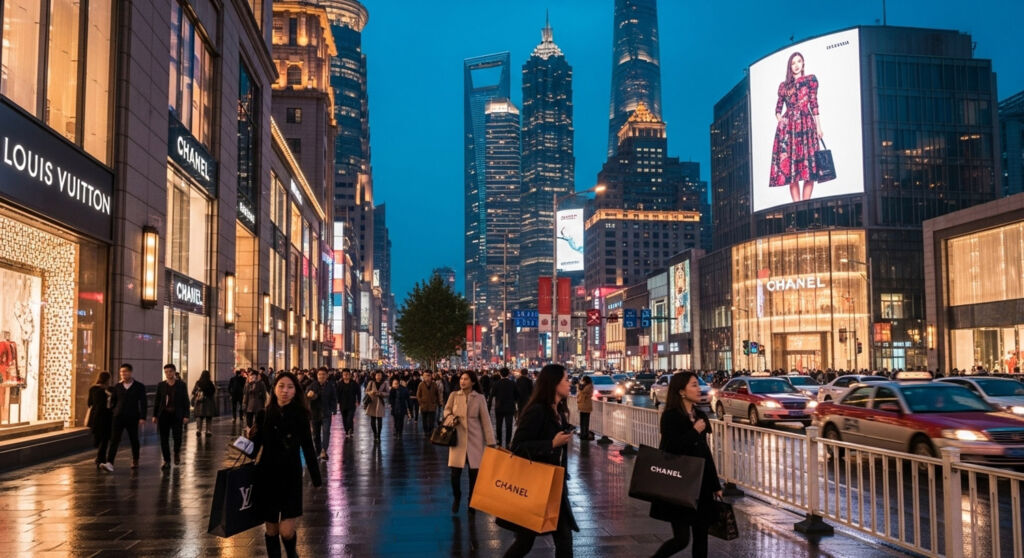
China’s luxury market, long the engine of global luxury growth, is undergoing significant transformation in 2025. After rebounding strongly post-pandemic, recent headwinds, including softer economic confidence, property market tensions, and shifting consumer values, have slowed growth and reshaped buying behaviours.
This article explores how the market’s evolution is driven by a new generation of consumers, a surge in domestic luxury brands, digital innovation, and a growing focus on experiences and cultural relevance—offering a nuanced, data-driven perspective free from political commentary.
The Chinese luxury goods market remains a global powerhouse, valued at an estimated $46 billion in 2025. However, growth is softening, with Bain & Company reporting an approximate 15-20% contraction in domestic personal luxury spend in 2024 and stable, flat trends expected throughout 2025.
Key segments driving market dynamics include high-value fashion and leather goods, watches and jewellery, cosmetics, luxury travel, and fine dining experiences. Shanghai, Beijing, and emerging lower-tier cities provide diverse growth corridors for luxury consumption spurred by expanding urban affluence.
Recent consumer sentiment studies reveal marked shifts among Chinese luxury buyers. While overall consumer confidence has dipped, especially amid real estate market worries and employment anxieties, the affluent remain aspirational yet increasingly value-driven.
More than two-thirds surveyed report increased savings for future financial security, modulating discretionary spending to prioritise meaningful, culturally relevant products. Younger consumers—Millennials and Gen Z—are leading a generational shift away from ostentatious logos toward personalised luxury experiences, authenticity, and cultural stories.
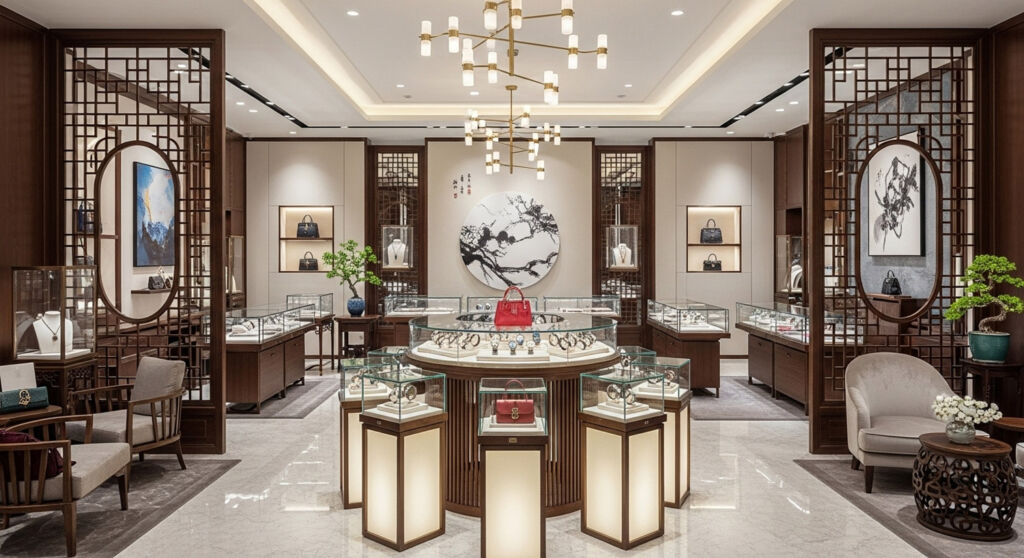
China’s luxury market in 2025 is distinguished by the growing prominence of local brands offering “accessible luxury” infused with cultural heritage and digital savvy. Brands such as Shang Xia, Ne·Tiger, and Exception de Mixmind are national icons gaining momentum, particularly among younger consumers who prize cultural resonance and innovation over traditional Western labels.
This homegrown luxury renaissance underscores a broader consumer desire for authenticity and national pride, positioning domestic brands as vital market drivers alongside established global houses.
China remains the global benchmark in luxury digital marketing and commerce. With over 80% of luxury purchases influenced by digital touchpoints—from social media platforms like Xiaohongshu to livestream e-commerce—brands leverage storytelling and peer validation in locally tailored contexts.
Experiential luxury spending, from elite travel and wellness to exclusive concierge services, is also rising despite overall market softness, driven especially by Gen Z and Millennials who prioritise meaningful engagement over asset accumulation.
The market’s transformation is not without hurdles. Economic uncertainty, inflation concerns, and shifting regulatory environments challenge luxury houses to balance exclusivity with accessibility. Price sensitivity is heightened, and counterfeit goods remain a persistent risk.
However, stimulus measures, increased domestic spending, and innovative brand strategies are cautiously optimistic signals for recovery post-2025. Analysts predict a stabilising market poised for gradual growth, fuelled by evolving consumer values rather than sheer volume.
The Chinese luxury market in 2025 is at a crossroads, balancing the weight of economic realities with new forms of consumer aspiration. Its future will be shaped by a generation that places experience, culture, and authenticity at the centre of luxury consumption.
Domestic brands and savvy digital engagement set the stage for a market that is less about status and more about meaning—underscoring the nuanced redefinition of luxury in the world’s largest consumer arena.
CXG Group, “Chinese Luxury Consumer Sentiment 2025” (Oct 2025)
Bain & Company, “China Luxury Market Report 2025” (Oct 2025)
Oliver Wyman, “Chinese Luxury Consumer Behaviour and Trends” (2025)
MDRi, “China Luxury Consumer Forecast 2025 Report” (Dec 2024)
Monocle, “How Chinese brands are moving from cheap knock-offs…” (Sep 2025)
Luxury Society, “China’s Luxury Recovery Gains Momentum” (Sep 2025)
Jing Daily, “Best Chinese Brand Collaborations of 2025” (Jul 2025)
Trajectry Innovation Consultancy, insights on digital luxury consumption (2025)