Editor’s Note
The latest Double 11 data reveals a shift in China’s e-commerce landscape, with instant retail emerging as a standout growth driver. As platforms pivot toward efficiency and deeper consumer value, the race for faster, seamless fulfillment is reshaping retail competition.
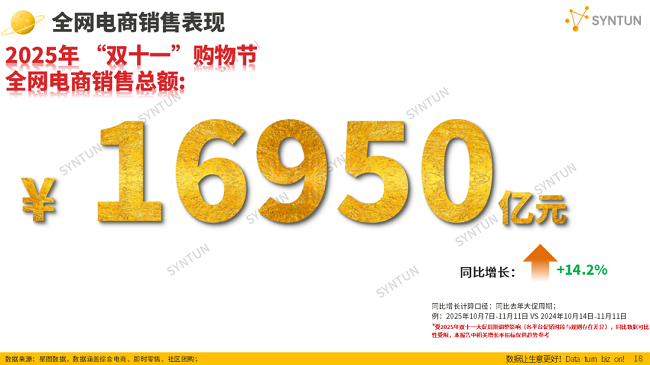
The 17th Double 11 shopping festival has concluded. Data from Xingtu shows that during this promotional period, the sales volume of comprehensive e-commerce platforms reached 16.19 trillion yuan, a year-on-year increase of 12.3%. Instant retail emerged as the biggest highlight this year, with omni-channel sales reaching 67 billion yuan, a surge of 138.4% year-on-year. As the promotional cycle lengthens and marketing tactics simplify, the industry is showing a new trend of slowing growth and deepening value. Against the backdrop of diminishing traffic dividends, instant retail has become a key direction for platforms to expand growth, pushing logistics fulfillment into a “minute-level” competition stage, highlighting the value of third-party instant delivery platforms with full-scenario and omni-channel service capabilities.
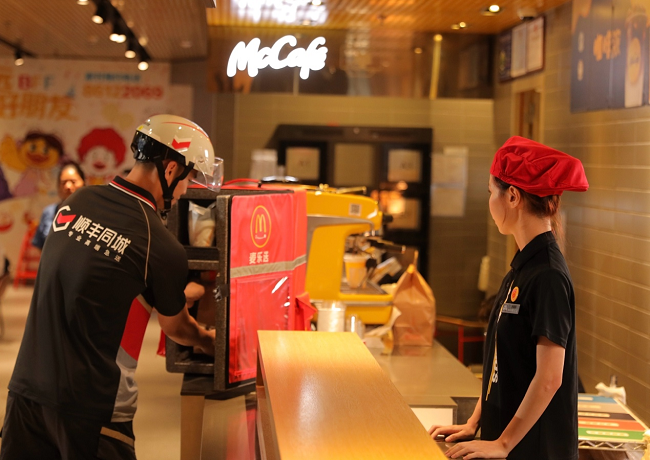
By category, food and beverage delivery continued its high growth trend, with beverage orders increasing by over 160% year-on-year and fast-food orders growing by 110%. Non-food categories such as supermarkets/department stores, cosmetics, and jewelry also achieved double-digit growth. Leveraging its neutral third-party positioning, SF Intra-City saw significant order increases from channels including Douyin, Meituan, Taobao Flash, JD.com Instant Delivery, and merchants’ own channels. Furthermore, its “last-mile” delivery business saw average daily order volume significantly exceed last year’s peak, with daily pick-up order volume doubling.
This Double 11, major platforms continued to ramp up their instant retail strategies: Taobao Flash collaborated with over 37,000 brands and 400,000 stores, competing with a “far-field prices + near-field fulfillment” approach; JD.com integrated instant retail into its core business, launching “Instant Delivery with up to 50% off”; Meituan strengthened its supply chain coverage through a “central warehouse + flash warehouse” model. Driven by platforms, numerous brands joined in, expanding instant retail categories from food and beverage to fresh produce, electronics, medicine, home appliances, and other full-scenario goods. A new consumption trend of “no need to meet spending thresholds, no waiting for pre-sales” also emerged. High-value goods quickly reached users via instant delivery, placing higher demands on supply chain fulfillment capabilities.
SF Intra-City provides omni-channel order consolidation management and delivery services for brands like Luckin Coffee, Bawang Chaji, McDonald’s, and KFC, achieving year-on-year growth of over 160% and 110% in beverage and fast-food orders, respectively.
For categories like supermarkets, cosmetics, electronics, and medicine, SF Intra-City provides integrated “warehousing + transfer + instant delivery” supply chain services, collaborating with numerous brand stores and flash warehouses to enhance near-field fulfillment capabilities. Its supermarket and department store solutions serve clients like Sam’s Club and Yonghui Supermarket, covering scenarios such as store-to-door delivery within hours, long-distance shuttle, and store returns/exchanges, driving high double-digit growth in related category orders.
As Double 11 promotion rules simplified, delivery speed and fulfillment stability became key competitive factors. Data from the State Post Bureau shows that during the promotion period, national express delivery business volume cumulatively reached 13.938 billion pieces, with the average daily collection volume at 117.8% of the normal level, keeping continuous pressure on the logistics network.
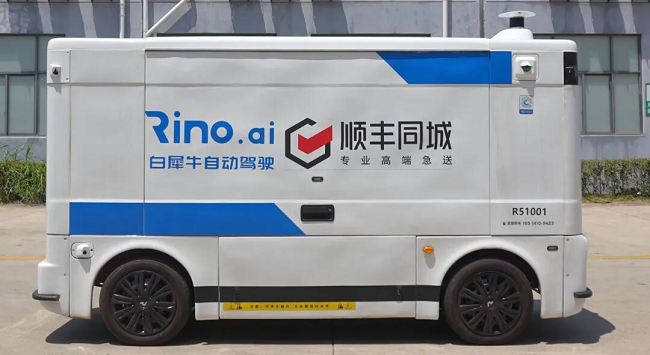
To cope with the pressure, SF Intra-City deployed over 800 autonomous vehicles in more than 100 cities across China, with an average of about 20,000 active trips per month, primarily undertaking short-distance shuttles and hub distribution within the “last mile.” These vehicles efficiently handled peak orders during the promotion, effectively freeing up manpower and ensuring overall fulfillment efficiency.
Additionally, SF Intra-City collaborated with public transport groups to explore a “parcel + bus” model. In Wuhan, idle bus depots were converted into logistics hubs, with bus company employees participating in sorting and transportation, improving sorting efficiency by over 30%.
Currently, SF Intra-City’s services have penetrated all aspects of intra-city logistics, driving the upgrade of traditional express delivery to half-day and hour-level delivery. During Double 11, the average daily order volume for each segment of its “last-mile” service exceeded last year’s peak, with daily pick-up order volume increasing by 106% year-on-year, effectively alleviating peak-period capacity pressure.
Instant retail has reshaped this year’s Double 11 competitive landscape, reflecting both changes in consumption habits and driving continuous upgrades in commercial infrastructure. From brands’ multi-channel strategies to platforms strengthening logistics capabilities, the industry collectively pushes fulfillment services towards greater efficiency, stability, and comprehensive coverage. In this process, SF Intra-City, with its neutral positioning and full-scenario service capabilities, demonstrates increasingly important infrastructure value.