Editor’s Note
The Hurun Research Institute’s latest annual report offers a detailed look into the lifestyles and consumption trends of China’s high-net-worth individuals. As this influential survey marks its 21st year, it provides valuable insights into the evolving preferences and priorities shaping the luxury market.
Hurun Research Institute today released the “2025 Hurun Best of the Best—Report on the Quality of Life of China’s High-Net-Worth Individuals” (Hurun Chinese Luxury Consumer Survey & Hurun Best of the Best Awards 2025). This marks the 21st consecutive year the institute has published this report, which aims to reveal the lifestyle, consumption habits, and evolving brand perceptions and preferences of China’s high-net-worth individuals, striving to depict the changing life patterns of this group. The “Hurun Best of the Best” is widely regarded as the ISO for brands targeting high-net-worth individuals.
In 2024, China’s high-end consumption market size decreased by 2% year-on-year to 16.3 trillion yuan. Influenced by the downturn in the high-end jewelry, watch, and luggage markets, the traditional luxury goods market overall declined by over 8%. Growth primarily came from high-end services (such as hotels, travel) and the luxury car market priced above 500,000 yuan.
Over the past year, the average annual material consumption of high-net-worth households decreased by 12%, a reduction of 280,000 yuan. Their average willingness to spend on purchases is: 660,000 yuan for cars, 420,000 yuan for jewelry, 410,000 yuan for watches, 350,000 yuan for art, 230,000 yuan each for education and travel, 190,000 yuan for health services, 180,000 yuan for alcohol, and 150,000 yuan for home maintenance.
Huawei has been the most favored mobile phone brand among high-net-worth individuals for two consecutive years, with Apple ranking second and Xiaomi rising one spot to third. In other consumer electronics categories, the top favored brands are: DJI (drones), Unitree (robotic dogs), Insta360 (panoramic cameras), Ninebot (self-balancing scooters), and Niu (two-wheel electric vehicles).
Travel remains the preferred form of entertainment, followed by fine dining, hot springs, SPA, wine tasting, and party dinners. Over 90% of high-net-worth individuals maintain weekly exercise habits, with running still being the most favored form of exercise, while yoga and hiking have risen to the top three.
In terms of transportation, the proportion of those with dedicated chauffeurs has increased. Regarding car choices, SUV models dominate, and luxury MPVs are gradually gaining attention. Support for relatives is mainly concentrated on emergency assistance, providing job opportunities, and children’s education.
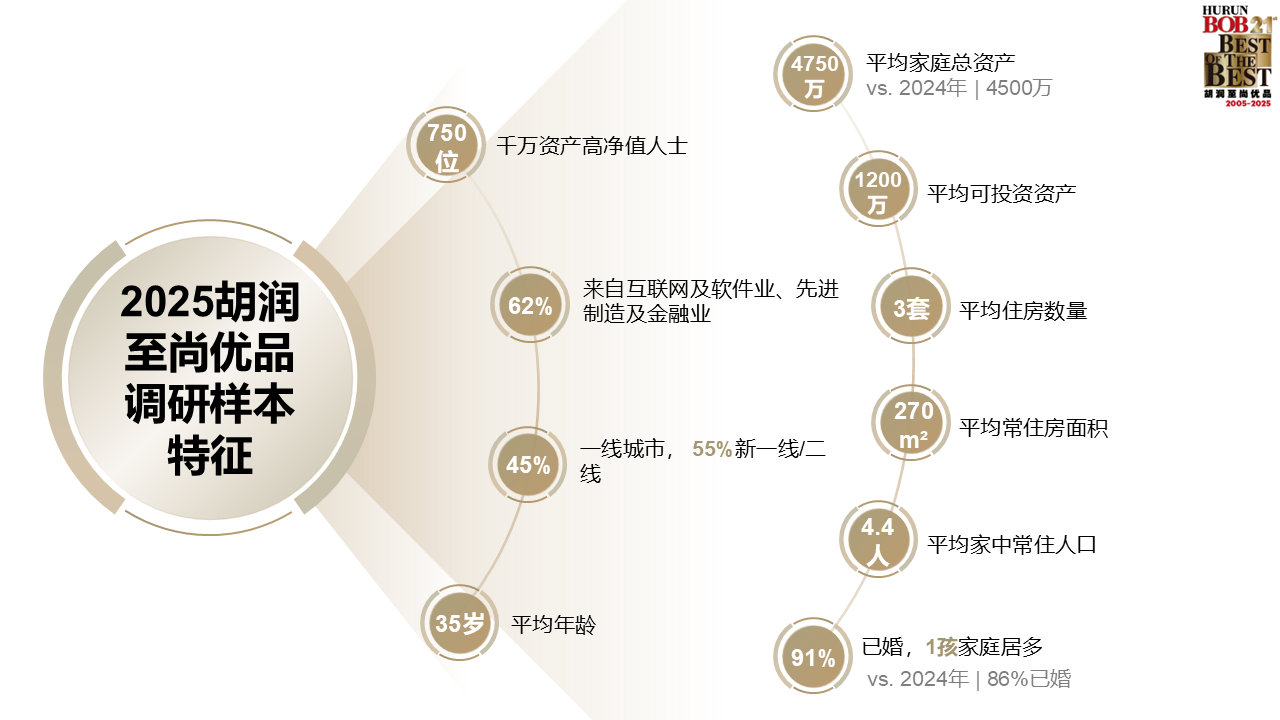
This survey covered 750 Chinese high-net-worth individuals with assets of at least 10 million yuan, including 32 ultra-high-net-worth individuals with assets over 100 million yuan. The average total family assets of respondents were 47.5 million yuan, with average investable assets of 12 million yuan. 45% of respondents are from first-tier cities, 41% from new first-tier cities, and 14% from second-tier cities. The average age of respondents is 35 years old.