Editor’s Note
This report explores how Asia, led by China, is setting the global standard for luxury retail through immersive and culturally nuanced experiences. From seasonal campaigns to sensory pop-ups, we examine the strategies captivating a new generation of discerning consumers.
The summer of 2025 confirmed Asia, and particularly China, as the strategic laboratory for global luxury. From Shanghai to Tokyo, Bangkok to Singapore, luxury houses have multiplied immersive, narrative, and experiential initiatives to captivate a demanding and digitally-connected clientele. This report highlights the best practices observed – Qixi campaigns, sensory pop-ups, heritage exhibitions, and cultural collaborations – to decipher the new dynamics redefining the luxury customer experience.
In China, the summer of 2025 was marked by a creative effervescence where luxury houses doubled down on boldness to capture the attention of a young, digital, and experience-hungry clientele. From Chanel and Louis Vuitton to Burberry, Loewe, and Lancôme, Qixi campaigns and immersive activations blended cultural heritage, emotional storytelling, and digital integration. China thus confirms its role as a key testing ground, where luxury reinvents itself through hybrid, multisensory, and highly shareable formats.
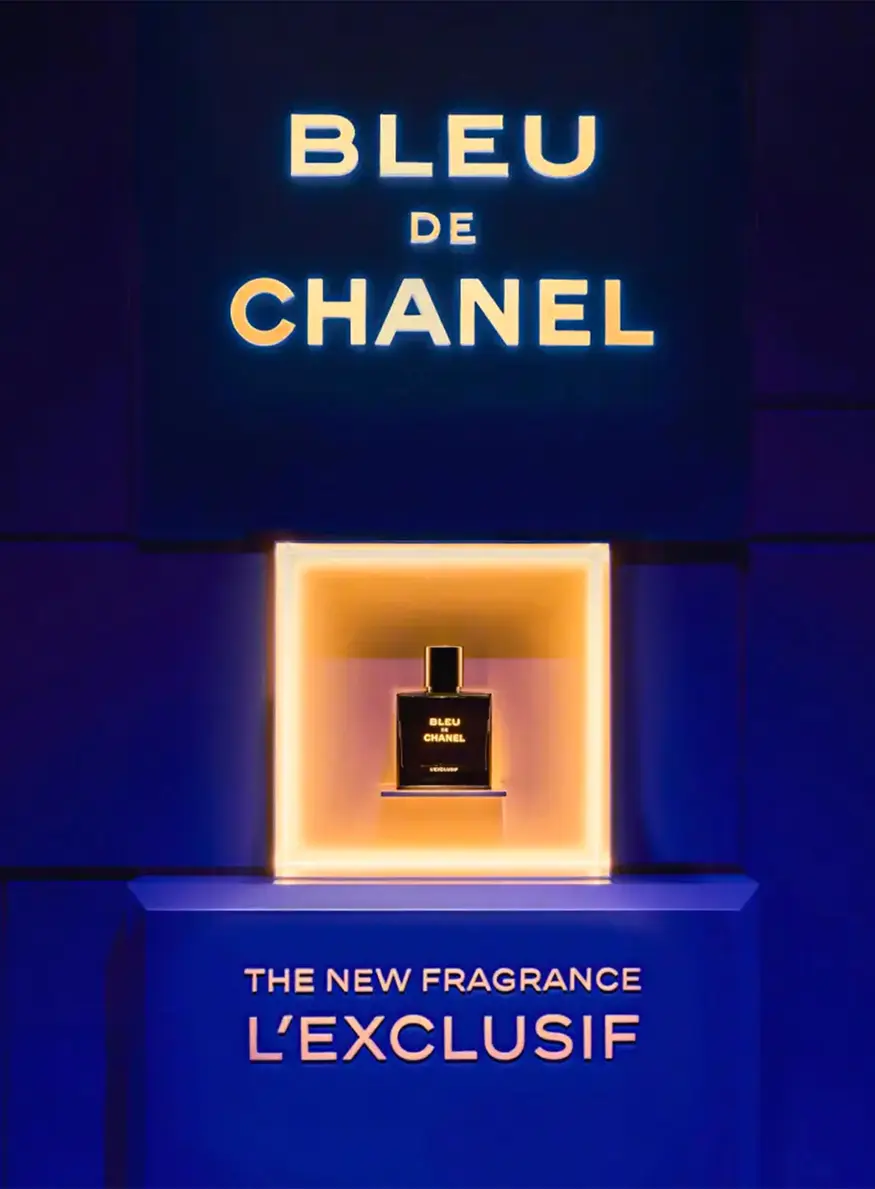
In August, Chanel organized an immersive experience around the “Bleu De Chanel” fragrance in Shanghai, transforming an invisible product into a multisensory journey. Designed for China’s rapidly growing perfume market, the activation blended olfactory education, lifestyle touchpoints, and shareable moments to make the fragrance tangible, cultural, and memorable. This marked the launch of their new fragrance, Bleu De Chanel L’Exclusif.
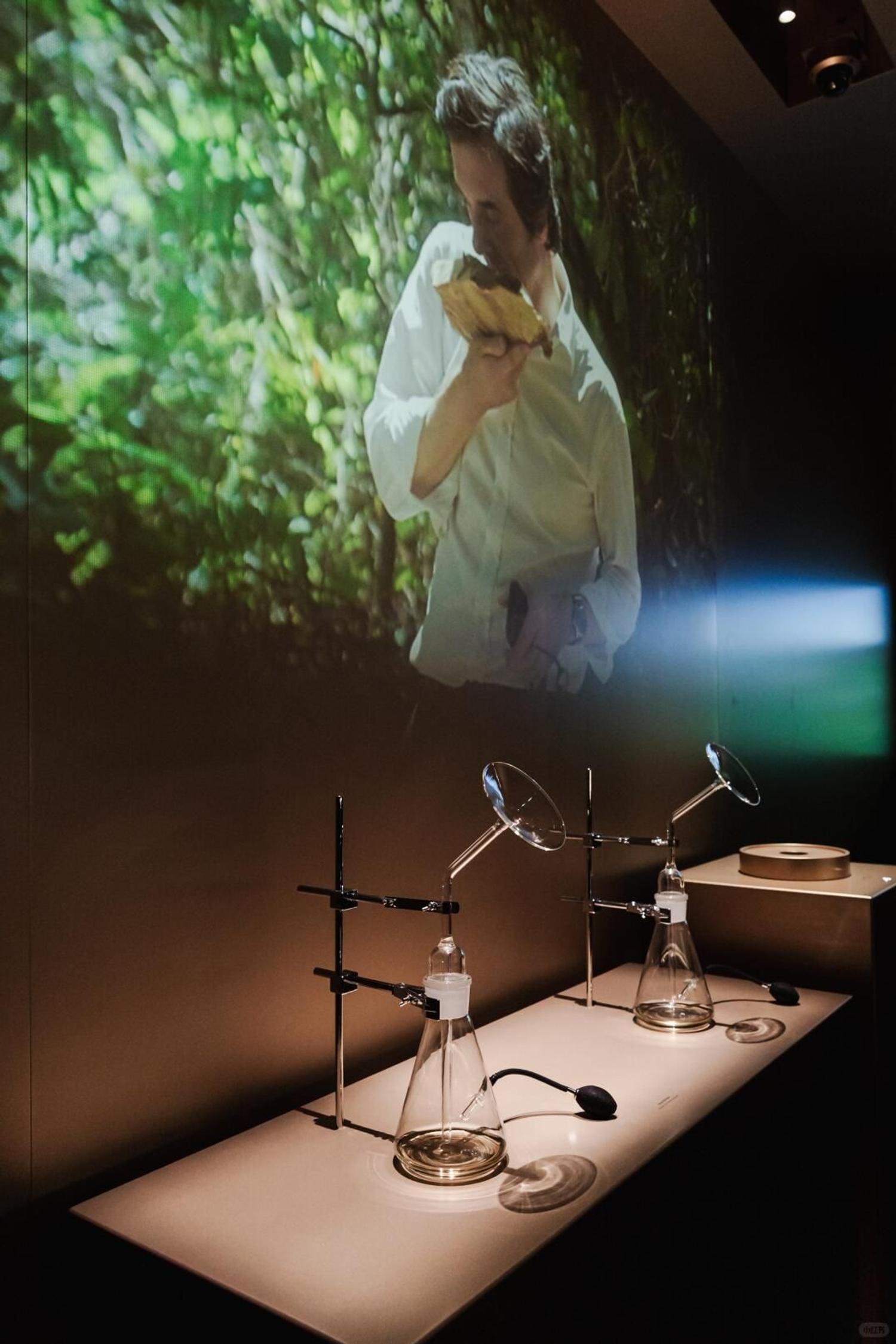
Guests entered via a luminous pathway before exploring U-shaped testing counters and a deep blue stage. The space told a story from forest to laboratory through projections, archives, and olfactory stations, transforming fragrance discovery into a theatrical experience.
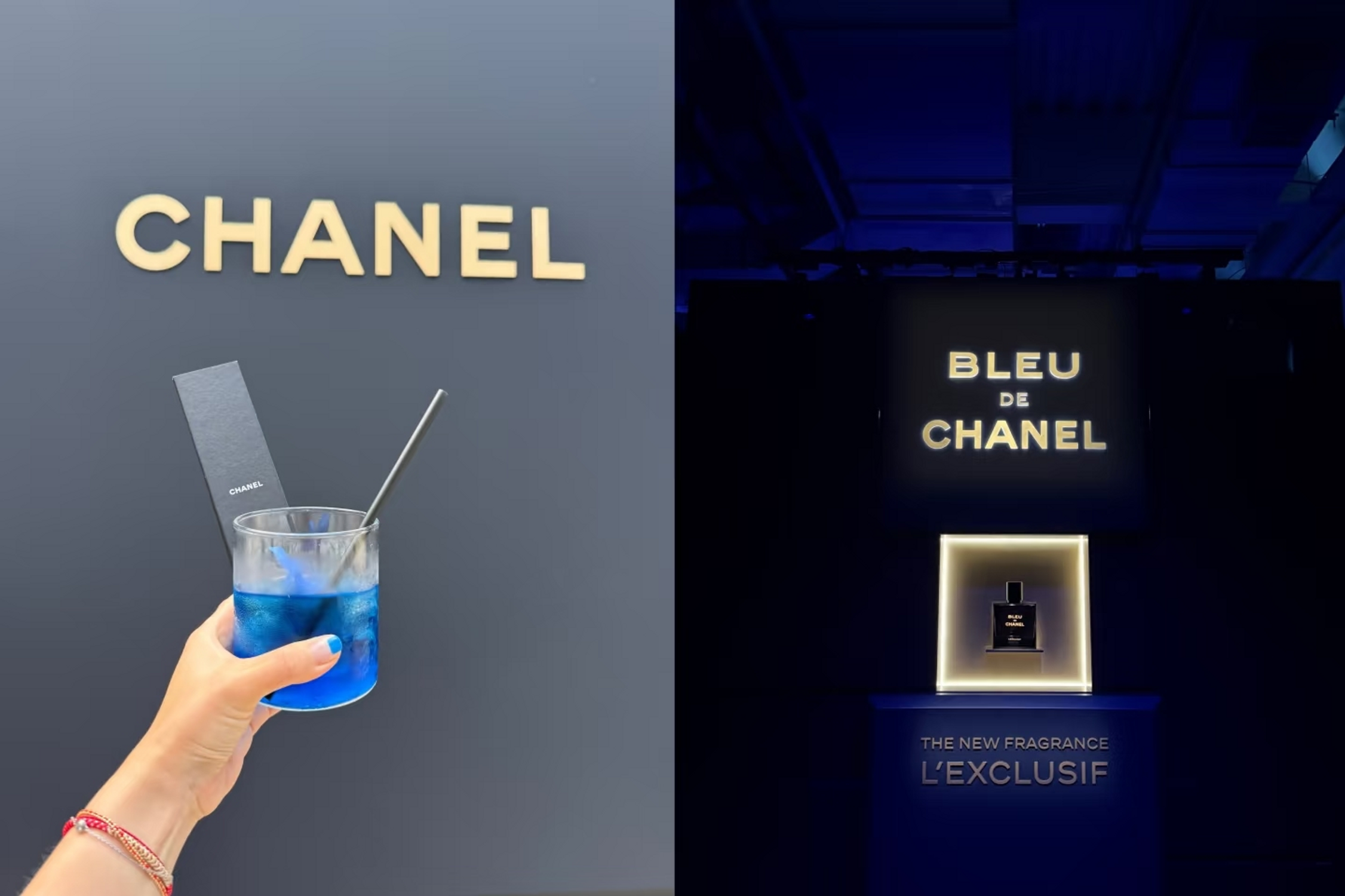
Beyond perfume, the event integrated music, touch, skincare, and beverages, while surreal blue interiors amplified the brand message. The experience extended outside the venue with a JZ Club concert and a “Listen to Bleu” series on NetEase Cloud Music.
Reservations were managed via the WeChat Mini Program, with sample distribution after the visit. The format fostered olfactory education, social sharing, and subtle recruitment, strengthening Chanel’s image in China’s booming fragrance segment.
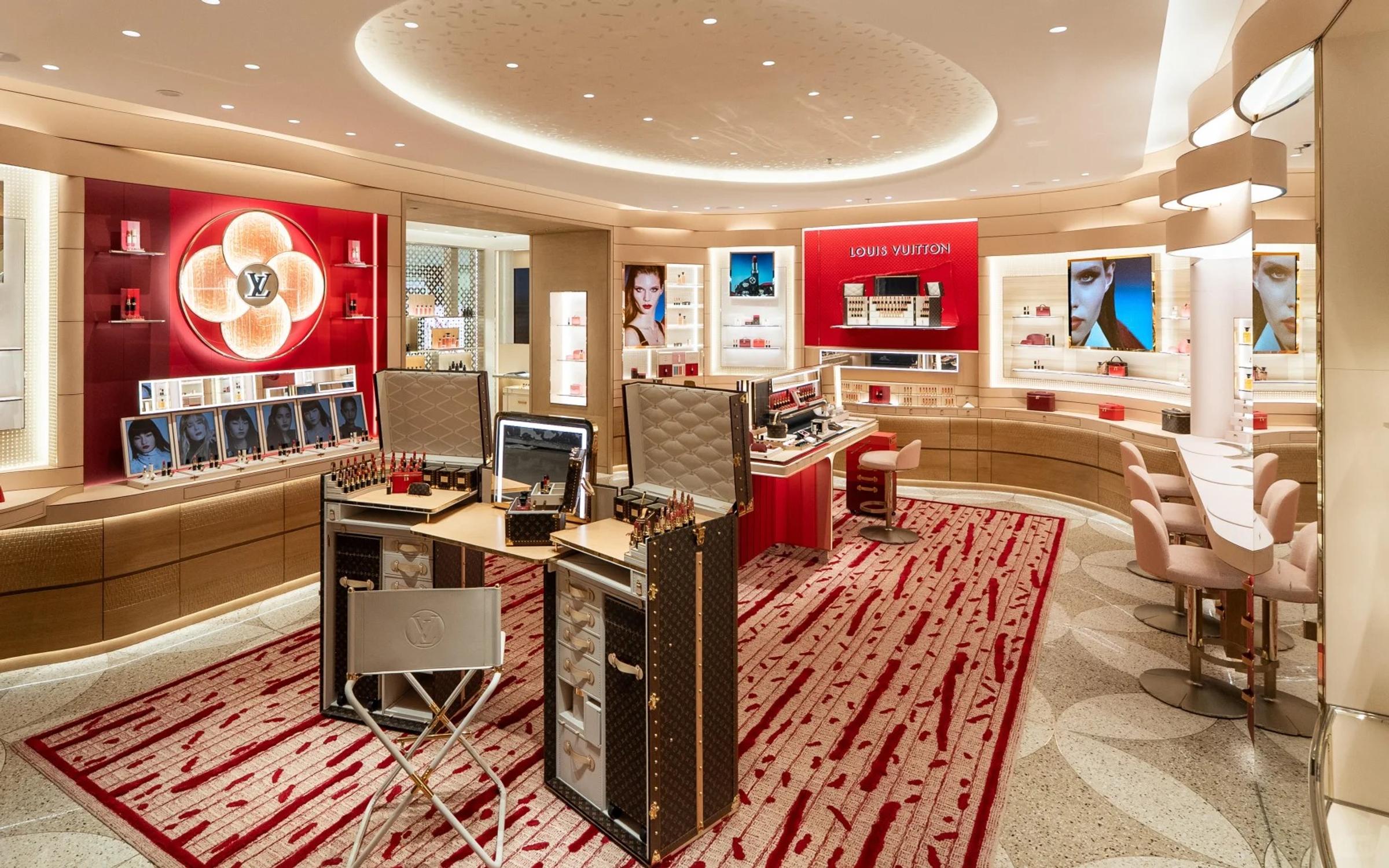
Louis Vuitton launched La Beauté exclusively in China, led by Dame Pat McGrath. The collection includes 55 lipsticks, 10 balms, and 8 palettes in “art object” packaging. The choice of Nanjing Deji Plaza, China’s most profitable luxury mall, reinforced the localization strategy and generated significant media buzz.
The opening of the first standalone beauty boutique at Deji Plaza illustrates LV’s China priority. This mall, a national luxury leader, offers direct access to a high-spending clientele.
Under Pat McGrath’s direction, La Beauté offers universal shades and skincare-infused formulas. Konstantin Grcic’s refillable cases are inspired by the Monogram flower; the range includes 55 lipsticks, 10 balms, and 8 palettes.
A campaign featuring Hoyeon was disseminated via social media, the LV website, mini-programs, and select retail. The launch sparked high engagement and debates around design and price.
Color cosmetics are becoming a pillar alongside fragrance, stimulating more frequent purchases and accessible entry into the LV universe. This China launch paves the way for gradual global expansion.
Burberry launched a three-step activation blending cultural heritage, celebrity storytelling, and gamified interaction to appeal to young Chinese audiences in its Qixi 2025 campaign. By introducing a heart-shaped logo inspired by Chinese knot traditions, unveiling a celebrity campaign film, and launching an interactive game on WeChat, the house strengthened emotional resonance while amplifying its festival presence.
In collaboration with Donghua University, Burberry reinterpreted its “B” monogram into a heart-shaped motif inspired by intangible Chinese knot art, while integrating the zodiac element of the Year of the Snake. This design highlighted traditional craftsmanship and positioned Burberry as a bridge between heritage and contemporary fashion.
An interactive WeChat game allowed users to create digital knots, blending tradition with modern engagement.