Editor’s Note
This article reports on the immediate stock market reaction to China’s new gold tax policy, highlighting significant share price declines for major retailers. The information is based on market data available at the time of writing.
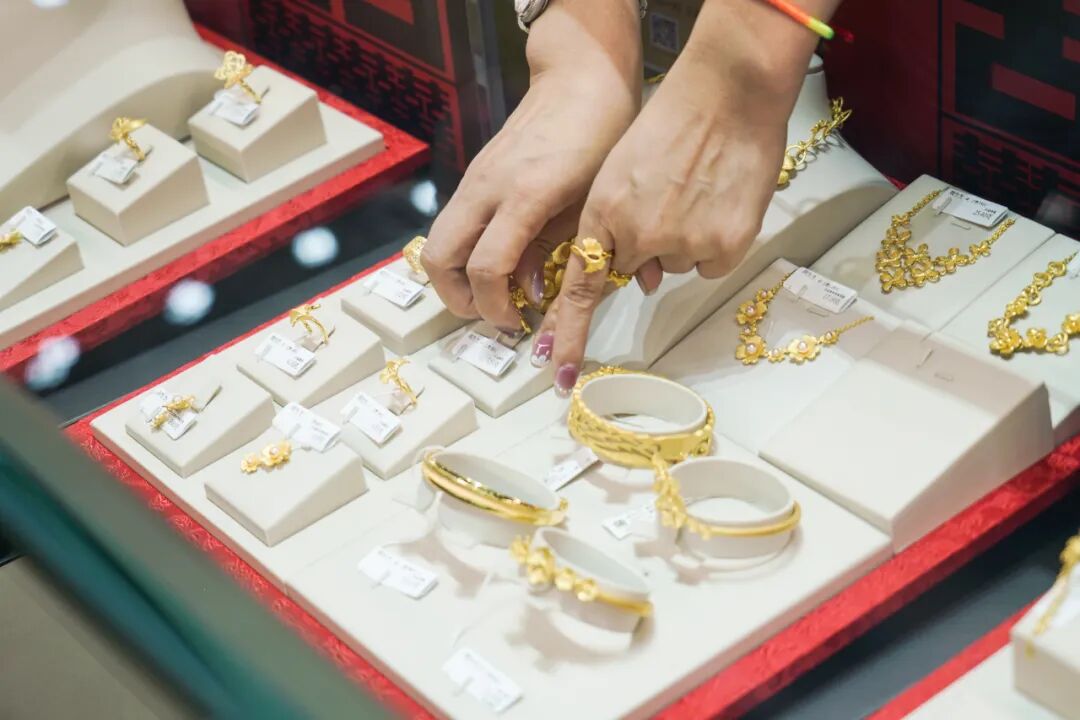
On the third day after the new gold tax policy was introduced, shares of multiple gold and jewelry retailers in mainland China and Hong Kong fell after Monday’s market opening. As of press time, shares of Chow Tai Seng (Chaohongji) on the A-share market fell nearly 10%, while shares of Chow Tai Fook Jewellery and Lao Pu Gold on the Hong Kong stock market dropped over 8%. Shares of Luk Fook Holdings and Chow Sang Sang fell more than 6%.
The “Announcement on Tax Policies Related to Gold” (hereinafter referred to as the “New Regulation”) jointly issued by the Ministry of Finance and the State Taxation Administration officially took effect on November 1, 2025, and will be implemented until December 31, 2027.
The new regulation stipulates that for member units or clients trading standard gold through the Shanghai Gold Exchange or the Shanghai Futures Exchange (hereinafter referred to as the “Exchanges”), the selling member unit or client is exempt from Value-Added Tax (VAT) on the sale of standard gold. For transactions without physical delivery out of the exchange warehouse, the exchange is exempt from VAT. For transactions involving physical delivery, the policy distinguishes between investment and non-investment purposes of standard gold, applying VAT policies accordingly: either a VAT refund-upon-collection policy, or a VAT exemption policy where the buyer calculates input tax based on a 6% deduction rate.
Against the backdrop of surging gold prices and booming high-end gold jewelry consumption, how this new regulation will affect domestic gold jewelry retailers and individual gold investment/consumption has become a focal point. The Shanghai Gold & Jewelry Trade Association provided further interpretation, stating that for both member units and non-member clients purchasing gold from the exchanges for non-investment purposes, the input tax deduction will decrease from 13% to 6%.
Zhao Lingyi, Chief Analyst of Retail and Social Services at Shenwan Hongyuan, told Jiemian News.
Citibank pointed out that in the worst-case scenario, this policy could lead to an approximately 7% increase in retailers’ gold procurement costs. Zhao Lingyi told Jiemian News that gold jewelry retailers are indeed facing the problem of an expanding cost price gap.
Currently, no major gold jewelry brand retailers have announced price adjustments due to the new regulation. Several listed gold jewelry companies, including Lao Miao Gold and Chow Tai Seng, told Jiemian News they are in specific operational communication with the Shanghai Gold Exchange and relevant tax authorities regarding the new rules. Whether it will ultimately affect pricing will depend on financial calculations.
Wu Qiong (pseudonym), a gold jewelry retailer at the Shuibei Gold & Jewelry Exchange, told Jiemian News. Many bosses in Shuibei are not member units of the gold exchange, and sometimes source gold raw materials from intermediaries. How this tax will affect such merchants still needs “time to digest.”
Pricing in the gold jewelry industry is significantly affected by fluctuations in raw material costs. Traditionally, the pricing model of real-time gold price plus processing fees and brand premium determines that changes in gold raw material costs will be transmitted to the consumer end within a certain period. Leading gold jewelry brands have always had stronger pricing power, and cost changes due to the tax reform will inevitably be reflected in product prices.
Implemented concurrently with the gold tax reform is the cancellation of the VAT exemption policy for polished diamonds. According to the latest announcement from the Ministry of Finance, the General Administration of Customs, and the State Taxation Administration, the 13% VAT preferential policy on diamond imports was abolished starting November 1, 2025.
Due to cost changes caused by both tax reforms, pure gold inlaid jewelry, which brands like Chow Tai Fook and Lao Pu Gold have been vigorously promoting in recent years, may bear the brunt of price increases by brand retailers. Zhu Guangyu, a senior diamond industry analyst, told Jiemian News that price increases among upstream diamond enterprises have already begun, and “it should extend to the consumer end relatively quickly.”
Investment bank Morgan Stanley pointed out that leading enterprises with strong pricing power like Chow Tai Fook and Lao Pu Gold are more advantageous under the current tax reform policies. However, how these leading enterprises manage consumer hesitation caused by price increases is also crucial, especially against the backdrop where retail pure gold prices have already exceeded 1,000 yuan per gram. Zhu Guangyu told Jiemian News that leading brands’ adjustments to product structure and marketing strategies during this period will affect consumer acceptance of their price increase strategies.
The gold and diamond tax reforms will also affect the secondary gold jewelry recycling market for a certain period. The liquidity of gold may be hindered due to tax issues. Zhu Guangyu also mentioned that due to weak terminal consumption of natural diamonds in recent years, the price increase caused by the tax reform seems to improve the profit margin of diamond goods.