Editor’s Note
The once-unassailable value proposition of diamonds is being reshaped by technology. As lab-grown alternatives become dramatically more affordable, they challenge traditional notions of luxury and investment, forcing a reevaluation of what gives a gemstone its worth.
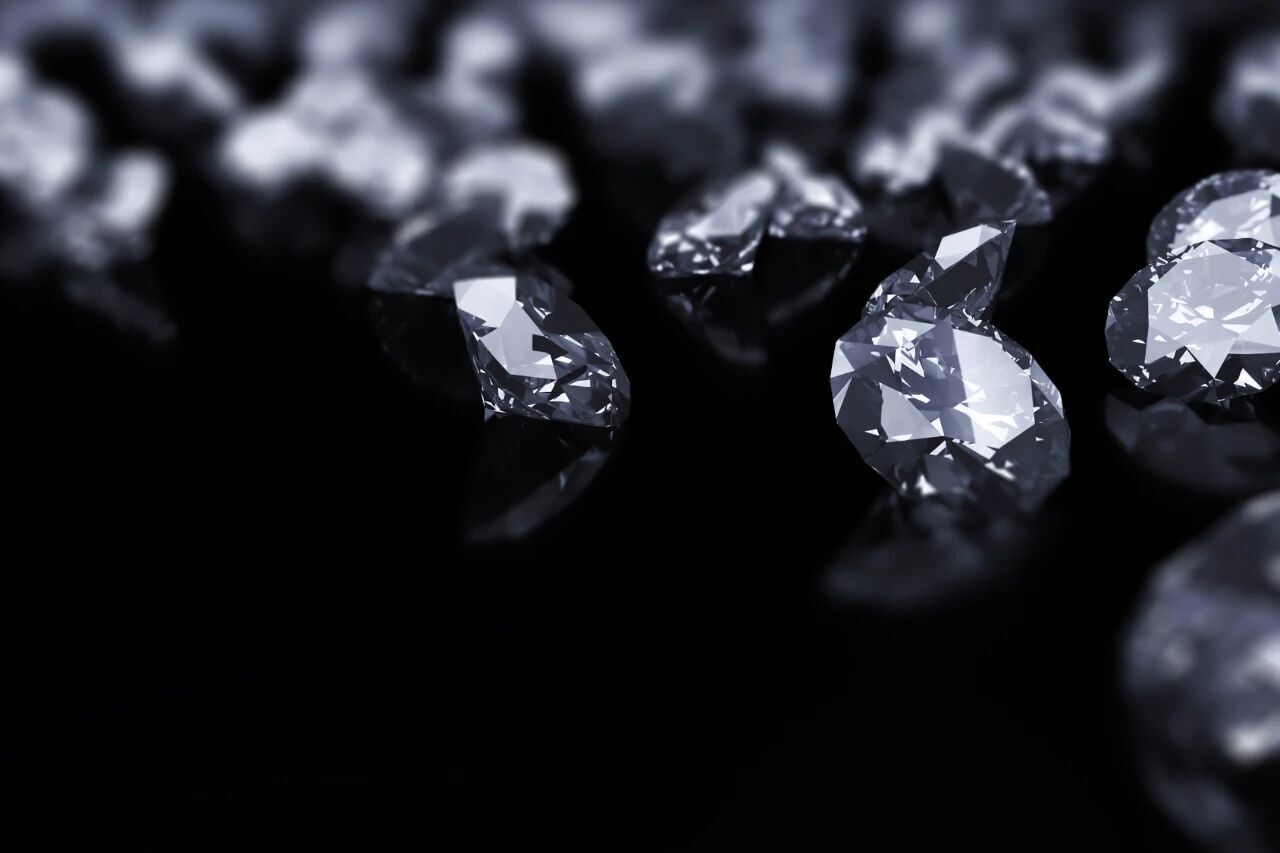
Diamonds, once prized for their high value, became an unattainable luxury in the eyes of many newcomers. In recent years, the price of lab-grown diamonds has continued to decline. Today, the price of 1-carat lab-grown diamonds has dropped from 8,000 yuan to 3,500 yuan, less than one-tenth of the price of natural diamonds of equivalent quality.
Natural diamond is the hardest substance in nature, while synthetic diamonds can also be formed through high temperature and high pressure processes. Currently, China’s lab-grown diamond industry leads the world in scale, with increasingly diverse downstream products. The “2024 China Gemstone Industry Development Report” mentions that, according to incomplete statistics, China’s lab-grown diamond output in 2024 was about 22 million carats, a year-on-year increase of 144.44%, accounting for 63% of global total production.
Data shows that in recent years, the retail price of lab-grown diamonds has fallen by more than 50% from its peak. In 2025, in the global diamond gemstone market, the sales share of lab-grown diamonds has exceeded 40%, an increase of more than 8 times compared to 2019.
A person in charge of a diamond store in Nanyang, Henan, indicated that in the past two years, lab-grown diamonds have advanced rapidly in the market. Young people now have high acceptance, and there are many designable styles for lab-grown diamonds.
It is understood that with the expansion of the market, lab-grown diamonds have formed a complete industrial chain domestically. In Fangcheng County, Henan Province, the local area has gathered 46 upstream and downstream enterprises of lab-grown diamonds, covering the entire chain from diamond seed cultivation and synthesis to cutting and processing.
Media reports indicate that a decade ago, a consumer spent over 100,000 yuan to purchase a 1-carat diamond ring. Today, she has inquired with multiple recycling shops and received a maximum valuation of no more than 30,000 yuan.
A woman from Anhui who spent 18,000 yuan to buy a diamond ring ten years ago shared on social media that she can now only get a 180 yuan buyback price, with a depreciation rate as high as 99%.
Another consumer who spent 14,000 yuan ten years ago to buy two wedding rings now cannot sell them for 200 yuan combined, bluntly stating, “Should have bought gold instead.”
A trader in the gemstone industry expressed that generally only large-carat (referring to one carat or above) natural diamonds are qualified for buyback. But at this point, people will find that those diamonds they spent a lot of money on earlier are actually not value-preserving. The general buyback practice is 40-60% of the original price, and the specific amount also depends on the color and brand of the item.
Regarding the reasons behind the recent sharp drop in diamond prices, industry insiders believe that consumers’ preference has shifted from diamonds to gold jewelry, along with a decrease in the number of weddings, which have both suppressed people’s demand for diamonds.
David Chu, Chief Executive Officer of the well-known diamond company Chow Tai Fook, stated that objectively observing the changes in the economic situation, consumers are gradually shifting from commodity consumption to service-oriented consumption. Therefore, the consumption of luxury goods categories, such as diamonds, has sharply declined.
There is also analysis stating that the sharp drop in diamond prices and the decline in market demand, especially the popularity and reduction in the cost of lab-grown diamonds, have decreased consumers’ demand for natural diamonds. Technological advancements have made the quality of lab-grown diamonds close to that of natural diamonds, but at a lower price, attracting more consumers, especially in daily jewelry consumption, seizing market share from natural diamonds.