Editor’s Note
As synthetic stones and origin fraud challenge global gem markets, Colombia is countering with a scientific solution. This article explores how a new $4 million laboratory aims to protect the integrity and value of Colombian emeralds through advanced certification.
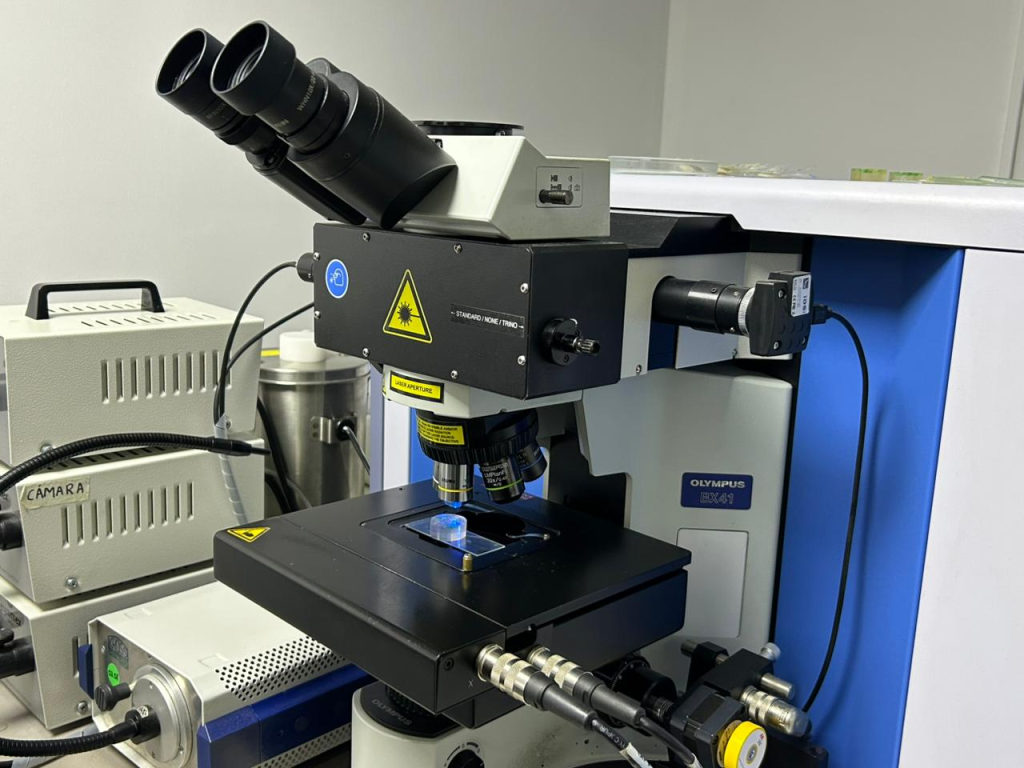
While origin fraud and synthetic stones threaten the market, Colombia responds with the most advanced gem laboratory in Latin America.
At a jewelry fair in Hong Kong, a buyer pays thousands of dollars for a “Colombian” emerald, but the stone comes from Zambia; and in another corner of the world, a U.S. laboratory creates in weeks what nature took millions of years to produce. Two scenes of the same threat to which the country responds with a decisive bet: science and innovation.
Fedesmeraldas invested US$4 million in state-of-the-art machinery to create the most advanced precious stone laboratory in Latin America, capable of accurately certifying the geographical origin of each emerald.
The goal: to shield the authenticity of Colombian gems and sustain the country’s leadership in a market that concentrates 85% of the world’s highest-quality emeralds.
With this technological foundation, Colombia not only seeks to protect its reputation but also to redefine the rules of the game. Origin fraud and synthetic emeralds threaten to dilute the value of “Colombian green,” but the country responds with science, innovation, and an expansion strategy that in less than two decades has channeled more than US$15 million in its own investment.
The laboratory operates as follows: when an emerald arrives for certification, its unique geological “signature” is analyzed.
Colombian emeralds form at low temperatures in sedimentary rock, while those from Brazil or Zambia grow in igneous rock. This fundamental difference makes Colombian emeralds have a brighter, more vivid green color with greater fluorescence.
But beyond color, each producing region in Colombia has detectable characteristics. Inclusions (small natural impurities), chemical composition, and even the way light interacts with the stone vary between zones. The laboratory can identify these differences with such precision that it already distinguishes between regions. The next, more ambitious step is to identify the specific mine of origin. If they succeed, it would be a unique standard in the global emerald market.
To train its algorithms, the center analyzes not only Colombian stones but also those from Zambia, Brazil, and Afghanistan.
Now, the technology exists, yes, but the challenge is commercial. If buyers do not demand certification (and many do not because they trust their suppliers or simply do not want to complicate transactions), fraud remains profitable.
Fedesmeraldas works with international buyers and jewelry houses to position certification as a market standard. The strategy is to convince buyers that certification is not a cost but an added value that protects their reputation. If this trend consolidates, it could change the rules of the game.
Meanwhile, another battle is being fought on a different front: synthetic emeralds. Laboratories in the United States and other countries manufacture gems in weeks, chemically identical to natural ones, at a fraction of the price and with an increasingly blurred differentiation.
The problem is that the market does not always think this way. Synthetic diamonds have already captured a significant portion of buyers, especially younger generations who prioritize price over origin. So the uncomfortable question persists: if a buyer cannot distinguish with the naked eye between a US$10,000 natural emerald and a US$500 synthetic one, why would they pay 20 times more?
Colombia’s response is to turn natural origin into a premium asset and not just a technical detail.
In this context, technological certification takes on another meaning: it not only proves that the stone is Colombian but also tells the story behind it. Which region it comes from, what makes it unique, why it is worth more. The laboratory generates a “passport” for each certified emerald that includes its complete analysis.
While Colombia strengthens its technological capacity, it is also rethinking its commercial strategy. The United States represented 70% of the export market because it functioned as a distribution center to the rest of the world. But trade tensions and increased tariffs have reconfigured that dynamic. Now the bet is direct: Asia.
In September, Colombia participated in two of the world’s most important jewelry fairs: one in Thailand and another in Hong Kong, moving between US$6 and US$7 million. Although the figure fell short of expectations, the signals were positive.
This dynamism confirms that the industry must look in that direction. That is why Colombia participates every year in three key fairs in the region where specialized buyers (Jewish, Indian, Chinese companies, and some designers) gather and markets are consolidated.