Editor’s Note
This analysis argues that the ongoing conflict stems not from diplomatic failure, but from an international system that incentivizes instability for strategic and economic gain.
The war is not a failure of diplomacy or peacekeeping; it is rather the success of an international system that rewards instability when it advances strategic and economic interests.
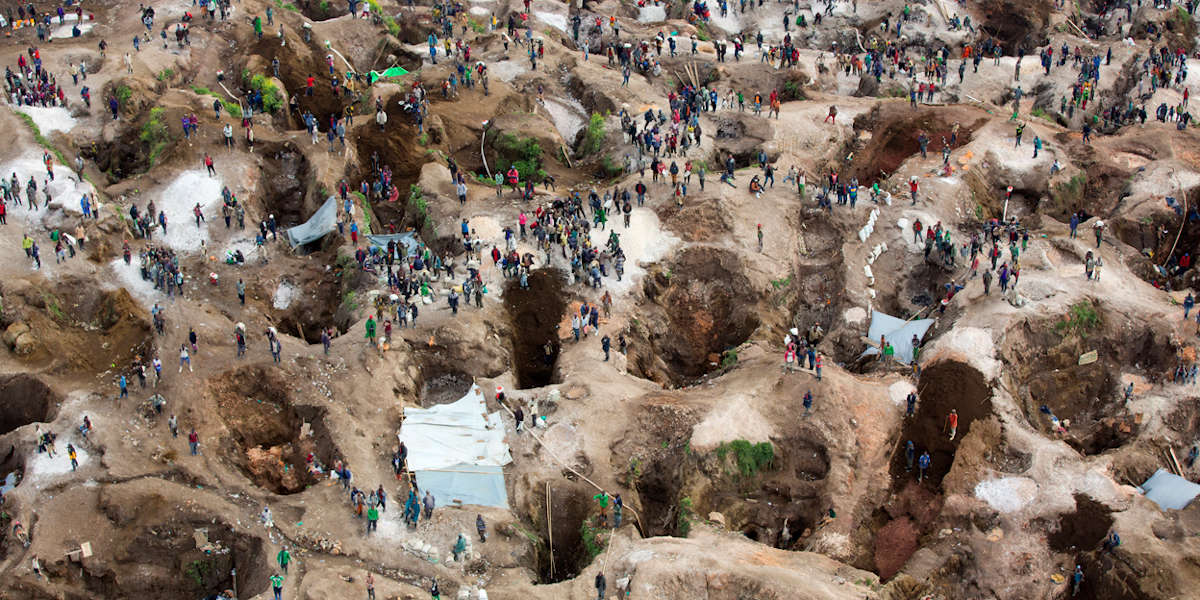
The eastern regions of the Democratic Republic of the Congo (DRC) have been for decades in a state of internecine conflict that has often peaked in open war. The conflict is driven by a profitable and complex network of actors, including local militias, neighboring nations, multinational technology firms, and emerging global powers, who exploit the DRC’s mineral wealth, including cobalt, coltan, and gold, which is essential to global industries like smartphones and electric vehicles. The conflict in the southern regions of the DRC has become an overlooked commodities hub in which violence remains cheap for those who wish to access conflict minerals at low cost and low levels of public scrutiny. The crisis in the DRC continues primarily because influential actors benefit economically and politically from ongoing instability.
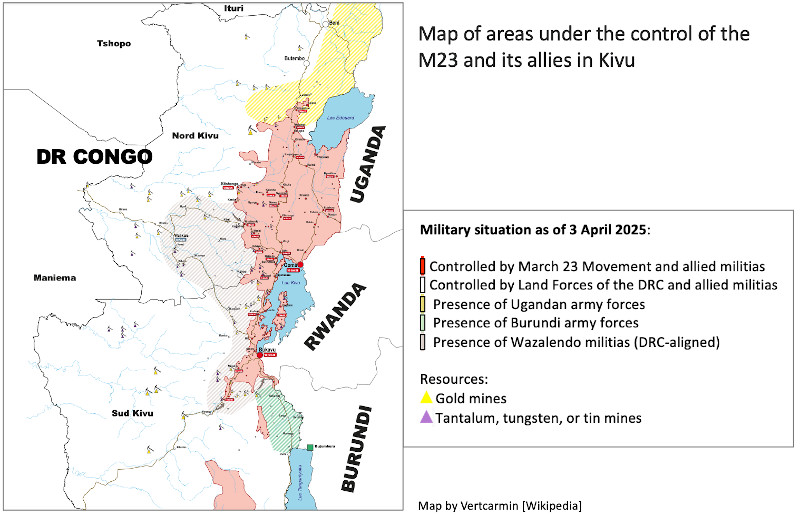
In recent months, eastern DRC has witnessed an escalation in violence, largely driven by the resurgence of the rebel group March 23 Movement, or M23. The rebel group has launched a series of offensive attacks since January 2025, capturing cities such as Goma, Bukavu, and Walikale. These attacks have resulted in thousands of deaths and displacements.
Today’s violence in eastern Congo, especially the rise of the M23 group, is rooted in the region’s long and complicated history of displacement and ethnic tensions. The Congolese Tutsis, known as the Banyamulenge, trace their origins to migrations from Rwanda as early as the 19th century. However, their presence grew during the late 20th century, especially following the 1959–1961 Rwandan Revolution, better known as the Hutu Peasant Revolt, and the 1994 genocide against the Tutsi; both episodes of violence triggered mass refugee movements into what was then Zaire. After the genocide, more than 1.2 million Rwandan Hutus, including armed Interahamwe militias, fled into eastern Zaire in the provinces of North and South Kivu, close to the Rwandan border, bringing with them instability and the seeds of regional conflict.
Rwanda’s new Tutsi-led government, under Paul Kagame, viewed these cross-border armed groups as a direct threat and decided, in 1996, to invade eastern Zaire with the argument of pursuing genocidaires, but also with the goal of eliminating refugee camps and securing control over the region. The invasion sparked the First Congo War, which later toppled Mobutu Sese Seko and installed Laurent-Désiré Kabila, who took power in 1997 with Rwandan and Ugandan support.
Relations soured quickly, however. Kabila later rebuffed Rwandan influence, and Rwanda and Uganda retaliated by supporting fresh rebel groups and triggering the Second Congo War in 1998. The conflict saw Rwandan and Ugandan troops again engaged in eastern DRC, taking territory and looting local resources. These incursions cemented the place of Tutsi military actors in Congolese terrain.
Therefore, the activities of Rwandan Hutu militias in the DRC, specifically the Democratic Forces for the Liberation of Rwanda (FDLR), a group made up of former genocidaires who fled Rwanda after 1994 and now operate in the DRC, and Rwanda-backed Tutsi rebels have fostered a long-standing ethnic and geopolitical rivalry.
The DRC has some of the most lucrative mineral deposits on the planet. It has over 70% of all cobalt reserves in the world, which are used for electric cars and smartphones, and up to 80% of all coltan reserves in the world, essential for the production of capacitors in nearly all electronics. Most of these reserves are in the Rubaya mining zone in the eastern DRC’s North Kivu region.
As the global economy increasingly shifts toward green technologies, control over cobalt and coltan has become geopolitically strategic. Congolese minerals are now needed by governments and companies to meet climate change objectives and keep consumers satisfied, but nobody wishes to examine how they are being acquired.
Despite international regulations and ‘conflict-free mineral’ certification schemes, tracking the true sources of minerals is all but impossible in eastern Congo. The minerals are sold to middlemen, smuggled across borders where they’re re-packaged as legitimate exports and sold to foreign companies. Once in global supply chains, corporations can invoke plausible deniability.
Even within Congolese institutions, corruption and collusion are widespread. Parts of the national army (FARDC) have been caught trafficking minerals themselves or selling arms to rebel groups. Peace is bad business, but continued conflict is good for all the actors who are making money under the table.
The March 23 Movement, known as M23, is a Tutsi-led rebel group that emerged in 2012 in the eastern DRC, and which is primarily active in the North Kivu province. The group was formed by former members of the National Congress for the Defence of the People (CNDP), itself a Rwandan-backed militia composed largely of Congolese Tutsis, many of whom had historical ties to Rwanda, as previously discussed.