Editor’s Note
This article explores the enduring fascination with diamonds, tracing their journey from a 15th-century royal betrothal to a modern symbol of commitment. Based on an Ipsos study for the Collectif Diamant, it examines how this gemstone maintains its allure in contemporary France.

From Marie of Burgundy to Lady Gaga, diamonds have traversed eras, always fascinating, but in the face of competition, they must continue to seduce. For the Collectif Diamant, Ipsos reveals the results of its study on diamond consumption and perception in France.
Before becoming the indispensable accomplice of modern engagements, the diamond had a trajectory worthy of a novel. It is said that in 1477, Archduke Maximilian of Austria gave Marie of Burgundy a ring set with a rough diamond. At the time, stones were neither faceted nor flamboyant, but they were already attributed virtues of purity and fidelity. The diamond, in its natural form, then embodied a promise carved in stone.
This story was traced by the Natural Diamond Council with journalist Marion Fasel in *The History of Diamond Engagement Rings: A True Romance*, a work that reminds us how natural diamonds, despite eras and styles, remain unbeatable.
Over the centuries, styles have succeeded one another and symbols have been enriched. In the Renaissance, diamonds were coated with enamel; at the 18th-century English court, Queen Charlotte rivaled in splendor by combining a wedding band and an engagement ring. As for Queen Victoria, she fell in love with a snake-shaped ring, a coded message from an animal then synonymous with eternity.
The real stroke of brilliance? It arrived in 1886 when Charles Lewis Tiffany invented the “Tiffany setting,” which puts the diamond on a pedestal. It was then looked at differently.
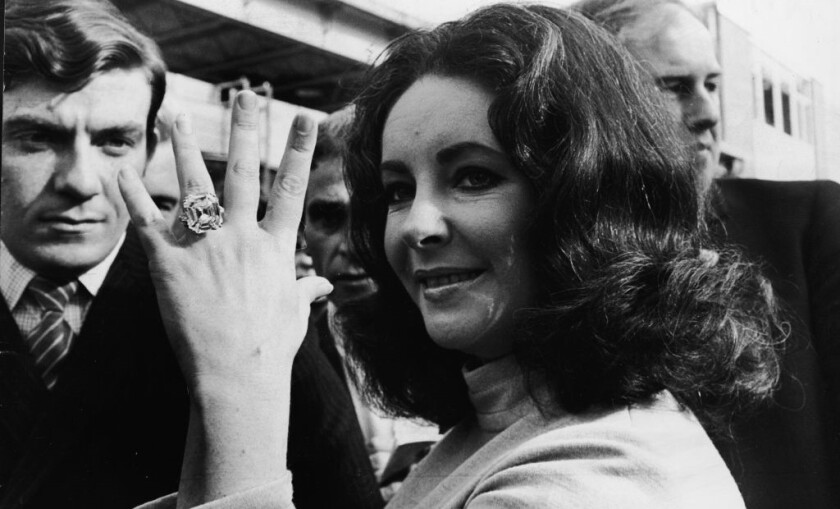
Since then, the diamond has made a career on the red carpet. From Elizabeth Taylor’s impressive 33.19-carat diamond to Jennifer Lopez’s rare green diamond and Lady Gaga’s oval diamond seen at the 2024 Mostra, it adapts, plays with shapes, colors, and above all, personalities. Now, every star (or almost) has their signature diamond.
Today, it is no longer automatically associated with the stereotypical image of a suitor on one knee. In 2025, the diamond also slips into a solo setting, chosen by a woman to celebrate a new beginning, or by a young man to honor a promotion. Less and less coded and more personal.
According to the Ipsos study conducted for the Collectif Diamant on 1,000 French people, 40% of respondents own a diamond and, while rings remain the most prized pieces, the purchasing dynamic has changed. The loving gesture remains central, but personal pleasure is gaining ground with 41% of women aged 25 to 59 buying for themselves. Far from any old-school protocol.
And yet, the diamond must convince. 62% of non-buyers cite a prohibitive price. Some also fear theft, others fear buying a fake or wearing jewelry that is too “ostentatious” or not “lifestyle” enough.
The stone divides but intrigues. 65% of higher socio-professional categories (CSP+) still say they are attracted to it, and among 25-34 year olds, interest skyrockets. Some also see it as an investment, with the diamond as a good investment. Among young men in particular, symbolism sometimes gives way to a more patrimonial logic: 1 in 10 say they are ready to spend more than €10,000 for an exceptional piece.
But here again, competition comes from elsewhere. When CSP+ individuals have to choose how they would like to treat themselves with a significant sum, custom travel and exceptional stays come first. The diamond seduces 37% of respondents. It competes less with other jewelry than with experiences and lived moments. It must therefore offer one itself.

And that’s where it stands out. The purchasing experience has become as important as the jewel itself. Independent jewelers seduce with their human and bespoke approach, capable of engaging the consumer around the rarity and authenticity of natural diamonds, which remain, after all, the reference choice. The great houses, for their part, embody the dream, the ceremony, and the expertise. The diamond is no longer a simple luxury object; it embraces the new codes of desire, with a memory to build and a story to tell.