Editor’s Note
The luxury sector, long considered immune to broader economic cycles, is showing signs of strain in 2024. This article examines whether the current slowdown is a temporary dip or the start of a deeper market transformation.
A Shift in Momentum
Luxury has always seemed to evolve sheltered from economic crises. However, in 2024, signs of weakness have appeared. Iconic brands, accustomed to insolent growth, have seen their sales slow down. Should this be seen as a simple temporary dip or the beginnings of a more profound upheaval in the market?
For decades, luxury has thrived by relying on a well-oiled model: rare and desirable products, a loyal international clientele, and powerful storytelling. This mechanism accelerated after the Covid-19 pandemic, with a genuine post-crisis craze. Between 2021 and 2023, consumers rushed to buy luxury items, leading to record sales increases and spectacular financial results.
But this boom could not last forever. In 2024, the situation is changing. The purchasing power of Western consumers is being severely tested by inflation and increased economic uncertainties. Priorities are shifting: spending on travel and diverse experiences is taking precedence over the purchase of material goods. In China, once the engine of the sector, a new approach is emerging. Faced with political pressures and an evolution in mindsets, ostentatious consumption is gradually fading in favor of more discreet luxury.
Expert Analysis: An Adjustment, Not a Crisis
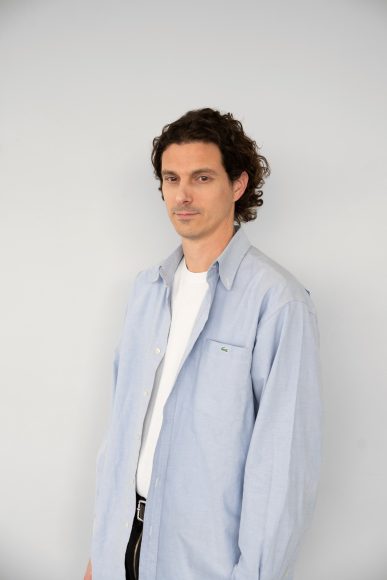
So, is the sector seeing a simple correction after years of euphoria, or are we witnessing a deeper transformation of its economic model? To decipher these changes and understand the sector’s future prospects, Franck Delpal, a professor at the French Fashion Institute (IFM) and a luxury economist, author of the book “Économie du luxe,” analyzes the dynamics shaping this industry, from the evolution of purchasing behaviors to the strategies of the major houses.
After years of exceptional growth, the luxury market is experiencing a slowdown. Can we speak of a crisis?
“If we base ourselves on the sector’s usual growth rates, which are around 4 to 5% per year, the current growth of 2% may seem weak. We are clearly below usual performance, but we must put this into perspective. These figures remain positive and are based on extremely high historical bases, notably the record years of 2022-2023. We are more facing an adjustment than a real crisis.”
Explaining the Slowdown
What explains this market slowdown?
“The post-Covid period was marked by an exceptional luxury boom, largely due to forced savings and what is called ‘revenge shopping’: consumers, frustrated by lockdowns, spent massively on luxury. Some companies experienced double-digit growth, sometimes beyond 20 or 25%, which is difficult to sustain in the long term. A return to normal was inevitable. Furthermore, there are changes in consumer behavior. Behind the numbers, we also perceive cultural evolutions and adjustments in the way luxury is consumed, which can be more interesting to observe than the mere financial performance of the groups.”
Impact on Major Groups and Desirability
Does the drop in sales really impact the major groups?
“No, not really. Even if the operating result decreases slightly, it remains extremely positive. We are talking about companies that continue to make a lot of money. Take the example of Gucci: the brand is experiencing a slowdown, but it remains an extremely profitable company. The leaders of the sector, like LVMH, Kering or Hermès, are not to be pitied. They continue to generate very high margins and invest in their development. The challenge is more on the side of the brands themselves, which must preserve their desirability and adapt to the expectations of an evolving public.”
Has luxury lost its desirability?
“That’s a risk, yes. Some brands may have smoothed their image too much, seeking to be efficient and optimize their ranges, to the detriment of originality and boldness. However, what makes customers dream is precisely surprise, emotion, the unexpected. When products become too predictable, consumers turn away. We see this with collections that are sometimes perceived as reinterpretations of existing models. If innovation and creativity are not present, some customers may wonder why buy a new bag that looks like the one they already own.”
Leadership Changes and the Chinese Market
We are currently observing significant turnover of artistic directors and leaders in luxury houses, both in fashion and jewelry. Is this a response to this challenge?
“Yes, in part. There have always been cycles in fashion and luxury, and after several years under the direction of the same creator, some houses feel the need for a new breath. The designer ‘mercatto’ is not necessarily a sign of crisis, but rather a desire to renew the codes, refresh the image of brands and capture consumer attention. Luxury houses must remain in tune with their time. This does not mean they deny their history, but they seek to offer a modern reading of their heritage to seduce new generations of customers.”
The Chinese market plays a key role in the luxury industry. How is it evolving?
“China has long been the engine of luxury growth. Chinese consumers accounted for nearly 35% of global purchases, and between 2019 and 2023, the market doubled. But today, we are observing a marked slowdown. On the one hand, the Chinese government promotes a ‘common prosperity’ policy, which encourages more discreet consumption and curbs ostentatious purchases. What is called ‘luxury shaming’…”