Editor’s Note
This report highlights the projected growth of the global silver jewelry market, driven by silver’s affordability and versatility. The figures underscore its enduring appeal in the fashion and accessories sector.
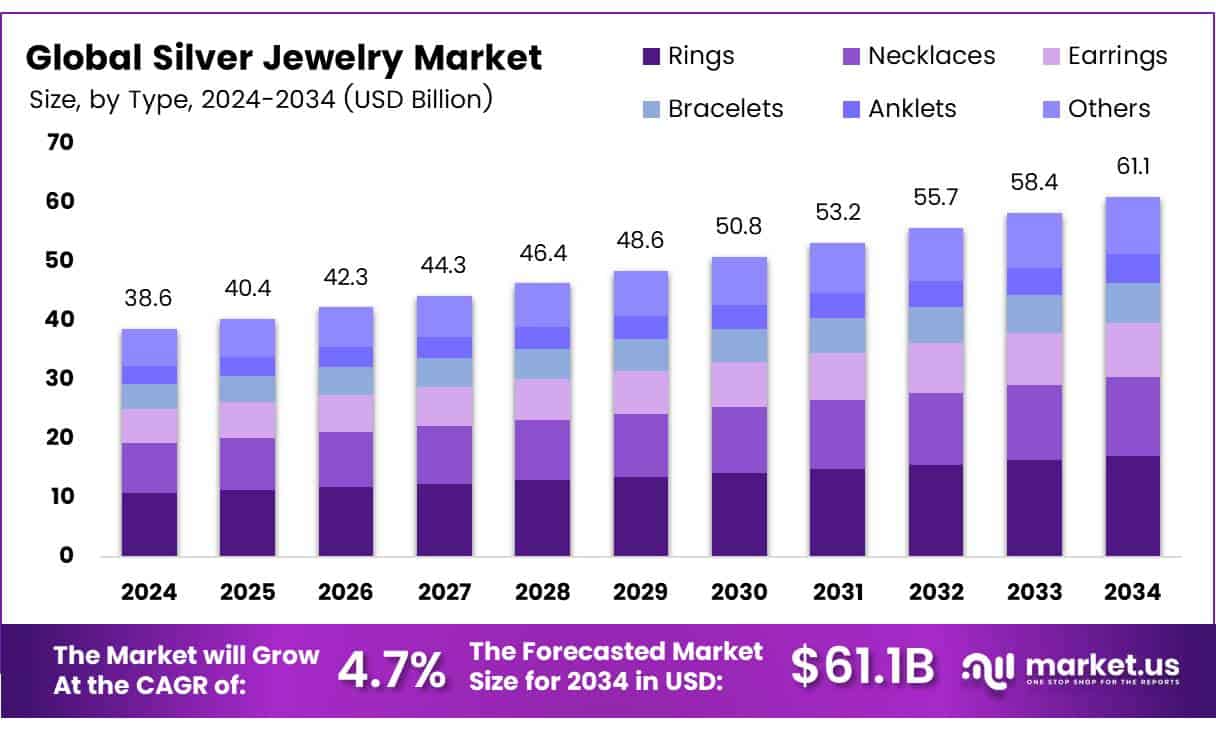
The Global Silver Jewelry Market size is expected to be worth around USD 61.1 Billion by 2034, from USD 38.6 Billion in 2024, growing at a CAGR of 4.7% during the forecast period from 2025 to 2034.
Silver jewelry refers to accessories made primarily from silver, a precious metal, often in combination with other materials like gemstones, enamels, or other metals for design and functionality. Silver’s natural luster, malleability, and affordability compared to gold make it a popular choice in the fashion and luxury goods industries.
The silver jewelry market refers to the commercial sector involved in the design, production, and sale of silver-based accessories. This market is influenced by global trends in fashion, shifts in consumer behavior, and fluctuations in the price of silver.
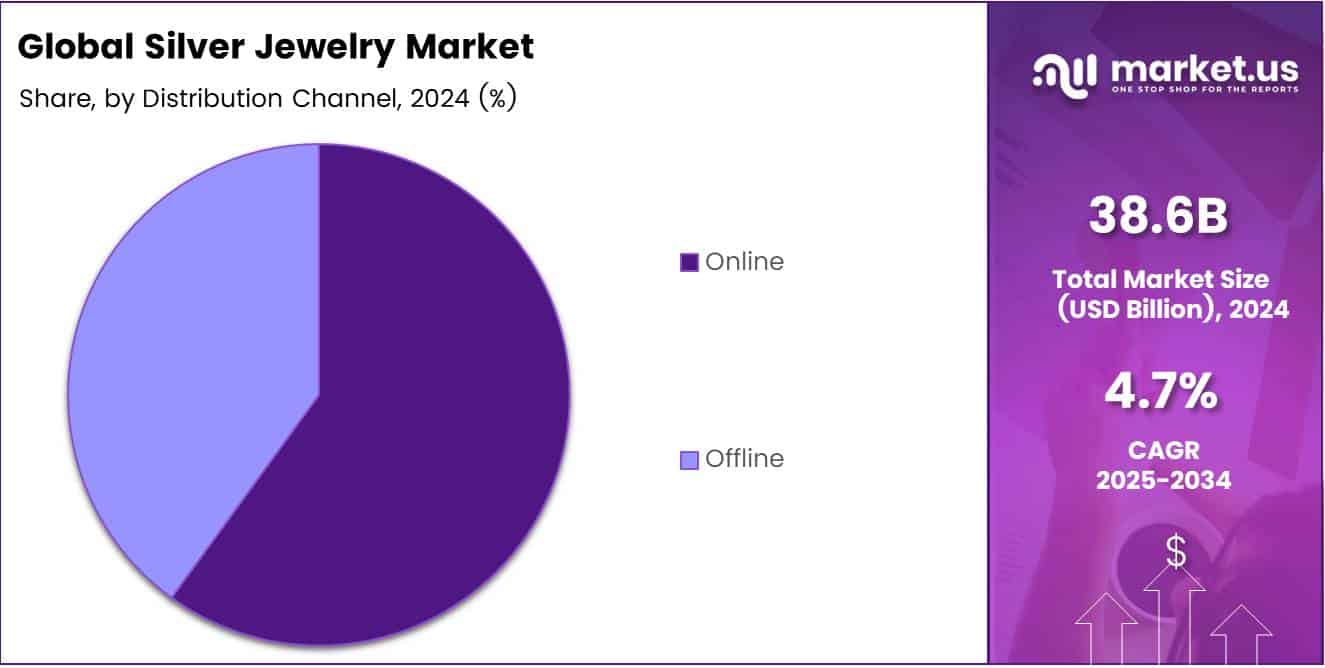
The silver jewelry market spans both retail and online sales channels, serving a broad demographic that includes different age groups, income levels, and geographic regions. As of recent reports, silver jewelry has emerged as a key segment within the broader global jewelry industry, with increasing interest driven by its aesthetic appeal and relatively lower price point compared to gold or platinum jewelry.
The silver jewelry market is seeing robust growth, largely driven by increased consumer demand for affordable luxury. According to the Silver Institute, 61% of retailers increased their silver jewelry inventory by 21% on average in the United States, indicating a growing interest in this segment.
Additionally, silver accounted for 28% of unit sales and 19% of dollar volume in jewelry stores, underscoring its popularity among consumers. The market is particularly thriving among younger buyers, with the 20-40 age group representing the highest percentage of silver jewelry purchases. This demographic seeks fashionable yet affordable accessories, making silver an attractive choice. Furthermore, silver jewelry’s versatility, durability, and ease of customization are also contributing factors to its increasing popularity.
As more people in these areas gain financial stability, demand for silver jewelry is expected to rise significantly. Another growth avenue lies in the rising consumer preference for sustainable and ethically sourced products. With more buyers becoming environmentally conscious, silver jewelry brands that use recycled or ethically sourced materials have the chance to attract a dedicated consumer base that values responsible production practices.
Another trend making waves is the rise of layered jewelry, where silver is used to create stackable rings, layered necklaces, and multiple bracelets. This trend allows consumers to express individuality through versatile and customizable pieces.
Government investment in mining and silver production has been pivotal in meeting the growing demand. According to the U.S. Geological Survey (USGS), in 2023, the United States produced approximately 1,000 tons of silver, valued at around $760 million.
Moreover, regulations around mining practices, particularly environmental concerns and fair labor practices, are becoming more stringent. These regulations, while important for sustainability, can also impact production costs, which in turn affect jewelry prices. However, the rise in search interest for silver jewelry—such as a 300% month-on-month increase in search activity for silver jewelry—demonstrates that demand remains strong.
The growing popularity of silver jewelry can also be attributed to a shift in consumer preferences. A report from BlackTreeLab reveals that 87% of people regularly wear earrings, 64% wear necklaces, and 47% wear bracelets daily.
These statistics illustrate the high demand for versatile, daily-use silver jewelry. Additionally, data from the Silver Institute shows that searches for silver jewelry have been climbing steadily, with a 58.5% rise in searches for silver earrings and a 39% increase in searches for silver necklaces.
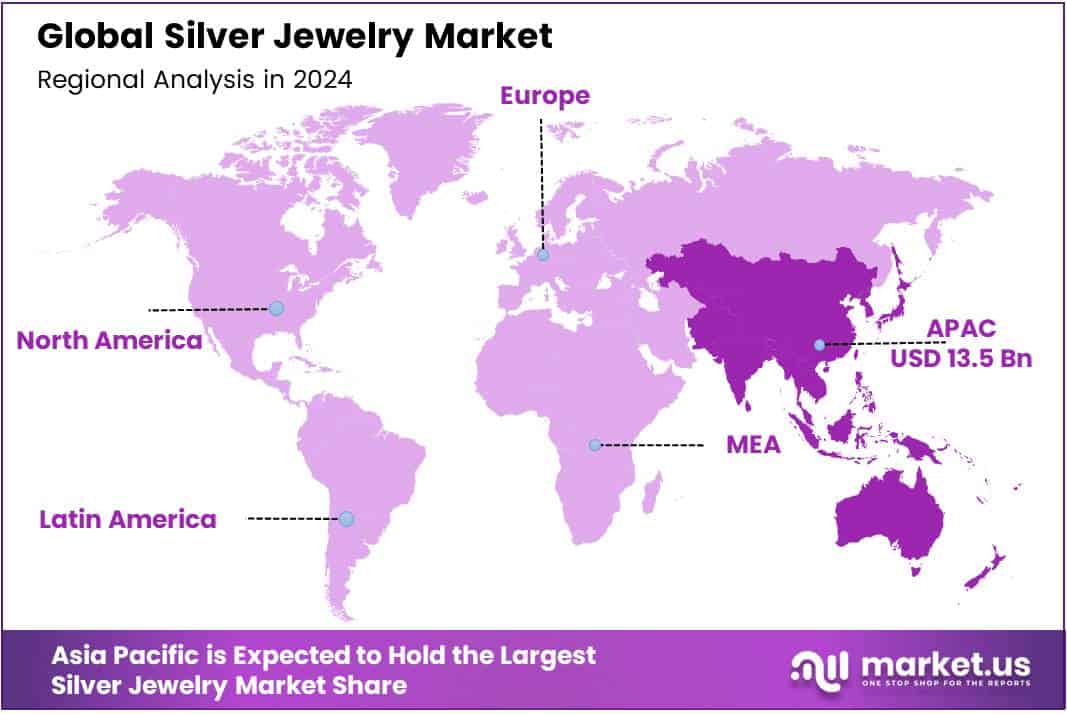
Global Silver Jewelry Market is projected to reach USD 61.1 billion by 2034, growing at a CAGR of 4.7%.
Rings dominate the Silver Jewelry Market, driven by engagement rings, wedding bands, and fashion rings.
Sterling Silver leads the material segment due to its high purity, durability, and wide consumer appeal.
Everyday wear holds the largest share in the application segment, driven by demand for versatile, durable pieces.
Women account for the largest share in the gender segment, with a wide range of styles and designs.