Editor’s Note
This article highlights a notable diplomatic development amid ongoing trade tensions. The reported silence from New Delhi underscores the complex and evolving dynamics in international relations, where economic policies can reverberate far beyond their intended scope.
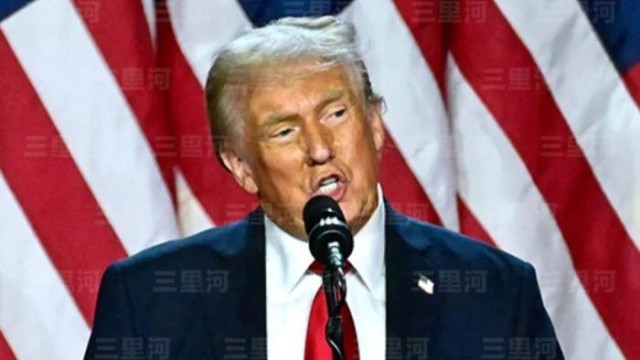
Recently, a piece of international news has attracted widespread attention: within just a few weeks, Indian Prime Minister Narendra Modi has refused to answer phone calls from US President Donald Trump four times.
This unusual “diplomatic move” comes as trade tensions between the two countries continue to escalate due to the US imposing additional tariffs on Indian goods. So far, Washington and New Delhi have not made any formal response.
According to a warning from the US Department of Homeland Security, starting from 00:00 US Eastern Time on August 27, the US’s 50% additional tariff measure on Indian goods officially took effect.
The introduction of this policy stems from two rounds of executive orders previously issued by the Trump administration.
On August 6, US President Donald Trump signed an executive order, citing India’s “direct or indirect import of Russian oil” as a reason, to impose an additional 25% tariff on Indian products exported to the US. The announcement stated that, except for some exceptional circumstances, the new tariff measure would be implemented 21 days after the executive order was published.
Combined with another executive order signed by Trump on July 31, the 25% base tariff and this 25% additional tariff merge to form a total tariff rate of 50%.
Foreign media analysis suggests that the core purpose of this additional tariff is to force India to adjust its energy policy towards Russia through economic pressure. This unilateral tariff increase is not only “precision pressure” but also casts a shadow over global trade. How will India respond, and can it make the US’s “calculations” backfire?
According to reports from *The Indian Express*, starting from August 27, the US’s comprehensive 50% tariff on Indian goods will directly lead to a “severe recession” in India’s export industry.
Analysis generally believes that India’s labor-intensive industries will be the first to bear the brunt, including textiles and apparel, gemstone and jewelry, leather products, carpets, and home furnishings. Exports of related products may plummet by about 70%, threatening thousands of jobs; while some sectors are temporarily exempt from direct impact due to policy exemptions.
On one hand, India’s heavy-industry sectors, which are at the “center of the storm,” are facing the dual pressure of profit compression and supply chain disruption:
· Textile and apparel industry – As a pillar industry supporting India’s labor-intensive sector, it is highly dependent on the US market. The 50% tariff will directly erode profit margins, leaving little room for relief.
· Gemstone and jewelry industry – Industry associations have warned that high tariffs could trigger supply chain disruptions, and overall export scale will shrink significantly.
· Seafood processing industry – India’s largest category of seafood exports will be severely hit in the US market.
· Carpet handicraft industry – Traditional small and micro industries are difficult to withstand the impact of falling demand.
· Home furnishings manufacturing industry – Highly price-sensitive, competitiveness in the US market will be greatly weakened.
On the other hand, for sectors in India that are temporarily exempt from tariffs, the exemption is not a “sure thing,” and subsequent hidden worries have not dissipated:
· Pharmaceutical industry – Currently still enjoys tariff exemption, but Trump has explicitly threatened that if US-India disputes escalate, a 200% tariff will be imposed on this sector.
· Electronics and IT hardware – Benefiting from strong US market demand for related products, they have not been directly impacted by tariffs in the short term.
· Petroleum products – Maintain tariff exemption status, but the industry needs to be wary of potential risks from international oil price fluctuations and subsequent policy adjustments.
The latest report from the Global Trade Research Initiative (GTRI), an Indian think tank, predicts that affected by this, India’s exports to the US will drop from $87 billion in the 2025 fiscal year to $49.6 billion in the 2026 fiscal year; about 66% of goods exported to the US will be impacted by tariffs.
The British Broadcasting Corporation (BBC) also quoted trade expert opinions, stating that the 50% high tariff is almost equivalent to a “market ban” for India’s main export goods such as ready-made garments, leather, and gemstone jewelry.
Can India withstand it?
Action one: As the leading party in responding to the tariff impact, the Indian government is taking a two-pronged approach, focusing on policy adjustment and market expansion.
To mitigate the tariff impact, the Indian government has taken the lead in introducing countermeasures, including temporarily suspending import tariffs on some raw materials, while accelerating trade negotiations with other countries in an attempt to expand non-US export markets.
Action two: At the diplomatic level, India has taken a tough stance. Foreign Minister S. Jaishankar clearly stated that US-India trade negotiations are still advancing, but India “has a bottom line that must be adhered to,” and will prioritize protecting the interests of its own farmers and small businesses. All decisions are based on national interests; Indian Ambassador to Russia Venkaiah Naidu further stated that despite facing US pressure, India will continue to purchase Russian oil.
Action three: Indian companies have also taken practical actions.
According to *The Economic Times* of India citing informed sources, state-owned oil refining enterprises such as Indian Oil Corporation and Bharat Petroleum Corporation have planned to temporarily stop purchasing Russian crude oil spot purchases in future procurement cycles until the government gives clear instructions.
In addition, Indian media analysis said that against the backdrop of “increasingly tense US-India strategic relations,” India has partially suspended purchases from the US military. This move may weaken the cohesion of the US-Japan-India-Australia “Quadrilateral Security Dialogue (QUAD)” mechanism.
Will it add to global trade troubles?
Regarding the deeper purpose of imposing additional tariffs, US Vice President Mike Pence bluntly stated in an interview with NBC News that the Trump administration’s implementation of “coercive economic statecraft” – including the “tiered tariff system” against India – has the core goal of “weakening Russia’s ability to profit from the oil economy,” ultimately forcing Russia to agree to a ceasefire agreement with Ukraine.
Pence emphasized that the essence of this set of “combined” economic sanctions is to cut off the “source of funding for Russia’s war machine” to achieve the purpose of pressuring Russia.
It is worth noting that some US media have pointed out that the US’s practice of “weaponizing” tariffs is causing concern in many countries.
This behavior of using unilateral sanctions to pressure other countries may not only disrupt existing trade rules but also accelerate the fragmentation of the global trade system – countries may rebuild regional trade networks to avoid risks or be forced to do so, leading to further division of global industrial and supply chains.