Editor’s Note
This article outlines the immediate economic implications of the U.S. tariff announcement on India. The move signals a significant shift in trade policy, with potential repercussions for global supply chains and bilateral relations.
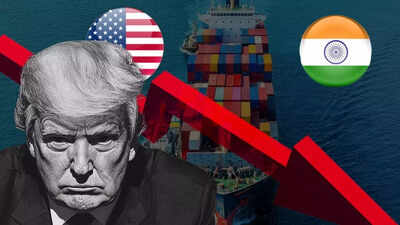
US President Trump has announced a 25% tariff on Indian exports, effective August 1, impacting sectors like electronics, pharmaceuticals, and jewellery. Trump criticized India’s tariffs as “among the highest in the World” and hinted at penalties related to Russian energy purchases. This decision challenges India’s trade expectations, potentially affecting 10% of its exports and disrupting key industries.
India’s expectations for favourable treatment compared to regional competitors, seem to have dimmed for now despite being one of the earliest nations to initiate trade discussions with Washington. For comparison, Vietnam faces 20% tariffs, Indonesia 19%, and Japan 15%.
According to a Bloomberg report, internal Indian calculations suggest that if tariffs exceed 25%, approximately 10% of total Indian exports would be affected from July to September. The bilateral trade between India and the US reached $129.2 billion in 2024.
The higher than expected rate is expected to impact various sectors including electronics manufacturing, generic pharmaceuticals, jewellery and automotive components.
Government-owned refineries including Indian Oil Corp Ltd., Bharat Petroleum Corp Ltd. and Hindustan Petroleum Corp Ltd., alongside private sector companies such as Reliance Industries Ltd. face potential adverse effects from the implementation of new tariffs.
Reliance had established an agreement to purchase up to 500,000 barrels daily from Russia in the current year, positioning itself as India’s primary importer of Russian crude.
The newly imposed tariff has raised serious concerns, said India’s Gem and Jewellery Export Promotion Council in a statement late Wednesday, calling it a “deeply concerning development” that risks disrupting vital supply chains and endangering numerous jobs, particularly affecting the gems sector “severely impacted”.
India has emerged as the leading supplier of smartphones to the US market, surpassing China, following Apple Inc.’s decision to increase iPhone assembly operations in the South Asian nation. However, this position could become vulnerable due to the recent tax implementation.