Editor’s Note
This profile highlights the work of Dr. Arvind Virmani, a key architect of India’s economic reforms. His career exemplifies how research-driven policy advice can bridge theory and practice to shape national growth.
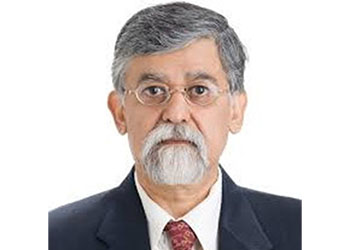
Dr. Arvind Virmani is a Member of NITI Aayog. He is an expert in policy and institutional reforms for sustainable, rapid, and inclusive economic growth.
He is a macroeconomist who has bridged the gap between academia, think tanks, and policymakers through research-based policy advice and policy-oriented research. He played a key, professional, and advisory role in the economic reforms of the 1990s and 2000s, such as tax, tariff, foreign exchange, financial sector, and expenditure policy reforms.
He was the Founding Chairman of the “Foundation for Economic Growth and Welfare” (EGROW) and Chairman of the Forum for Strategic Initiatives (FSI, Delhi). Previously, he served as Executive Director at the IMF, Chief Economic Advisor in the Ministry of Finance, and Principal Advisor in the Planning Commission.
He was the Director and Chief Executive of ICRIER and has published over 60 journal articles, books, and chapters, and over 100 working papers and policy papers in macroeconomics, development, tax and tariff reform, foreign exchange, international relations, and national security strategy.
He has been a member of TRAI, an advisor to FICCI (Public Policy & Economics), and a member of the RBI’s Technical Advisory Committee on Monetary Policy.
His experience in the financial sector includes: Chairman of the Trustee Board of SBI Mutual Fund, Director of LIC, Member of the SEBI Appellate Tribunal and the Depositories Act, Member of the Trustee Board at UTI, and Director at PNB, Allahabad Bank, and Exim Bank.
His think tank experience includes: Member of the Board of Governors at CPR and RIS, Non-Resident Senior Fellow at the Brookings Institution, USA, Affiliate Professor and Distinguished Senior Fellow at George Mason University, USA.

Customs Tariff Reform: Strategy, timing, and phasing of tariff reduction from a peak of 300 percent in 1990 to 10 percent by 2002.
Income Tax Reform: Simplification of personal income tax rates into a three-slab system with a highest slab of 30 percent and fewer exemptions.
Corporate Tax Reform: Simplification and reduction of the maximum rate.
Indirect Taxes: Conversion of the Central Excise Duty system into Central Value Added Tax (CENVAT), and initiating the creation of a National VAT, later named GST.
Trade Reform: Design and phasing of trade liberalization strategy from the perspective of the Ministry of Finance (Department of Economic Affairs, Department of Revenue). Phasing trade liberalization progressively from intermediate goods to capital goods and then to consumer goods. Phasing the current account from the trade account to the current account.
Capital Account: Phasing from FDI to equity (NRI, FII) then from long-term debt to medium-term debt.
Foreign Exchange Reform: Moving from a controlled and managed foreign exchange system to a dual exchange rate and from there to a unified, but managed exchange rate. Replacement of existing laws by a comprehensive new Foreign Exchange Management Act.
Liberalization of Banking and Capital Markets: Accelerating private entry alongside improvements in the regulatory system. Balancing competition against problems of asymmetric information and moral hazard.
Macro Management Advice: On India’s BOP crisis, Latin American crisis, Asian crisis, nuclear-related sanctions, and the global financial crisis. Policy for increasing capital inflows.
Sectoral Reform Advice: On cross-sectoral reforms in every industrial, infrastructure, social, and service sector.
Room No: 111
Contact Detail: 23096673
Email: member-niti[at]gov[dot]in
Designation: Member NITI Aayog

Divisions: Data Management & Analysis, & Frontier Technologies; Economics & Finance; Managing Urbanisation; Public Finance and Policy Analysis; Public-Private Partnerships; Skill Development, Labour & Employment; State Finances & Coordination