Editor’s Note
The recent US tariff adjustments are poised to have a significant impact on key Indian export sectors, particularly MSMEs. This analysis highlights the most vulnerable industries and the broader economic implications.
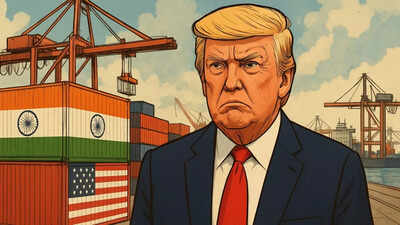
According to CRISIL, the five sectors expected to see meaningful impact are gems and jewellery, textiles, seafood, chemicals, and auto components. Gems and jewellery has the highest exposure to the US at approximately $10 billion.
The removal of trade preferences under the Generalized System of Preferences (GSP) will significantly impact sectors constituting about 25% of India’s US exports, particularly textiles, gems and jewellery, and seafood. Small and medium enterprises, which dominate these sectors with over 70% share, will face substantial difficulties. The chemical sector, where SMEs hold a 40% market share, is also expected to face significant challenges.
In Surat’s gems and jewellery industry, which controls over 80% of diamond exports, MSMEs will experience adverse effects. The US receives approximately one-third of India’s diamond exports, whilst diamonds constitute more than half of the nation’s gems and jewellery exports.
The seafood industry’s small enterprises face challenges with the newly imposed 50% tariff, particularly when competing against Ecuador. Ecuador’s geographical proximity to the US market, combined with a considerably lower 15% tariff, creates an uneven playing field.
The chemical sector encounters robust competition from Japanese and South Korean manufacturers, who benefit from reduced tariff rates.
The automotive components sector anticipates a slight negative impact, as the US market represents only 3.5% of India’s total production. Small and medium enterprises that supply parts to major exporters dealing with the US market will experience setbacks. This impact is notably significant for suppliers of gearbox and transmission equipment components, which represent 25% of India’s automotive parts exports and maintain substantial US market exposure of approximately 40%.
Certain industries remain protected at present. For example, pharmaceutical products, constituting 12% of US-bound exports, are presently free from tariff impositions.
The US tariff implementation will impact $19 billion worth of exports across textiles, chemicals, seafood and auto components sectors, with a portion facing potential risks. Nevertheless, the anticipated $10 billion growth in the domestic market for these sectors is likely to partially offset the negative effects.
For steel industries, the US tariffs are predicted to have minimal impact on MSMEs, as these enterprises primarily focus on re-rolling and long product manufacturing, whilst the US predominantly imports flat products from India. Additionally, the US represents merely 1% of India’s total steel exports.