Editor’s Note
This article details the successful repatriation of the ‘Piprahwa Jewels’ to India, highlighting a significant case where sustained public advocacy and diplomatic efforts converged to secure the return of cultural heritage.
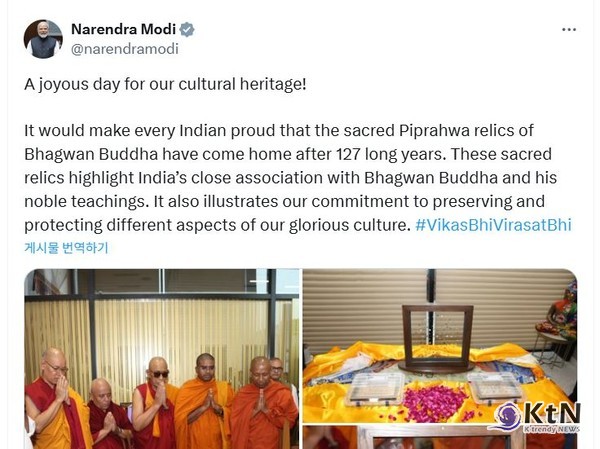
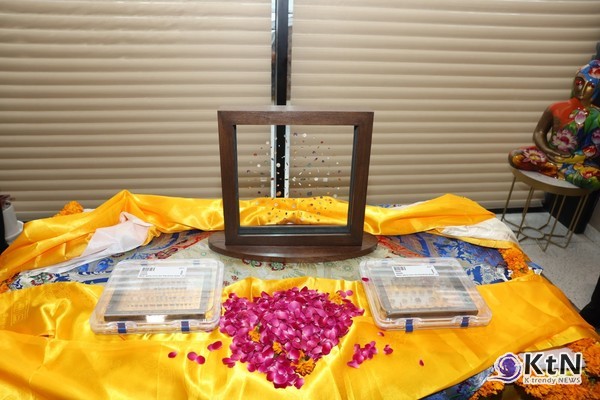
[KtN Reporter Lim Woo-kyung] Ancient jewels related to Buddha relics, excavated and taken out of the country by a British engineer 127 years ago, have returned to India. The repatriation of 334 ancient jewels, known as the ‘Piprahwa Jewels,’ led by the Indian government on July 30, 2025, has set a new milestone in the global movement for the return of cultural heritage.
This repatriation is evaluated as symbolically revealing not just the return of artifacts, but a shift in perception regarding the global art market and cultural heritage, as well as the value of culture as a national diplomatic asset. The unprecedented decision by auction house Sotheby’s to cancel the auction and return the items demonstrates that global public opinion and ethical pressure from the international community can lead to tangible results.
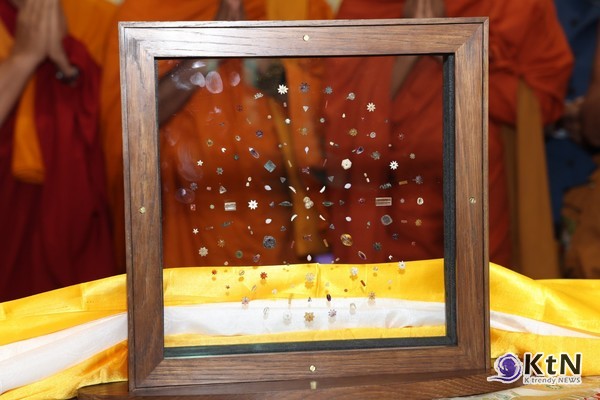
The Piprahwa Jewels are artifacts excavated in 1898 by William Claxton Peppé, a civil engineer working in British India at the time, from the ‘Piprahwa’ stupa near Uttar Pradesh. Composed of gold, coral, amethyst, pearls, and shells, these jewels were unearthed from a site where Buddha’s relics were also found, and the Indian Buddhist community has considered them part of sacred relics.
These jewels were originally scheduled to be auctioned by Sotheby’s in Hong Kong on May 7, 2025. However, following strong protests from academia, religious circles, the Indian government, and subsequent public opinion from the international civil society, the auction was postponed. After two months of negotiations, the auction house completely canceled the sale of the jewels. Subsequently, through discussions between the owner (the Peppé family), Sotheby’s, and the Indian government, a decision was made for their unconditional return.
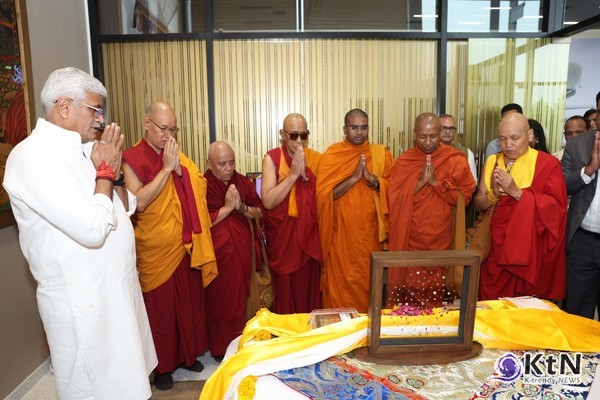
Indian Prime Minister Narendra Modi stated on X (formerly Twitter) on the day of the jewels’ return. The Indian Ministry of Culture emphasized,
The core of this incident is that pressure from international civil society and public opinion actually changed the structure of the art market. When the auction of the Piprahwa Jewels was announced, Buddhist communities, scholars, museum experts, and religious leaders worldwide united to issue statements of opposition, and hundreds of thousands of online protest signatures were collected. The Indian Ministry of External Affairs formally objected to Sotheby’s, emphasizing that the artifacts were “inalienable cultural assets.”
While Sotheby’s stated that
it unusually canceled the auction due to concerns about public pressure and potential damage to market trust. Subsequently, Sotheby’s issued an official statement expressing
emphasizing its image as a ‘responsible auction house.’
This is seen as a signal of structural change, indicating that the ethical standards of the art market are expanding beyond ‘legal ownership’ to include ‘cultural origin and legitimacy’ and ‘religious sensitivity.’
The return of the Piprahwa Jewels is also a case that proves once again that cultural heritage is not merely artifacts of the past but economic assets for the present and future. The Indian government plans to use this repatriation as an opportunity to expand tourism infrastructure centered around the Buddhist sacred sites where the jewels will be displayed and to actively link them with education and cultural content industries.
In recent years, India has significantly increased Buddhist-related tourism demand through cultural heritage repatriation, and the Piprahwa Jewels, with their sanctity and symbolism, are expected to be utilized as representative content. Amid expectations of multi-layered economic effects such as cultural branding, exhibition industries, and content production, analyses are gaining traction that heritage repatriation is emerging as a core strategy of national soft power.
This repatriation is recorded as a successful case of a ‘governance model’ where the Indian government organically collaborated with diplomatic, academic, and religious circles. The diplomatic prowess that recovered high-value heritage without financial burden and secured international legitimacy can serve as an effective strategy in future cultural property repatriation negotiations.
On the other hand, this case also reveals remaining challenges. The most representative issue is the conflict between ‘private ownership rights’ and the ‘public nature of cultural property.’ The Peppé family, which owned the jewels, claimed to be the “legal owner,” but the Indian government countered that
Given the high likelihood of repeated clashes between legal and ethical standards in similar future cases, the need for establishing international standards is being raised.
Furthermore, from the auction house’s perspective, the tightrope walk between ‘legal contracts’ and ‘moral responsibility’ is expected to continue for the time being. Voices are also growing louder that to maintain market trust, it is necessary to strengthen provenance verification in the pre-auction stage and establish a flexible response system for heritage with repatriation potential.
The return of the Piprahwa Jewels is not just a single repatriation news item. It is a decisive scene showing that the world order surrounding cultural heritage is changing from ‘who owns it’ to ‘who can be responsible for it.’ The perception is spreading that artworks are no longer just high-value trading items but ‘public assets’ containing a nation’s history, religion, and identity.
Sotheby’s gained market trust through this choice, and India secured both diplomatic achievements and cultural assets. This incident will serve as a benchmark for future international auction markets, cultural policies, and art ethics. The ownership of cultural heritage is complex, but its return clearly starts from a sense of responsibility.