Editor’s Note
This analysis highlights a pivotal shift for India’s textile industry under the new trade agreement, which removes longstanding tariff barriers to unlock significant export potential in the UK market.
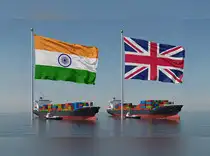
The textile sector emerged as the immediate winner, with the agreement eliminating crippling 10-12% duties that had handicapped Indian exporters against Bangladesh, Pakistan, and Cambodia. The UK represents India’s third-largest textile export market, yet India currently supplies only $1.79 billion worth to a $26.95 billion market, signaling massive untapped potential.
Zero-duty access covers 1,143 textile tariff lines, with India expected to capture at least 5% additional market share within two years.
The chemical sector is bracing for perhaps the most dramatic transformation, with exports to the UK projected to surge 30-40% to an estimated $650-750 million in 2025-26. This represents a quantum leap for an industry already targeting aggressive global expansion.
Indian pharmaceutical companies, already dominant in generics, are poised to strengthen their grip on Europe’s largest market outside the EU. The zero tariff provisions under the FTA are expected to significantly enhance the competitiveness of Indian generics in the UK market, which remains India’s largest pharmaceutical export destination in Europe.

The technology transformation could be equally dramatic. Software and IT-enabled services, currently worth $32 billion in 2024-25, are projected to achieve 15-20% annual growth under ambitious UK commitments. Electronics exports are set to accelerate with zero-duty access for smartphones, optical fiber cables, and inverters.
In a twist that could reshape India’s premium alcohol market, import duties on spirits will plummet from 150% to 75% and then 40% over a decade. This dramatic reduction will slash costs for companies importing Scotch whisky while intensifying competition in the premium segment.
The gems and jewelry sector, with current UK exports of $941 million, is targeting a massive expansion into the UK’s $3 billion annual jewelry import market. Tariff relaxations are projected to double India’s gems and jewelry exports to the UK within 2-3 years.

Agricultural exports are expected to surge over 20% in the next three years, with duty-free access for fruits, vegetables, cereals, spices, and processed foods contributing to India’s ambitious $100 billion agri-exports target by 2030.
Crucially, Vijayakumar added that the deal’s timing “during a time of tariff wars is commendable, and hopefully this will improve India’s chances of striking a fair-trade deal with the US.”
The comprehensive nature of the deal extends beyond merchandise to services trade, with Indian professionals benefiting from relaxed visa norms and a landmark social security agreement.