Editor’s Note
The Indian loyalty program market is poised for significant expansion, projected to grow from $4.3 billion in 2025 to $17.1 billion by 2035. This growth, driven by digitalization and evolving consumer expectations, is currently led by key players like Capillary Technologies, InterMiles, and Zeta.
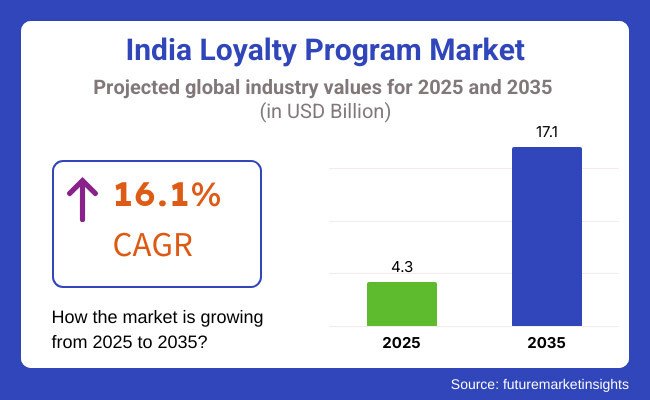
The India loyalty program market will grow from USD 4.3 billion in 2025 to USD 17.1 billion by 2035, reflecting a 16.1% CAGR. Digitalization and consumer demands fuel growth. Capillary Technologies leads with 15-20% market share, followed by InterMiles (10-15%) and Zeta (8-12%).
The India loyalty program market is projected to experience robust growth, with its valuation expected to increase from approximately USD 4.3 billion in 2025 to nearly USD 17.1 billion by 2035. This represents a CAGR of 16.1% over the forecast period. The expanding digital infrastructure, rising consumer expectations for personalized engagement, and the adoption of data-driven reward systems are key factors driving this market’s growth in India.
The surge in smartphone penetration and internet connectivity has transformed the way loyalty programs are designed and delivered. Digital platforms enable businesses to collect and analyze customer data effectively, allowing for tailored rewards, targeted promotions, and enhanced customer experiences. These personalized approaches foster stronger brand loyalty and increase customer retention, benefiting industries such as retail, e-commerce, banking, telecommunications, and hospitality.
The Indian market is witnessing a shift from traditional point-based loyalty schemes to more sophisticated, technology-driven programs that leverage artificial intelligence, machine learning, and big data analytics. These technologies enable real-time customer insights, predictive modeling, and dynamic reward structures that adapt to consumer behavior and preferences. Mobile apps and digital wallets are becoming key channels for program delivery, offering convenience and seamless integration with everyday transactions.
Segmentation within the market highlights diverse loyalty program models, including coalition programs, tier-based schemes, cashback rewards, and experiential benefits. Coalition programs, where multiple brands collaborate to offer shared rewards, are gaining popularity by providing customers with a wider range of redemption options. Tier-based programs incentivize higher spending by offering exclusive benefits to loyal customers, enhancing engagement and lifetime value.
The rise of omnichannel retailing in India also contributes to market growth, as consumers expect consistent loyalty experiences across physical stores, online platforms, and mobile channels. Businesses are investing in unified loyalty solutions that bridge these channels and provide holistic customer views.
The e-commerce and retail segment is projected to hold a substantial market share of around 48% in 2025, driving the growth of loyalty programs in India. Retailers and online platforms increasingly deploy point-based rewards, cashback offers, and time-bound discounts to encourage repeat purchases and deepen consumer engagement.
These incentives motivate customers to remain loyal by providing tangible benefits for continued shopping, enhancing brand affinity and lifetime value. The rapid expansion of digital commerce, fueled by rising internet penetration and smartphone usage, has accelerated the adoption of loyalty initiatives in this sector. Personalized rewards and gamification features further enrich customer experiences, fostering stronger connections with brands.