Editor’s Note
The Indian rupee hit a new record low against the U.S. dollar on Thursday, driven by foreign capital outflows and trade uncertainties. While the Reserve Bank of India intervened to stabilize the currency, the rupee’s decline underscores ongoing pressures in the financial markets.
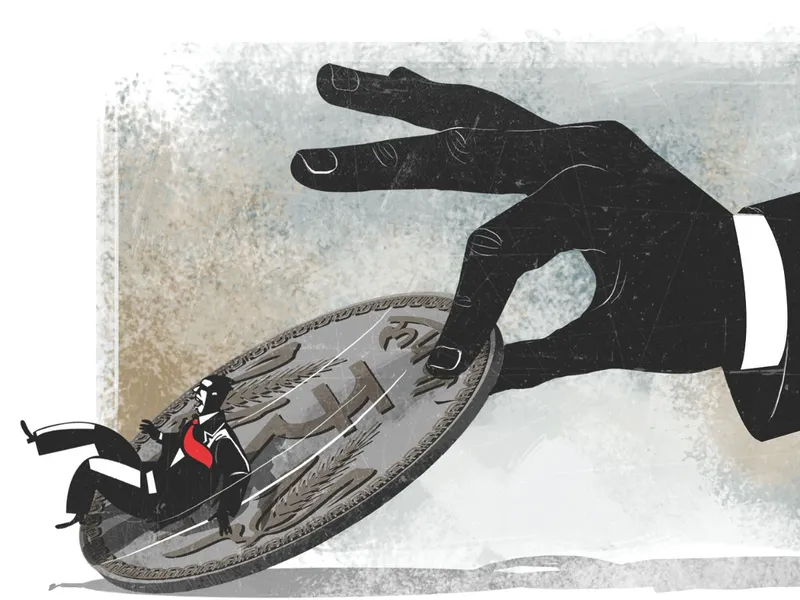
The Indian rupee closed at a new all-time low of 90.37 per US dollar on Thursday, driven by foreign fund outflows from bonds and equities and uncertainty surrounding a trade deal with the United States. Dealers noted that the rupee touched a new intra-day low of 90.49 against the dollar, but some losses were recouped after the Reserve Bank of India (RBI) intervened in the foreign exchange market by selling dollars just before market close.
Last week, on December 3, the rupee had closed at 90.20 per dollar, which was then the all-time low. Today, the rupee fell by 0.45 percent. This year, the rupee has been the worst-performing currency in Asia, depreciating by 5.26 percent against the dollar.
He added,
Chief Economic Adviser (CEA) V. Anantha Nageswaran said on Thursday that India and the US have resolved “most of their long-pending differences” on a trade deal, and a formal agreement could be reached by March 2026. Anil Kumar Bhansali, Head of Treasury at Finrex Treasury Advisors, said,
Market participants said stop-loss selling had begun at the 90.25 per dollar level. They noted that the RBI’s intervention was modest, which has been the trend for the past few weeks. The central bank has likely reduced its net short position in forwards, which had increased in September and October. This has led to increased volatility in the forex market.
He added,
Meanwhile, the Reserve Bank accepted government bonds at yields 2 to 3 basis points below prevailing market rates in its Open Market Operation (OMO) purchase auction, helping lower yields across tenures. The RBI received bids worth Rs 1.1 lakh crore against a notified amount of Rs 50,000 crore for the OMO purchase auction. The yield on the 10-year government bond closed at 6.58 percent compared to the previous close of 6.63 percent.
He further said,
The RBI will sell government bonds worth Rs 28,000 crore in its weekly auction tomorrow.
The central bank had also announced liquidity measures through Open Market Operations and a forex buy/sell swap. The OMOs will involve the purchase of Government of India securities worth Rs 1 lakh crore in two tranches of Rs 50,000 crore each. The second auction is scheduled for December 18. Additionally, a $5 billion dollar/rupee buy/sell swap for three years is also to be conducted on December 16.