Editor’s Note
This article has been updated to clarify the implementation timeline for U.S. tariffs on Indian goods, following an announcement by former President Donald Trump.
Donald Trump announced a 25% tariff on India on July 30. This is effective from today. An additional 25% tariff will be imposed from August 27.
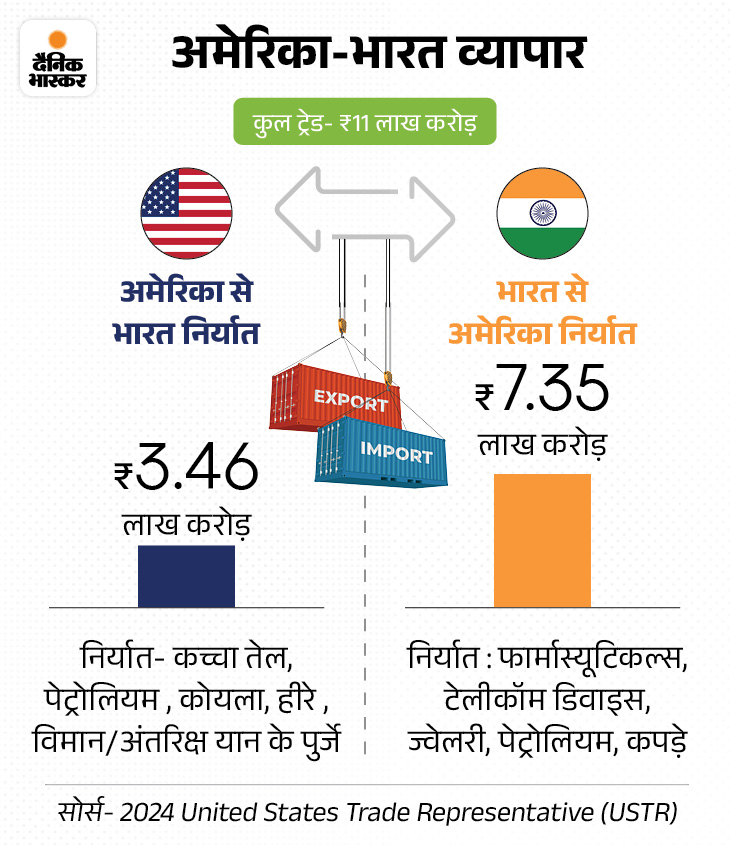
A 25% tariff on goods shipped from India to the US has been implemented from today, August 7. Meanwhile, the 25% extra tariff will be effective from August 27. Currently, Indian goods were subject to about a 10% tariff. With the new tariffs, Indian goods will become more expensive in the American market.
However, Indian exporters said they have markets all over the world besides the US to sell their goods. In many sectors like jewelry, India’s exports to the US are higher due to lower tariffs. Now exporters can increase their share in the rest of the world’s markets.
Let’s understand how much impact the 25% tariff effective from today will have on which sector…
Previous Situation:
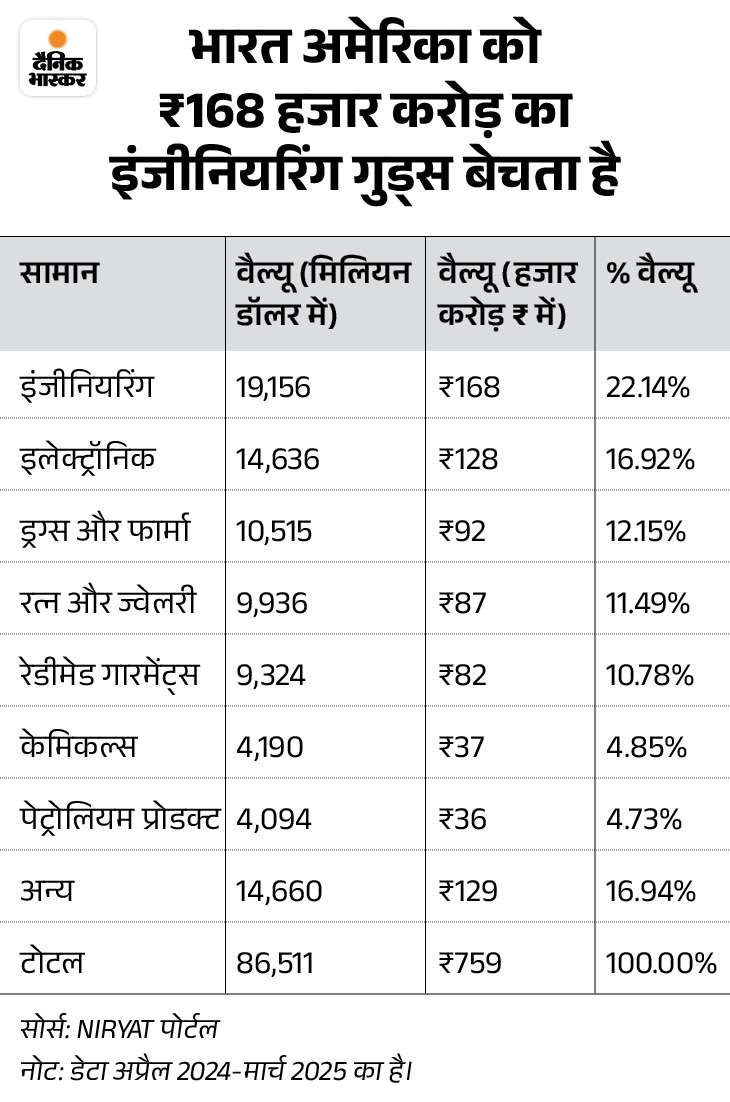
India exported $19.16 billion (approx. ₹1.68 lakh crore) worth of engineering goods in 2024. This includes steel products, machinery, automotive parts, electrical machinery, and other industrial equipment.
Current Tariff:
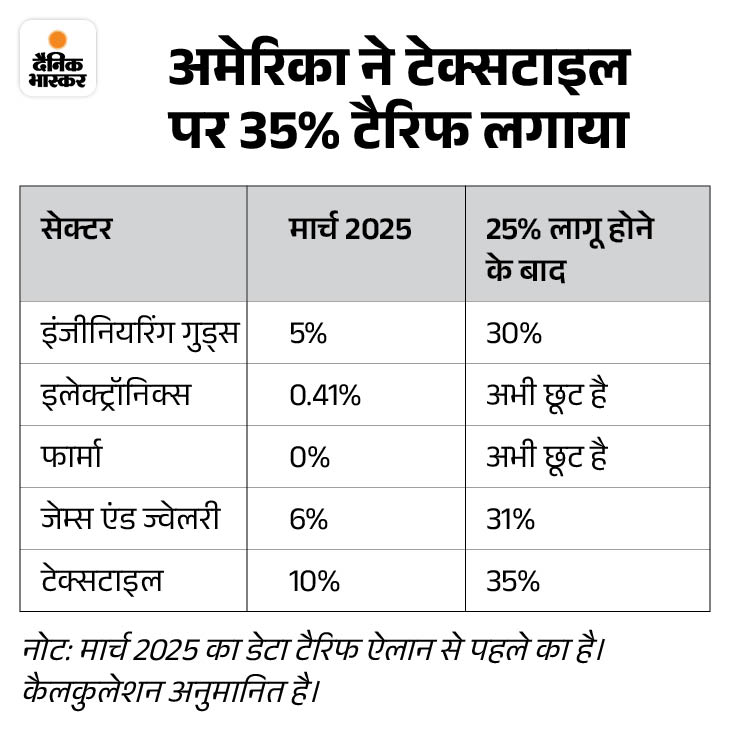
5% + 10% = 15%, with many engineering products also exempt under Section 232. Before the announcement of the 10% tariff in April 2025, the tariff on this category was about 5%.
Example:
A $100 part sells for $115 in the US.
After Tariff:
New Tariff: 5% + 25% = 30%
New Cost: A $100 good will now cost $130.
Impact:
A 10-15% reduction in exports is possible due to the price increase.
Affected Companies:
Bharat Forge, Tata Steel, and L&T, among others.
Challenge:
Millions of jobs could be at risk. Small and medium enterprises will be the most affected, contributing 40% of engineering goods exports.
What Can India Do?
Demand for engineering goods is increasing in Europe (Germany, UK) and ASEAN countries (Singapore, Malaysia). India can increase its share in these markets.
Expand the PLI scheme for engineering goods to reduce production costs, so companies remain competitive in the US market.
Previous Situation:
India exported $14 billion (approx. ₹1.23 lakh crore) worth of electronics to the US in 2024. This included a large share of smartphones, especially iPhones. India is the largest supplier of iPhones to the US.
Before Donald Trump first announced the tariff in April, the average tariff on electronics was 0.41%.
Example:
A $100 smartphone sold for $100.41 in the US.
44% of smartphones sold in the US are made in India.
After Tariff:
Currently, electronics are exempt. Until the Section 232 tariff is announced, exports of smartphones like Apple and Samsung to the US will not be affected.
Section 232 is part of the US Trade Expansion Act of 1962, which allows tariffs on imports based on national security. If imports are a threat to national security, the Commerce Department investigates and recommends tariffs.
The final decision on the tariff will be made after the Section 232 review. If the new 25% tariff is implemented after the announcement of the Section 232 tariff, electronic goods exported from India to the US will become more expensive and exports will be impacted.
New Tariff: 25%
New Cost: A $100 smartphone will cost about $125.
Impact:
A 25% price increase, which could lead to a 20-25% reduction in demand.
Affected Companies:
Companies like Apple and Dixon Technologies.
Challenge:
Tough competition from countries like Vietnam and Mexico.
What Can India Do?
Negotiate to maintain exemptions for smartphones and semiconductors from tariffs.
Focus on strengthening the domestic market and developing new brands.
Previous Situation:
India exported $10.52 billion, i.e., approx. ₹92 thousand crore, worth of medicines to the US in 2024. This is about 40% of US prescriptions. If implemented, it will affect both the US and India.
Current Tariff:
0% (Pharma has been exempt so far).
Example:
A $100 drug costs $100 because there is no tariff.
After Tariff:
Pharma is currently exempt, but Trump has threatened a 150% tariff within 18 months and later 250%.
If a 25% tariff is implemented:
A $100 drug will cost $125.
Affected Companies:
Sun Pharma, Dr. Reddy’s, Cipla, Lupin.
Challenge:
If the tariff is implemented, competition from countries like Vietnam will have to be faced.
What Can India Do?
Push for a trade deal with the US to keep generic drug prices low.
Increase exports to alternative markets like Europe and Latin America.
Previous Situation:
India exported $9.94 billion (approx. ₹87 thousand crore) worth of gems and jewelry to the US in 2024. This is 44.5% of US diamond imports.
Current Tariff:
Jewelry (6%+10%=16%), Diamond (0%+10%=10%). Before the announcement of the 10% tariff in April 2025, jewelry was taxed at 6% and diamonds at 0%.
Example:
$100 jewelry sells for $116 in the US.
A 15-20% reduction in exports is possible due to the price increase in the US.
After Tariff:
New Tariff:
Jewelry (6%+25%=31%), Diamond (0%+25%=25%).
New Cost:
$100 jewelry will now cost $131.
Impact:
A 15-20% reduction in exports is possible due to the price increase.
Affected Companies:
Rajesh Exports, Titan, Kalyan Jewelers.
Challenge:
American buyers may turn to cheaper alternatives, putting millions of artisans’ jobs at risk.