Editor’s Note
This article provides a technical overview of fluorspar (calcium fluoride), highlighting its key properties and primary industrial applications. It serves as an introduction to the mineral’s characteristics and its role as a critical raw material in various sectors.
Fluorspar, characterized by its main component calcium fluoride (CaF₂), is a mineral possessing properties such as chemical stability, optical transparency, and fluorescence. Structurally belonging to the cubic crystal system, its excellent processability makes it widely suitable for industrial applications. Notably, its role as a raw material for fluorine chemicals, leveraging its property of releasing fluorine upon heating, enables diverse applications including metal refining, aluminum manufacturing, chemical synthesis, and etching. Particularly in applications for electronic materials/semiconductor processes and high-performance resins, the demand for material modularity and chemical purity creates a structure where the selection of fluorspar directly impacts product performance. Compared to other mineral resources, its applications are broadly distributed across intermediate and final products, establishing its uniqueness as an industrial foundational material due to the ease of achieving technical differentiation.
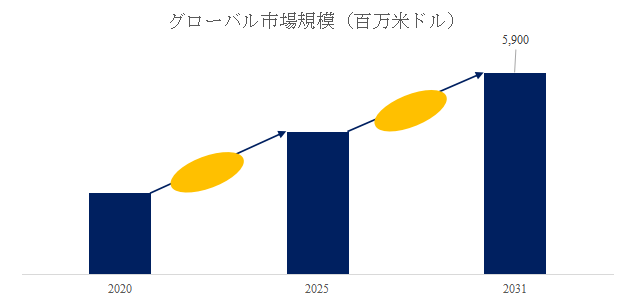
The industrial value of fluorspar is increasing annually due to its linkage with downstream industries. Specifically, it is applied across diverse sectors including the production of fluorine derivatives in the chemical industry, gases for semiconductor microfabrication in the electronics industry, structural stabilizers for pharmaceuticals, heat- and corrosion-resistant components in the automotive sector, and fire-resistant materials in construction. Particularly, structural shifts downstream, such as the transition to carbon neutrality and the advancement of vehicle electrification, are prompting a re-evaluation of upstream materials like fluorspar. In this context, according to the LP Information report, the global fluorspar market is projected to achieve a CAGR of 5.9% during the forecast period from 2025 to 2031, reaching a market size of USD 5.9 billion by 2031. This growth rate is underpinned by the expanding demand for fluorine-based materials and the advancement of functional materials, representing a typical case where downstream changes ripple upstream. Fluorspar is no longer just a raw material resource but is increasingly positioned as a “functional material infrastructure” that fundamentally supports the performance and reliability of downstream products.
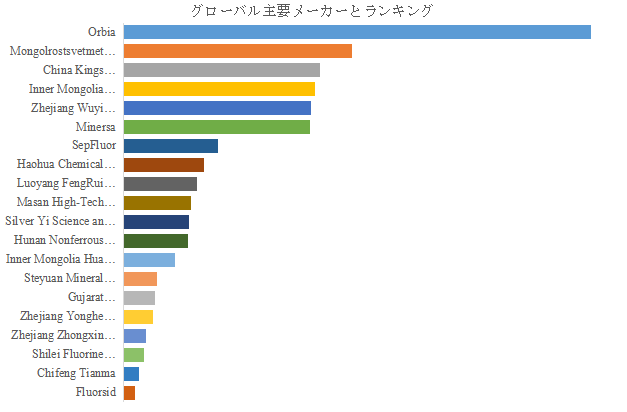
The competitive advantage of fluorspar is composed of several perspectives. Firstly, accumulated technology from mining to refining enables stable supply of product grades, where uniformity in quality, especially in procuring high-purity calcium fluoride, is directly linked to ensuring reliability in electronic material applications. Secondly, as a countermeasure to geopolitical risks in raw material supply, diversification of producing countries and advancement of inventory management technologies are progressing, aiming to strengthen supply chain resilience. Additionally, in the synthesis processes of fluorine chemicals starting from fluorspar, process optimization such as improving yield and recycling by-products is underway, achieving a balance between cost and environmental impact. Future technology trends include expectations for expansion into new application areas beyond traditional markets, driven by advancements in nano-sizing, combination with surface treatment technologies, and recycling technologies.
Fluorspar, once limited to certain basic chemical applications, is undergoing a significant transformation in its positioning alongside the sophistication of modern industrial structures. Particularly in Japan, where industrial competitiveness based on advanced material technology serves as a national growth engine, the stability and functionality of upstream materials like fluorspar have become decisive factors influencing the performance and quality of downstream products. Addressing cross-industrial challenges such as the miniaturization of electronic devices, structural precision in pharmaceuticals, lightweighting and high durability in mobility, and functional enhancement of energy conversion materials, necessitates a supply system for high-purity fluorine compounds derived from fluorspar.
Simultaneously, the fluorspar market is transforming from a traditional resource-dependent model into a strategic industry encompassing non-price competitive elements such as processing technology, application development, and supply chain management. Within this, the role of fluorspar in the overall industrial structure is at a stage of being redefined from a “mere mineral resource” to a “material infrastructure supporting the core of industrial functions.” Looking ahead, alongside the expansion of application fields, the significance of fluorspar introduction is expected to become increasingly diversified as its positioning within the overall material portfolio is reviewed. In other words, the trends in the fluorspar market are likely to gain increasing attention as a symbol of a turning point in Japan’s material strategy, transcending individual products or application areas.