Editor’s Note
This article provides a concise overview of food absorbent pads, highlighting their role in maintaining hygiene, freshness, and product appeal in food packaging.
Food absorbent pads are high-performance pads used in food packaging for items such as fresh meat, fish, and vegetables to absorb excess moisture and juices, maintaining hygiene and freshness. Utilizing highly absorbent materials, they help prevent leakage and discoloration, thereby extending the shelf life of food and improving its appearance. They are essential materials contributing to enhanced packaging quality and consumer satisfaction in retail and food processing industries.
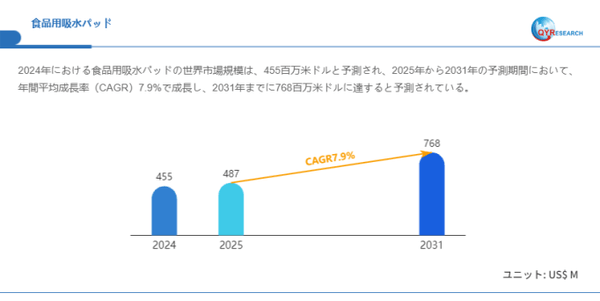
According to a new market research report released by QYResearch titled “Food Absorbent Pads – Global Market Share and Ranking, Overall Sales and Demand Forecast, 2025-2031”, the global food absorbent pads market size is expected to expand steadily from approximately USD 455 million in 2024 to USD 487 million in 2025. It is projected to grow at a compound annual growth rate (CAGR) of 7.9% during the forecast period, reaching USD 768 million by 2031.
Consumer Habits and Retail Development: The sustained growth in demand for prepared and cooked foods in Japan is increasing the need for food absorbent pads to manage juices from meat, seafood, and cooked dishes. This helps maintain packaging cleanliness and extends product quality retention. Furthermore, the continuous development of modern retail channels and cold chain logistics supports the safe distribution of fresh food, encouraging the use of absorbent pads during the distribution process.
Stringent Food Hygiene Regulations: The Japanese market sets extremely high standards for food safety and hygiene. The use of food absorbent pads, which are packaging materials in direct contact with food, contributes to compliance with these strict regulations by absorbing excess moisture and inhibiting bacterial growth, thereby ensuring food safety and hygiene.
Sustainable Packaging Trends: Similar to other advanced markets, there is a growing environmental awareness among Japanese consumers and businesses. Interest is strengthening in environmentally friendly food absorbent pads made from biodegradable, compostable, or renewable resources. This trend is driving manufacturers to research and develop more sustainable product solutions to meet market demands for environmental protection.
Material and Technological Innovation: The growth of the food absorbent pads market is also supported by continuous product innovation. For example, pads with enhanced absorption capacity and moisture retention more effectively maintain food quality. Additionally, some high-performance products now incorporate antibacterial properties, offering added value in the Japanese market where food safety and quality requirements are exceptionally high.
Demographic and Social Changes: Japan’s aging population creates demand for foods that are easy to prepare and eat. Many such convenient foods incorporate absorbent pads to manage juices, indirectly driving the market. Moreover, the widespread increase in personal hygiene awareness across society is strengthening consumer tendencies to place greater importance on packaging cleanliness and dryness when purchasing food.
1. Sustained Demand in Meat, Poultry, and Seafood Packaging
Food absorbent pads are already widely used in the packaging of meat, poultry, and seafood, and this demand is expected to continue growing steadily. The juices and blood produced during the packaging process of these fresh items not only impair appearance but can also cause bacterial growth. Absorbent pads effectively absorb these liquids, maintaining dryness and hygiene inside the packaging, which is crucial in the Japanese market that highly values food safety and quality.
2. Social Structural Changes and Expansion of the Prepared Food Market
Changes in Japan’s social structure, such as smaller households and an aging population, continue to drive the expansion of the prepared and cooked food market. These products typically contain significant amounts of juice and are prone to leakage due to vibration during transportation. Utilizing food absorbent pads helps effectively manage juices, ensure packaging cleanliness, and contribute to maintaining food quality. As consumer demand for convenient foods continues to diversify, packaging solutions catering to this vast market undoubtedly hold broad development potential.
3. Evolution into High-Functionality/High-Performance Products and Differentiation Advantage

Beyond basic absorption functions, the market demands higher performance from food absorbent pads. For example, pads with enhanced absorption capacity and moisture retention can maintain food dryness for longer periods. Going a step further, absorbent pads integrated with antibacterial properties provide an additional safety barrier by inhibiting bacterial growth, consequently contributing to extended food shelf life. In the Japanese market, where requirements for food safety and quality are particularly stringent, such high-performance and functional products not only solve core challenges but can also create significant differentiation advantages for companies.
1. Stringent Food Safety and Compliance Requirements
In the Japanese market, safety standards for food contact materials are extremely high, with the Ministry of Health, Labour and Welfare establishing strict regulations on chemical migration from food packaging materials. As products that directly contact food, food absorbent pads must comply with these regulations. Non-compliance could lead to product recalls or reporting obligations. The cost and time required for compliance testing and certification before launching new products are significant, posing a high technical barrier for companies.
2. Intense Price Competition and Cost Pressure
Consumers in the Japanese market are price-sensitive, and competition within the food absorbent pads sector itself is intensifying. Manufacturers not only need to manage their own production costs, but downstream food manufacturers also strictly control their packaging material procurement budgets due to the cost pressures they face. This situation means absorbent pad manufacturers face continuous cost reduction pressures at every stage—raw material procurement, production efficiency, and logistics management—creating an environment where profit margins are easily squeezed.
3. Supply Chain and Logistics Efficiency Challenges
Japan has limited land area and high warehousing costs, making frequent, small-lot purchases mainstream in the market. This requires food absorbent pad suppliers to have rapid response capabilities and flexible supply chain management. Simultaneously, logistics and distribution costs in Japanese urban areas, especially commercial facilities, are high, and issues like traffic congestion can arise. These factors contribute to increasing the final product cost and eroding market competitiveness.
This report provides a comprehensive analysis of the food absorbent pads market, from its current state to future prospects. It organizes market size, growth forecasts, competitive landscape of key companies, and demand trends by region, application, and product type, clarifying growth factors, challenges, risks, and market opportunities. It also includes analysis of sales trends, latest developments of major manufacturers, and supply chains, offering content useful for corporate strategic planning.