Editor’s Note
This analysis highlights gold’s exceptional performance in 2025 and projects a potential surge toward $5,000 per ounce by 2026, driven by central bank purchases, geopolitical tensions, and its role as a hedge against currency devaluation. While forecasts are speculative, the underlying trends warrant close attention from investors.
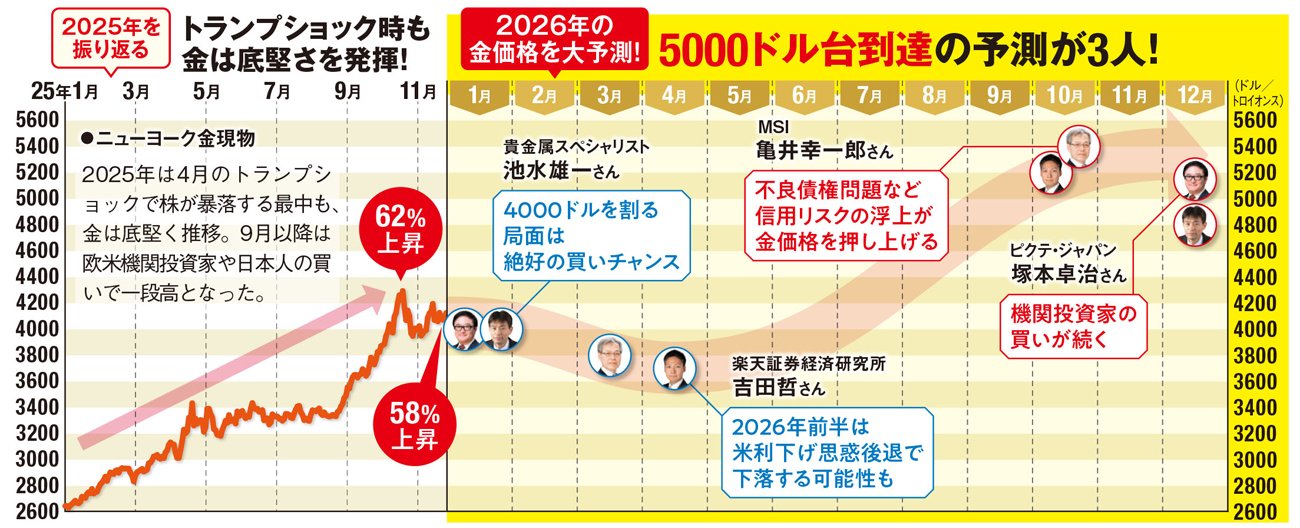
2025 was a year of significant gains for gold. In October, it hit a new all-time high of $4,381 per troy ounce, representing a 62% increase from the start of the year. Although it retreated slightly from that peak, by the end of November, it was still up 58% year-to-date. Compared to a 14% rise in the S&P 500, a 28% rise in the Nikkei 225, and negative returns for Bitcoin, gold’s performance stood out among major assets.
This trend is driven by geopolitical fragmentation, which is accelerating moves by central banks in emerging economies to sell dollars and buy gold. Yuichi Ikemizu, a precious metals specialist, explains:
Institutional investor demand is also rising. While gold does not yield interest and has historically been less favored as an investment, Tatsuji Tsukamoto of Pictet Japan notes:
Ikemizu adds:
This trend is likely to continue into 2026. Satoru Yoshida of Rakuten Securities Economic Research Institute focuses on growing demand for alternative assets:
Koichiro Kamei of Market Strategy Institute (MSI) is watching developments ahead of the US midterm elections in November 2026:
Kamei also points to another risk: the emergence of hidden non-performing loan issues, such as in private credit (direct lending by investment funds). If these problems surface, they could further push up gold prices.
Given these factors, professional forecasts for 2026 gold prices are unanimously bullish. Many expect a floor around $3,700 per troy ounce, with highs potentially reaching near $5,000.
The increase in gold demand appears to be a long-term structural trend. Ikemizu points out:
As long as governments continue to expand debt and issue large amounts of cash to fuel economic growth, this trend will not stop. Expected policies like US rate cuts and fiscal stimulus under Japan’s Takamatsu administration could accelerate inflation, leading to further cash devaluation and higher gold prices.
A combination of factors—rising geopolitical risks, accelerating moves away from the dollar, and currency devaluation—is likely to push gold prices higher over the long term.
(Note: The original article indicates that the sections on platinum and silver price forecasts are behind a paywall/membership requirement and are not provided in the source text.)