Editor’s Note
This article explores the shifting motivations behind fashion purchases for Generation Z, moving beyond mere aesthetics to examine how social media, celebrity influence, and narrative-driven branding shape contemporary consumer behavior. It prompts us to reconsider what we are truly buying into with each purchase.
Do you remember the last reason you bought a piece of clothing? Was it “because the season changed” or “because it was on sale”? No, Gen Z is different.
The Goal Inc. conducted an awareness survey on fashion purchasing targeting 500 people aged 20-50 nationwide. The results revealed that Gen Z’s clothing selection criteria are shifting towards “standards different from the conventional.”
This survey explores generational fashion purchase motivations and priorities, clarifying a “new way of choosing” that is not based on seasonality or price. We hope this information will be useful when considering marketing and product development targeting Gen Z.
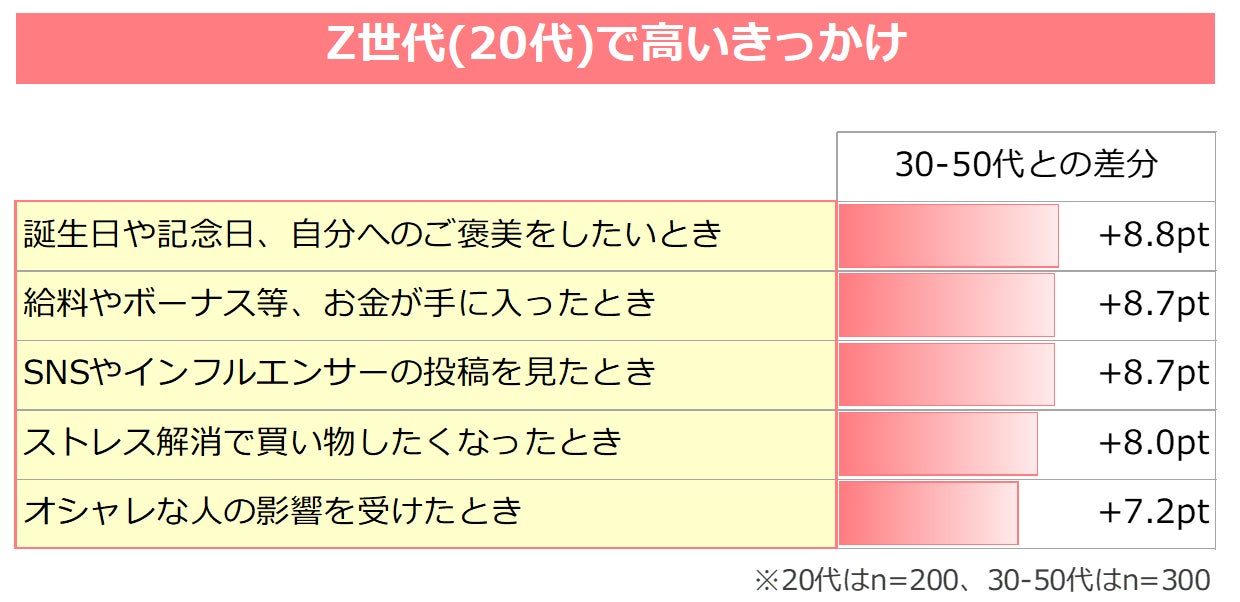
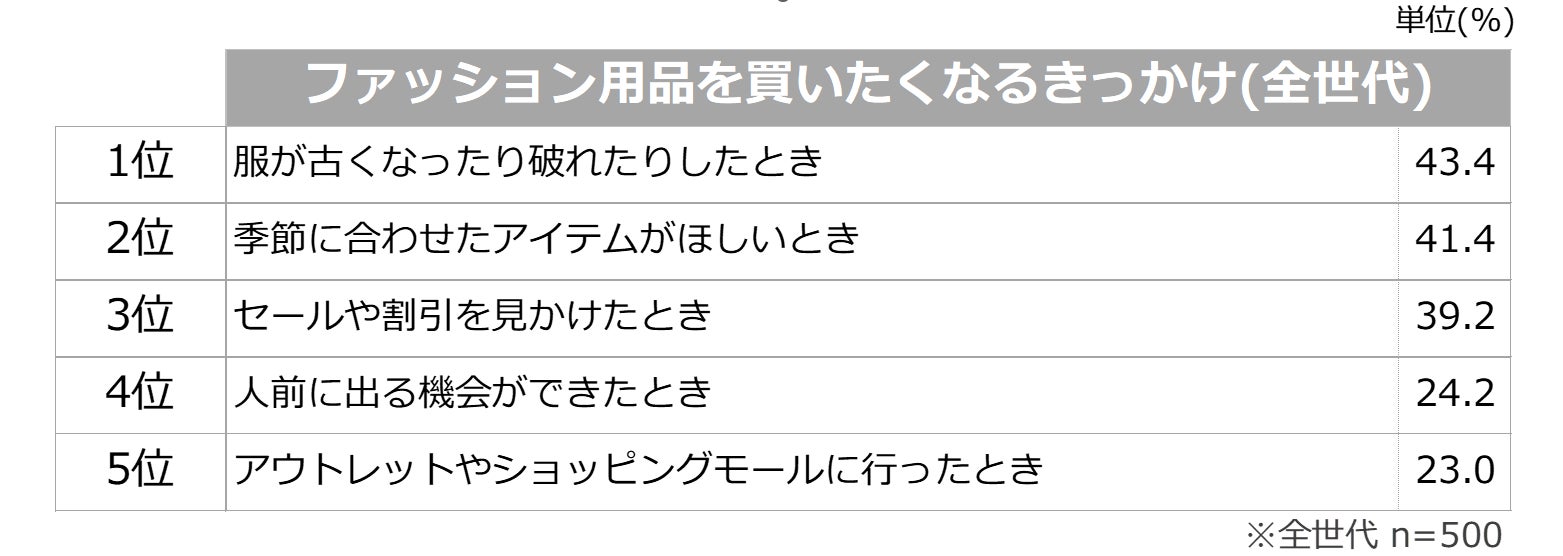
The survey first compared generational fashion purchase motivations by asking, “What triggers your desire to buy fashion items?”
Looking at these results, Gen Z shows a strong tendency to purchase fashion based on intrinsic motivations such as “a reward for myself,” “having received money,” “influencer posts,” and “stress relief.” On the other hand, they show little tendency to purchase based on extrinsic motivations like “clothes are worn out,” “to match the season,” or “sales and discounts.”
While those in their 30s-50s, whose wardrobes are already well-established, primarily purchase based on external necessity, Gen Z appears to view fashion as an “expression of self” or “emotional release,” with their purchasing actions rooted more in internal desires.
Next, the survey revealed impulse purchase rates by location with the question, “How often have you made impulse purchases of fashion items?”
As suggested in Topic 1, perhaps because Gen Z tends to purchase based on emotion, their impulse purchase rate tends to be higher than that of those in their 30s-50s. While offline impulse purchases, driven by the one-time encounter with the physical item, are strong,
For Gen Z, who are intimately familiar with SNS and e-commerce sites in their daily lives,
The purchasing environment, unconstrained by time or place, can be said to more naturally encourage emotional snap decisions.
So, is Gen Z honest with their feelings and unconcerned with the eyes of others? Next, the survey clarified who each generation is conscious of regarding fashion with the question, “Whose opinion do you consider regarding fashion?”
Looking at these results, the ranking of “strangers passing by on the street” rises with older generations, becoming the top choice for those aged 40 and above. In contrast, Gen Z’s ranking for “strangers” is low,
While those in their 30s-50s choose their “attire” conscious of the eyes of the unspecified majority, Gen Z appears to view fashion as a “means to share their own world” within relationships with “someone connected by shared values,” such as friends, partners, or idols.
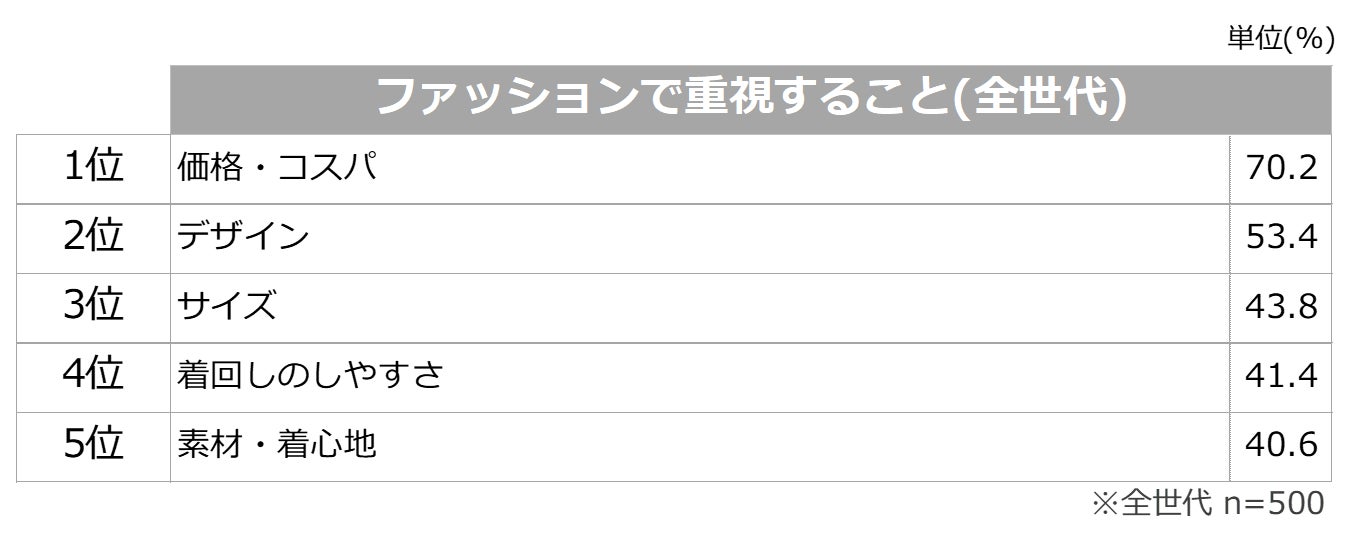
Finally, the survey compared what each generation values in fashion with the question, “What do you value in fashion?”
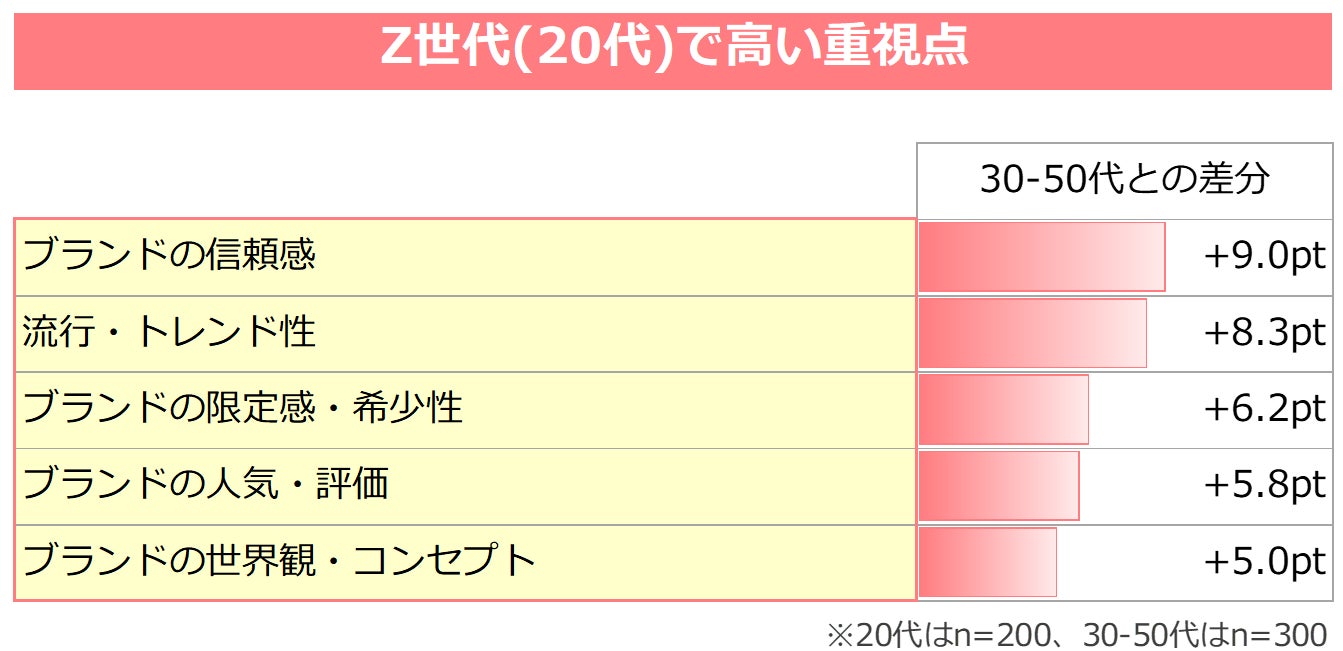
While functional product attributes like “price/cost-performance,” “size,” “versatility,” and “material” rank high across all generations, Gen Z shows a higher tendency to value brand-related attributes such as “brand trustworthiness, sense of exclusivity, popularity, and worldview.”
While those in their 30s-50s prioritize practicality, Gen Z shows a tendency to strongly empathize with the story or background a brand tells and find value there. For Gen Z, fashion is not about “what to wear” but the act of choosing
Unraveling Gen Z’s fashion purchasing behavior reveals a consistent posture of seeking “self-expression” and “meaningful connections.” The fact that their purchase triggers are rooted in intrinsic emotions, and the subjects of their consciousness are those close to them with whom they share values—all of this serves as evidence that
Furthermore, for Gen Z, fashion is not merely attire but a medium for weaving together their “own worldview,” “emotions,” and “relationships.” The key selection criterion is not functionality or price but “whether they can empathize with the story the brand tells.” In other words, when Gen Z buys clothing,
That is precisely the concept of “narrative consumption.”
What will be required of brands going forward is not to impose a story to be told, but to present an “open-ended worldview” that makes consumers want to tell their own story and to build a relationship where they can spin the narrative together.