Editor’s Note
This article, based on a report from the Natural Diamond Council, provides a data-driven overview of the lab-grown diamond sector, focusing on terminology, disclosure practices, and market dynamics. The information is presented as an objective resource for industry professionals and consumers.
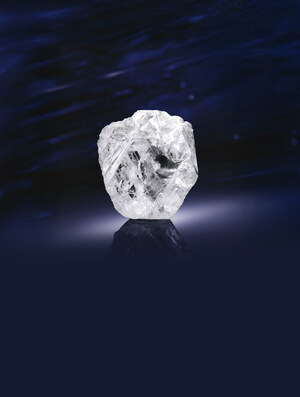
The NDC’s latest report offers a data-driven look at the laboratory-grown diamond sector, addressing terminology, disclosure, sustainability claims and pricing. The Council’s goal is not to disparage or promote, but to serve as a trusted resource for retailers, journalists and consumers alike.
Key facts from the report include:
– More than 70% of laboratory-grown diamonds are mass-produced in factories in China and India.
– The manufacturing process is energy-intensive, requiring sustained temperatures upwards of around 2000°F (1,093°C) and large amounts of water to cool reactors.
– The price of a 1.5-carat laboratory-grown diamond has fallen 86% from $10,750 in mid-2015 to $1,455 in 2025.
– Data supplied by analysts Edahn Golan on wholesale prices and Paul Zimnisky on retail prices shows that the wholesale price for a 1ct round near colourless (FGH) high-clarity (VS1) laboratory-grown diamond is now just 5% of what it was seven years ago in 2018 (i.e., it has fallen by 95%), while the retail price is 24% of what it was in 2018 (a fall of 76%).
– Analysis by Paul Zimnisky for the last 5 years shows that the average retail margin on laboratory-grown diamonds has increased over the period from 46% to 84%. Put another way, this means the average mark-up on synthetic diamonds has increased from 85% to over 500%.

The fast proliferation of laboratory-grown diamonds has brought a tidal wave of inaccurate and misleading claims, often confusing or misinforming consumers about what they are buying. The market has also experienced dramatically falling prices due to mass production and technological efficiencies. For example, a 1-carat, VS1, F-G-H colour LGD today sells for just 5% of its 2018 wholesale price. Retail prices, while slower to fall, are now only 24% of their 2018 levels, largely due to increasing retail margins. This price erosion, combined with increasingly ambiguous marketing, makes transparent, fact-based education more critical than ever.
As recently announced, GIA will no longer use its internationally recognized 4Cs grading system created to evaluate the quality and characteristics of natural diamonds when describing the colour and clarity of laboratory-grown diamonds. Instead, beginning later this year, the GIA will use simplified descriptors categorised broadly as either “premium” or “standard”—or no grade at all if the quality is subpar. By replacing detailed grading reports with broader descriptors, such as “premium” and “standard,” GIA is making a clear distinction between two product categories and ensuring the consumer is properly informed.
Synthetic diamonds were first developed in the 1950s for industrial purposes, but it has only been in the last decade that they have become widely available for jewellery. The manufactured stones are created using energy-intensive High-Pressure, High-Temperature (HPHT), and Chemical Vapour Deposition (CVD) processes, mainly in large-scale factories in China and India, where coal is largely used for power.
Despite having the same crystal structure, laboratory-grown diamonds are not identical to natural diamonds and are identifiable with specialist equipment. By law, full disclosure is mandatory and the following terms can be used to describe them: “laboratory-grown diamonds”, “laboratory-created diamonds”, “synthetic diamonds”. In the US, “[manufacturer’s name]-created diamonds” is also allowed.
While some grading laboratories will not certify laboratory-grown diamonds, others, such as the Gemological Institute of America (GIA), IGI and GSI, provide specifications and reports for laboratory-grown diamonds. These reports must clearly state the type of stone being graded.