Editor’s Note
This article marks the commencement of a significant decommissioning project for Australia’s first nuclear research reactor, HIFAR, at Lucas Heights. It signals the end of an era for this historic facility.
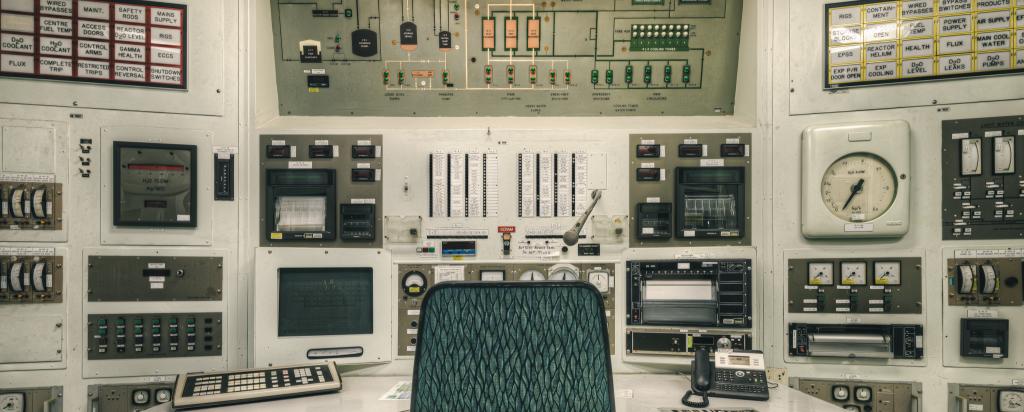
ANSTO is embarking on a major decommissioning project which will officially mark the end of an era for Australia’s first nuclear research reactor at Lucas Heights, the High Flux Australian Reactor known as HIFAR.
Opened by Australian Prime Minister Sir Robert Menzies in an elaborate ceremony in 1958, the HIFAR reactor safely operated for nearly 50 years until 2007 when it was replaced by ANSTO’s current multi-purpose research reactor, OPAL. The commencement of the project follows a license issued by the Australian Radiation Protection and Nuclear Safety Agency (ARPANSA) in late 2024, for the initial stages of the decommissioning works.
ANSTO CEO Shaun Jenkinson said Australia’s nuclear age was formally ushered in with the commissioning of HIFAR, which has remained an iconic landmark on ANSTO’s campus.
The decommissioning has since commenced with initial works under Phase A (Stage 1) to remove the neutron beam instruments, control room, fuel assembly station, and other peripheral equipment.
In stages 2 and 3 of Phase A, the HIFAR Circuits will be removed along with the contents of No.1 Storage Block.
Senior Project Manager Brett Wheeler said the long-running decommissioning project has involved 10 years of planning and preparations in the lead-up to ARPANSA’s licence approval.
The greatest majority of the waste generated from Phase A will be solid waste that can be safely recycled after its final characterisation. The small quantity of radiological waste will be managed and stored safely onsite at Lucas Heights in their purpose-built facilities. Any hazardous (non-radiological) waste such as lead and lead-based paints, will be disposed of offsite at a purpose-built facility.
Phase B will see the decommissioning of the reactor core, subject to further licence approvals with ARPANSA and a future national waste disposal pathway.
The facility housed six of Australia’s first neutron beam instruments, used for scientific investigations in chemistry, medicine, materials science, and environmental science. Today, the Australian Centre for Neutron Scattering sits adjacent to the OPAL multi-purpose reactor. Its 15 neutron beam instruments enable researchers and industry partners to study the structure and dynamics of atoms and molecule samples, such as polymers, proteins, and viruses.
The HIFAR decommissioning project for Stage 1 of Phase A is expected to be completed by 2026. It will also mark the second research reactor decommissioned in-house at ANSTO, following the successful decommissioning and dismantling of the Moata reactor in 2012, which safely operated for 24 years until 1995.