Editor’s Note
This article highlights a remarkable turquoise and diamond necklace from Van Cleef & Arpels’s Heritage Collection, emphasizing the rarity of its preserved color and craftsmanship.
For several reasons, the necklace with its sparkling garland of diamonds and large turquoise stones is not only attractive but also a unique piece. “It is not easy to find such a soft turquoise, and even less so to preserve this color tone in its original state over the years, as was achieved with this piece,” says Natacha Vassiltchikov of Van Cleef & Arpels. She is the head of the “Heritage Collection,” the luxury jewelry collection launched in 2007. It includes vintage pieces from the 1920s to the 1990s, which are not kept in the house’s own archive but can also be acquired. Determining their value, however, is a complex undertaking. “It depends on traditional factors such as the size of the gemstones, the type of setting, and the craftsmanship, as well as historical singularities – for example, who the jewelry once belonged to,” says Vassiltchikov. In the case of the necklace, she does not mention any celebrity in its provenance (others have been seen on Grace Kelly, and Gwyneth Paltrow also wore vintage earrings from the brand), but she emphasizes that the rare Iranian turquoise no longer exists in this form today.
Accordingly, the purchase price of the necklace is substantial, likely around one million euros. And that is probably one of the reasons why the piece found its way to Maastricht in March, to the TEFAF art and antiques fair, where Van Cleef & Arpels presented around thirty creations from this Heritage Collection to the public alongside pieces from current collections. The maison has participated in the fair over ten times now, so Vassiltchikov knows the score:
Like fine art and antiques in the neighboring fair booths, the Heritage Collection in Van Cleef & Arpels’ booth was also intended to first and foremost attract visitors aesthetically.
Bringing something extraordinary and standing out with it is the well-known rule of the game among the exhibitors surrounding this Central European art market spectacle, which takes place annually in spring at the MECC congress center on the outskirts of the Dutch city. Among the most important art fairs, TEFAF is the elegant and extravagant one.
In the halls, affluent buyers and interested connoisseurs complete a circuit each year between oysters and champagne and lavish floral decorations. TEFAF is also a reliable sensory overload, where the greatest attention is still drawn to the works in the fair booths; high prices are standard, and the bar is set high for art-historical level. This year, the Viennese art dealer Wienerroither & Kohlbacher particularly stood out with a rediscovered Klimt – media attention was guaranteed for the portrait of a Ghanaian prince.
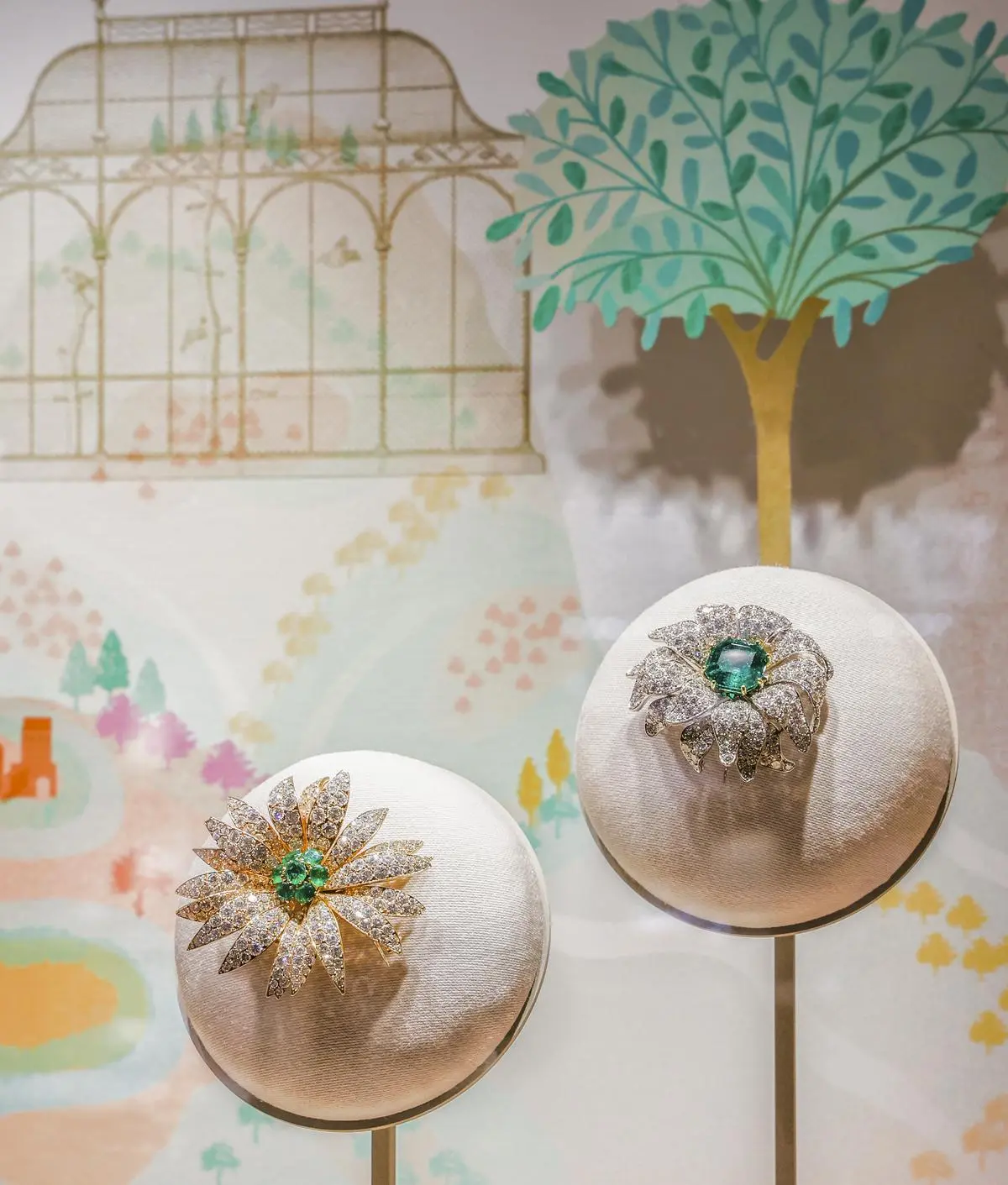
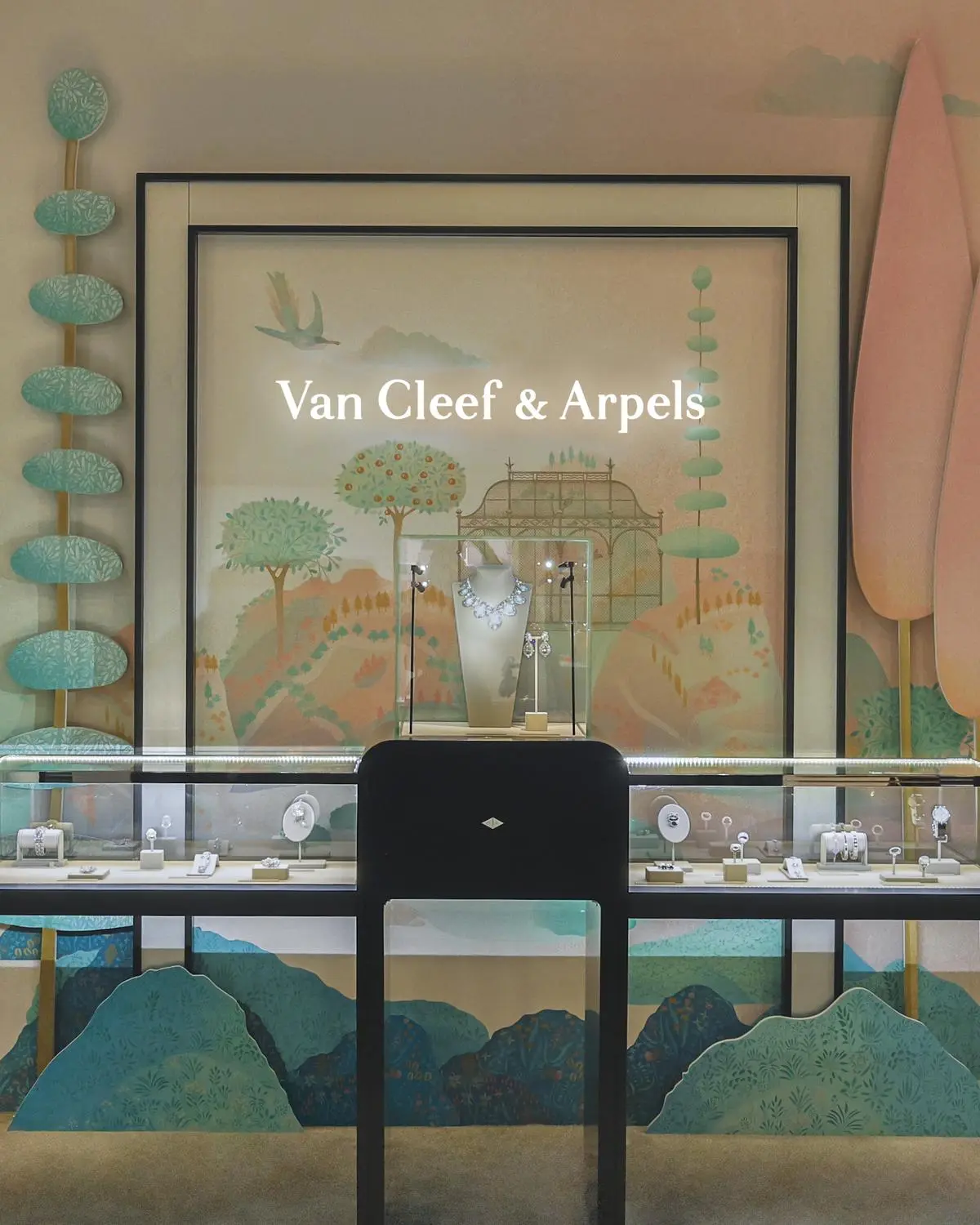
Between Dutch masters like Frans Hals, Picasso and other modern art, or imperial tables from the 18th century: an area with jewelry. “We are about seven contemporary jewelers here and about ten resellers, so it’s a small part of the fair,” says Vassiltchikov. A peripheral phenomenon that certainly has its relevance here, as lively activity was noticeable at the booth of the historic brand. Adorned with floral-fairy-tale elements this year, the presentation at the fair was meant to reflect the motif of connection to nature that runs through the history of the house’s pieces.

Because Van Cleef & Arpels possesses (besides jewelry artistry, of course) a treasure: an almost perfect archive that tells of the past.