Editor’s Note
This article highlights a significant rebound in the European luxury sector, driven by strong holiday sales. The performance of Richemont, in particular, underscores how key financial results can rapidly shift market sentiment.
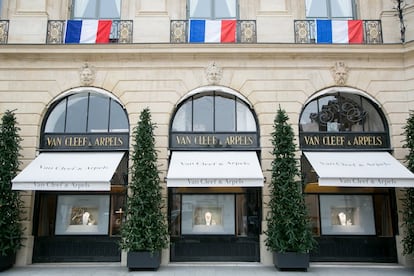
The heart of luxury has shown signs of life. After closing 2024 as one of the worst-performing stock market sectors in Europe (down 3.20%), 2025 has begun with a new air. The standout performer is Swiss group Richemont, which surged 16.4% on Thursday following the publication of its holiday season sales. The company, owner of jewelry brands Cartier and Van Cleef & Arpels, reported a 10% increase in sales during the last quarter of the year, which the company itself described as its best quarter in history, with €6.2 billion in revenue. This significantly exceeded analyst expectations, which had forecast growth of less than 1%.
The company was driven by sales of its high-end jewelry in both America and Europe, which compensated for the weakness in the watch business, the segment that has most weighed on the group’s earnings. The news propelled the Swiss company’s shares by up to 18% and spread euphoria to other companies in the sector. French groups LVMH and Moncler joined the gains, rising 9.1% and 6.3% respectively, while British companies Kering and Burberry rose 6.2% and 4%. European luxury, as a sector, is the second-best performer in the stock market in just 16 days of the year, up 5.64%; only behind the energy sector, which is up 6.32% to date. In Spain, Puig, linked to the sector through perfumes, also celebrated the optimism and led the gains on the Ibex with a 3.75% rise.
In the Asia-Pacific region—which was the area that most fueled the sector’s poor performance in 2024 due to low demand—Richemont’s sales fell 7% in the last three months, but this was a better result than expected. However, Chinese demand remains particularly weak. There, sales have fallen 18% due to lingering concerns over the real estate market.
Jean-Philippe Bertschy, an analyst at Vontobel, noted in statements to Bloomberg.
In the Bloomberg analyst consensus, 59% of the positions on the stock are ‘buy’ with a target price of €172.91. But today’s rise has already left the stock with little return potential, with shares trading at €173 each. Some companies catering to the wealthiest—such as Brunello Cucinelli or Hermès, which resisted the sector’s poor trend in 2024—have weathered the luxury slowdown better than those targeting a less affluent clientele. Just this week, Brunello Cucinelli reported a 12% increase in its quarterly revenue and forecast sales growth of 10% for this year and next. One of the Italian brand’s pieces are cashmere and vicuña jackets, which it sells for €17,500 each.
LVMH Moët Hennessy Louis Vuitton, the world’s largest luxury group and the largest company in the Stoxx 50, will announce its results next January 28. The French company, led by billionaire Bernard Arnault, is more exposed to the so-called soft luxury segment, which includes handbags and ready-to-wear fashion. It will then be seen whether the heart of luxury continues to show activity on the stock market electrocardiogram.