Editor’s Note
The enduring appeal of Buccellati, the Italian jeweler celebrated for its exquisite, entirely handmade pieces, is on display in Shanghai. This exhibition highlights a legacy of craftsmanship dating back to its 1919 founding, a tradition that continues to define the brand’s unique value.
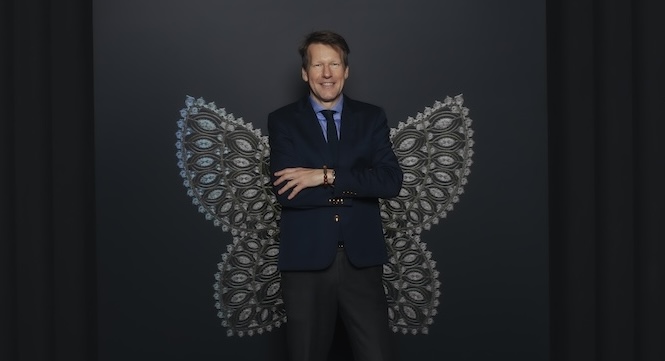
The touring exhibition “The Prince of Goldsmiths – Rediscovering the Classics,” held last year in Venice, Italy, by Italian jeweler Buccellati, is currently on display in Shanghai until January 5, 2026. The maison was founded in 1919 in Milan by Mario Buccellati. The exhibition’s name originates from the title “Prince of Goldsmiths” bestowed upon Mario by the writer Gabriele D’Annunzio in 1936. The brand’s jewelry is renowned for its delicate openwork inspired by the Renaissance and Italian architecture, and its silk-like, supple feel when worn. To this day, the founding family continues to uphold Mario’s aesthetics and techniques, offering entirely handmade jewelry. In 2019, marking its centenary, Buccellati became part of the Compagnie Financière Richemont group, blending tradition and innovation for global expansion. We spoke with Nicolas Rufenacht, CEO of Buccellati, about the highlights of the touring exhibition and the brand’s future strategy.
He assumed the CEO role in April last year, bringing extensive experience from auction houses and jewelry maisons. Shanghai was the first location chosen for the touring exhibition.
The Shanghai exhibition is even more powerful than the Venice one. It seamlessly blends the maison’s history, family stories, and core craftsmanship with beautiful digital signage, creating an immersive experience alongside archival pieces.
The exhibition also featured silverware pieces that poetically depicted scenes like forests with rabbits and birds or vibrant marine life, showcasing masterful engraving techniques. Buccellati applies its engraving artistry not only to jewelry but also to tableware, adding artistic value.
Regarding brand value, CEO Rufenacht stated:
To grow the business, production volume must increase. While many brands seek efficiency, Buccellati insists on handcraftsmanship in every step. The exhibition displayed tools used in various processes, and visitors could watch artisans at work.
he added. Few jewelers with over a century of history still have the founding family involved. Most founding families leave the business after selling the company.
Currently, third-generation Andrea serves as Creative Director and Honorary Chairman; his sister, Maria Cristina, is Global Communication Director; and their cousin Luca is Sales Director focusing on VIP clients while also overseeing the archives. Fourth-generation members Lucrezia and Filippo are also involved.
Since joining Richemont, investment has increased, and annual revenue has grown approximately fourfold in about five years. CEO Rufenacht noted:
Currently operating in 14 countries with 50 stores, mass production is impossible due to the all-handmade nature. Popular items can take months to deliver; pieces like the honeycomb-structured “Tulle” or intricately engraved “Macri” can take one to one and a half years.
Extremely delicate goldsmithing techniques like openwork and honeycomb require artisans with years of training. The brand not only trains artisans through its in-house educational institution but has also partnered with a Milanese specialized school to establish a master course in goldsmithing, focusing on preserving Italy’s unique techniques and nurturing artisans.
Due to its commitment to all-handmade production, the global growth strategy aims for selective and meaningful expansion rather than sheer scale.
The brand also plans to strengthen its silverware line, showcased in the exhibition.