Editor’s Note
Russia’s dominance of the global diamond trade, as detailed in this analysis, faces mounting geopolitical and economic pressures. The industry’s future hinges on how these challenges reshape a market long defined by Siberian supply.
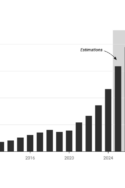
Russia is the world’s leading diamond producer. In 2024, the Kimberley Process estimated that Russian stones, mostly mined in Siberia, particularly in Yakutia, accounted for 35% of the global market, twice as much as its main competitor, Botswana (17%). The global diamond market is worth nearly $10 billion annually.
However, sanctions imposed on Moscow since 2022 threaten Russia’s dominance of the diamond market. The vast majority (around 90%) of Russian diamonds are produced by Alrosa, a state-owned mining company that extracts the equivalent of 40 million carats of diamonds annually.

Although it is the global market leader, nearly three-quarters of its sales were concentrated in G7 countries before the war. Since 2024, Russian diamonds have been subject to an embargo in the EU and the G7. After leaving Antwerp, the world’s diamond capital, Russian companies have relocated to Dubai or Hong Kong.
The loss of the European market, coupled with a drop in the price of Russian diamonds last year, contributed to a 25% contraction in Alrosa’s revenue in the first half of 2025. The company’s earnings before interest and taxes (EBITDA) collapsed by 42% year-on-year, while its net debt multiplied by 10, rising to 61 billion rubles (700 million euros) from 6.34 billion (70 million euros) last year.
The Russian Ministry of Finance announced at the end of October its intention to purchase diamonds from Alrosa, likely for several tens of millions of dollars.

Prior to a Russian state purchase of $100 million worth of diamonds from Alrosa in November 2024, the last transaction of this type dated back to 2012.
Despite the embargo, a portion of Russian diamonds—almost all of which are cut in India—manages to be sold on the European and North American markets. However, after postponing it twice following the G7 decision at the end of 2023, the EU is expected to implement its traceability mechanism starting January 1, 2026, which will allow tracking the origin of rough diamonds throughout the supply chain.

Russia is not the only producer affected by the crisis that has plagued the diamond market for several years. Alrosa anticipates that global production this year will reach its lowest level in 20 years. The company’s situation in the country is further aggravated by the high key interest rates of the Central Bank.