Editor’s Note
This article explores how India’s centuries-old tradition of gems and jewelry has evolved beyond its cultural roots to become a significant economic powerhouse, driving growth and showcasing the nation’s craftsmanship on the global stage.
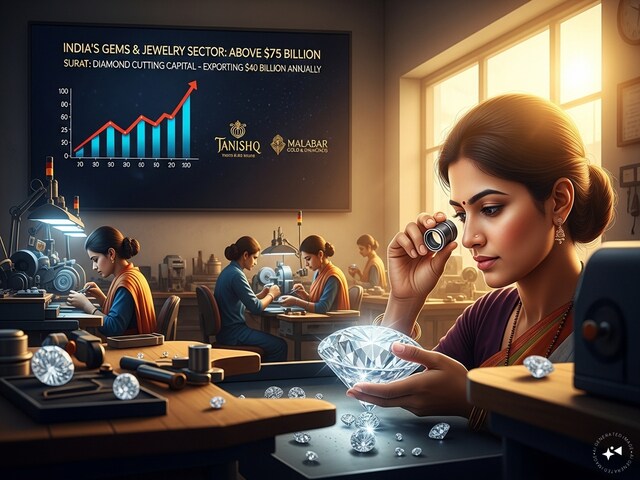
In India, gems and jewelry are not merely adornments but symbols of tradition, culture, and economic strength. For centuries, the intricacy and artistry of Indian craftsmen have been renowned worldwide. Whether it’s the precious emerald and topaz-studded necklaces of Rajasthan or the temple-inspired gold jewelry designs of South India, every piece embodies the soul of India. However, this heritage is no longer just traditional; the gems and jewelry sector has become the largest engine for India’s exports and employment.
The Indian gems and jewelry industry’s market value has now surpassed $75 billion, contributing approximately 7% to the country’s total manufacturing GDP. This sector directly or indirectly employs over 5 million people, the majority of whom are skilled artisans, designers, and small traders. In the trading hubs of Mumbai, Surat, Jaipur, and Chennai, millions of carats of diamonds and gems are cut and polished daily. Surat, in particular, is known as the world’s diamond cutting capital, where about 90% of diamonds are processed and sent to the international market.
India is now the world’s second-largest jewelry exporter. In the fiscal year 2024, India exported gems and jewelry worth approximately $40 billion. Key markets include the USA, UAE, Hong Kong, Belgium, and Singapore. Government initiatives like ‘Make in India’ and ‘Gems and Jewelry Parks’ have accelerated the sector’s growth. India recently signed the Comprehensive Economic Partnership Agreement (CEPA) with the UAE, which has reduced taxes on jewelry exports. This has directly benefited small and medium jewelry manufacturers.
Previously, jewelry was made solely by hand, but modern tools like Computer-Aided Design (CAD), 3D printing, and Artificial Intelligence have transformed the sector. Young designers are giving traditional art a modern look, such as adapting Kundan or Polki designs into Western styles. Digital platforms have also opened new markets for the industry. Online gold jewelry purchases from Tier-2 and Tier-3 cities have recorded a 30% increase. Brands like Tanishq, Kalyan Jewellers, Malabar, and Bluestone are further fueling this trend.
India not only exports jewelry but is also one of the world’s largest gem markets. The ‘Gems and Jewelry Expo’ in Jaipur attracts traders and collectors from over 30 countries annually. Sapphires from Manipur and Kashmir, topaz from Odisha, and opals from Andhra Pradesh are now gaining recognition in the international market.
A significant number of women are now entering the gems and jewelry sector, particularly in designing, polishing, and marketing. Government initiatives like ‘Skill India’ and the ‘Gem & Jewellery Skill Council of India (GJSCI)’ have provided new direction for women’s entrepreneurship.
India’s goal is now to grow this industry to $100 billion by 2030. To achieve this, there is a growing focus on “Green Gold” or sustainable jewelry, promoting the use of recycled gold, lab-grown diamonds, and carbon-neutral manufacturing.