Editor’s Note
This article examines a recent report highlighting critical security lapses at the Louvre Museum during a major theft, revealing that a mere 30-second delay allowed the perpetrators to escape. It underscores broader questions about institutional preparedness and response protocols.
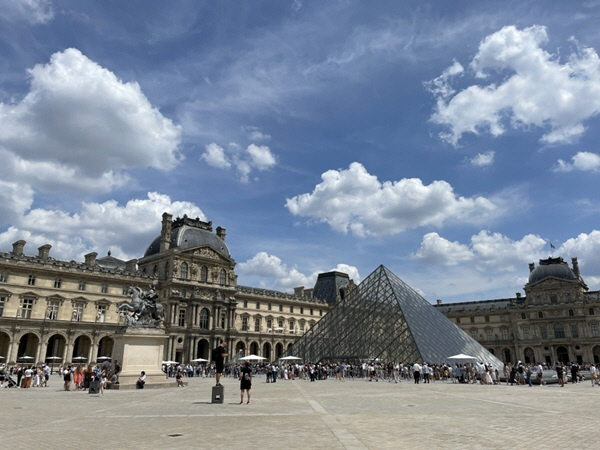
It has been revealed that if the Louvre Museum in Paris, France, had responded just about 30 seconds earlier during the jewelry theft that occurred last October, the thieves could have been caught, causing regret.
The French Ministry of Culture’s Inspectorate General released a report on the administrative investigation into the Louvre Museum theft on the 10th (local time), as reported by the local media Le Journal du Dimanche.
Unlike a criminal investigation which seeks to find and punish the perpetrators, the administrative investigation examines the circumstances of how the security system was breached and the reasons for the lack of a swift response.

pointed out Noël Corbin, Director of the Inspectorate General, while submitting the results report to the Senate’s Cultural Affairs Committee that day.
Pascal Mirene, an investigator who participated in this inquiry, explained:
The report concluded that the crime occurred because, although the museum’s weak security system had been pointed out multiple times before the incident, no countermeasures were prepared.

A 2019 security audit supervised by the high jewelry brand Van Cleef & Arpels pointed out security issues in the Apollo Gallery, where this theft occurred, but no significant improvements were made. Furthermore, Laurence des Cars, who took office as museum director in 2021, did not receive the results of that audit.
pointed out Laurent Lafon, Chairman of the Senate Cultural Affairs Committee, adding,

Misfortune has continued for the Louvre Museum even after the theft. In mid-last month, the Campana Gallery, an exhibition hall for ancient Greek art on the first floor, was temporarily closed due to the building’s aging. On the 7th of this month, a sewage leak occurred in the library responsible for ancient Egypt within the Louvre Museum, damaging approximately 300-400 books that got wet.