Editor’s Note
This article discusses expert skepticism regarding the potential commercial release of certain items, noting that while their current location is under scrutiny, a public reappearance is considered unlikely.
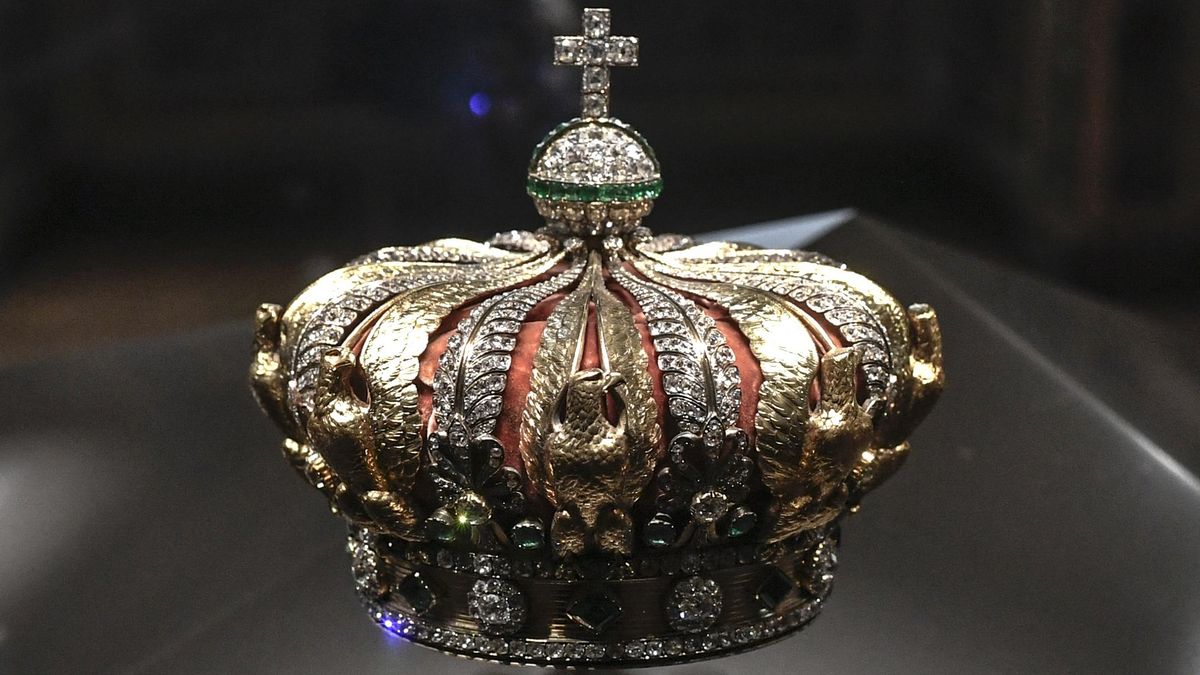
Experts doubt the pieces can be placed on the commercial market, as all eyes are currently on their whereabouts. However, they also do not believe they will reappear.
Sunday. 9:30 AM. Half an hour after the opening of the Louvre Museum, four hooded men enter through a window and take nine pieces from the Apollo Gallery, which houses the main jewels of the French royalty. One of them, the priceless crown of Empress Eugénie, is dropped along the way. The rest remain missing. The thieves needed barely ten minutes to commit the theft. Now, what will they be able to do with the pieces? Will it be possible to introduce them into a market where they now have all the attention?
José Luis Guijarro, director of the Master’s in Art Market at Nebrija University, explains to elDiario.es that it is complicated for them to be recovered, although he also believes they will not be able to be sold:
In the same vein is Joaquín Gallego, a specialist in the Art Market, who bets that the way out will be:
Yolanda Berger, director of the Diploma in Art Market at the University Carlos III of Madrid, poses the question:
The expert in illicit trafficking, for his part, states that jewels “move” more easily than other works like paintings, which are more complicated to transport while evading all kinds of controls. He also emphasizes that in this case, they are pieces of great economic value, but above all “patrimonial, affective, symbolic, and above all cultural for the country. France is now humiliated because it allowed this to be stolen.”
Joaquín Gallego recalls that it was precisely the Louvre that marked the “starting point of interest in the recovery of stolen works.” All this after the theft of Leonardo Da Vinci’s Mona Lisa disappeared in 1911. La Gioconda eventually reappeared. The perpetrator was Vicenzo Peruggia, a former employee of the museum, who at the time argued that he wanted to return the painting to Italy, its true home, as he believed it was part of the canvases that Napoleon had taken to France in the early 19th century.
Another of the most notorious thefts in recent years occurred in the neighboring country. In 2010, five paintings valued at 500 million euros, including a Picasso and a Matisse, were taken from the Museum of Modern Art.
opines Joaquín Gallego, who is clear that in both cases it is a ‘commissioned’ theft, in such a way that someone hires another person to steal “few, very concentrated pieces,” like what just happened at the Louvre.
Yolanda Berger is not so sure, despite the fact that there are those who become “infatuated” with a particular work. However, aware that collectors usually want to “show” their belongings, she asks:
What she does maintain is that these pieces have “no place in the market. Being jewels, through the commercial route is impossible.”
José Luis Guijarro warns that history is composed of other robberies perpetrated in the most “shoddy, easy ways, simply by entering through a window”:
The teacher blames fiction for having contributed to this perception within the collective imagination, due to the “films that romanticize security. This depends on the budget, and you have to choose what to protect and what not, and with what measures.” Titles like The Thomas Crown Affair (John McTiernan, 1999), The Picasso Gang (Fernando Colomo, 2012), Trance (Danny Boyle, 2013), and Bean: The Ultimate Disaster Movie (Mel Smith, 1997), could be framed in this trend.
When assessing where the Louvre pieces could end up, Guijarro points to the black market:
he notes, “although less and less, there is still a lot of fraud, money laundering, forgeries.”