Editor’s Note
While Kering’s sales declined, the performance surpassed expectations, driven by Gucci’s new bags and strong jewelry growth. This signals potential recovery in the luxury sector, as reflected in the sharp stock rise.
Kering’s sales declined but performed better than expected, with Gucci’s new bags attracting attention and jewelry seeing double-digit growth. The stock price surged sharply.
As LVMH has hinted in recent days, the luxury industry may be seeing light at the end of the crisis tunnel. Kering’s stock price is also rising, along with other luxury brand stocks.
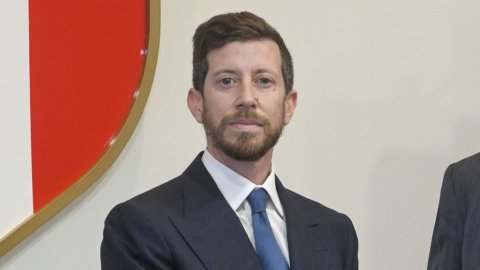
A few weeks after new CEO Luca de Meo took office, Kering’s sales decline was not as severe as feared, indicating a recovery in demand for luxury goods in North America.
The group owned by billionaire Pinault, which includes flagship brands Gucci, Yves Saint Laurent, and Bottega Veneta, saw a 5% decline in sales in the third quarter, significantly better than the analyst forecast of an 8.7% drop. Gucci’s sales fell by 14%, slightly below expectations. Meanwhile, Yves Saint Laurent and Bottega Veneta performed above expectations.

Kering shares rose more than 9% in trading in Paris, lifting the entire luxury sector on European and Milan stock exchanges. Moncler (+1.88%) and Brunello Cucinelli (+1.00%) were among the top performers on the main list, while L’Oréal and Hermès were also well-bought in Paris.
Kering’s stock has risen more than 40% this year, as investors pin hopes on de Meo’s ability to rebuild the group. The new CEO has also shown a willingness to act quickly, announcing this week the sale of its beauty division to L’Oréal for 4 billion euros. This sale includes the Creed brand and the development of Gucci beauty products. This move aims to reduce debt levels, which had been a concern for investors.
Attention is focused on Gucci, whose sales had lagged behind competitors in recent years during the luxury crisis, but is now showing improvement thanks to the launch of new products like the Mini GG bag and smaller versions of the Jilie bag, featuring the double-G logo.
Gucci accounts for about half of Kering’s profits, making it the most important brand for the company. Due to weak demand, the Italian brand’s management had to change its top designer twice in about two years, most recently hiring veteran Balenciaga designer Demna Gvasalia at the beginning of this year.

In contrast, the fashion houses Yves Saint Laurent and Bottega Veneta recorded results above expectations. The French brand’s quarterly sales were 620 million euros (down 7%), while the Italian maison’s sales were 393 million euros (down 1%). Sales for the group’s other fashion houses were 652 million euros (down 5%). Balenciaga saw improvements across all product categories, particularly in North America, while Alexander McQueen saw a slowdown in revenue decline due to increased sales in women’s ready-to-wear and apparel. Brioni maintained growth thanks to strong retail growth in Western Europe, North America, and Japan.
The jewelry houses recorded a very solid performance, with double-digit revenue growth. “Particularly encouraging” was Boucheron, which saw increased revenue in the United States and the Asia-Pacific region. Pomellato’s high-end jewelry line is a “great success,” while Qeelin maintained a “very positive” trajectory in the Asia-Pacific region.
The Kering division for eyewear and corporate revenue in the third quarter was 448 million euros, an increase of 2%. Revenue for Kering’s eyewear division increased by 7% on a comparable basis, thanks to strong performance across key regions and the brand portfolio.
The partnership with Valentino, announced in September and starting from the Spring-Summer 2026 collection, represents a new phase in the development of Kering Eyewear.
Retail sales in Q3 2025 decreased by 6% on a comparable basis, with all regions contributing to a sequential improvement from -16% in Q2, while wholesale sales decreased by 2%.