Editor’s Note
This analysis examines LVMH’s recent financial rebound, highlighting a return to growth in key markets and divisions after a period of sluggish sales. The performance in China is noted as a significant driver of this recovery.
The luxury leader posted growth exceeding expectations across all its divisions, particularly in fashion and leather goods. Volumes and traffic have recovered, notably in China where local consumer purchases recorded a clear increase.
For several quarters, the group with around 75 houses had seen its status tarnished by sluggish sales. The company notably reported a 9% decline in comparable data in fashion and leather goods, its most important (and most followed) division, in the second quarter.
Its stock had plunged heavily. By the end of June, the share price of the luxury leader was down about 30% for the entirety of 2025. The company even temporarily lost its crown as the largest market capitalization on the Paris Stock Exchange to Hermès, a title it has since reclaimed.
However, in recent weeks, a wind of optimism has swept through research departments, with several analysts switching back to a buy (or equivalent) rating on the stock.
On Tuesday evening, LVMH bolstered their confidence. The group delivered activity significantly above expectations for the third quarter.
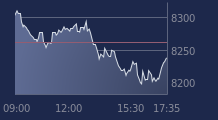
The market applauds. This Wednesday, LVMH shares rose 12.2% at the start of the session, by far the strongest gain in the CAC 40. Often considered a barometer of the sector due to its many businesses (leather goods, clothing, wines, jewelry, watches, selective distribution, watchmaking, perfumes, cosmetics), LVMH is pulling the entire luxury sector in its wake. Hermès gained 6.5% and Kering 8%.
The company chaired and led by Bernard Arnault delivered a performance much more in line with its rank than its previous publications.
From July to the end of September, the company recorded comparable growth of 1%, while the consensus (the average analyst forecast) anticipated a decline of 0.6%.
Fashion and leather goods limited the decline in its revenue to 2% in comparable data, while the consensus was at -3.9% on the same basis. According to Jefferies, the “buy-sides,” i.e., to simplify, the market, generally more demanding than the consensus, themselves expected a decline of 3%.
LVMH recorded a significant sequential improvement (from one quarter to the next) in this division after having suffered a 9% drop in the second quarter, in comparable data.
Certainly, the group was aided by a favorable comparison base. In the third quarter of 2024, LVMH was penalized by a certain economic wait-and-see attitude ahead of the US presidential election (which was held in November). This effect subsequently “reversed” in the fourth quarter.
UBS estimated that, mechanically, this favorable comparison base would have a positive impact of six percentage points on sales in the third quarter compared to the second.
But the improvement shown by fashion and leather goods (seven percentage points) goes beyond this simple base effect. Royal Bank of Canada also notes that, over two years, the revenue trend is also improving (a decline of 7% versus a decline of 8% in the second quarter),
appreciates the Canadian bank.
The Chief Financial Officer, Cécile Cabanis, provided several crucial indications during the conference call with analysts, the tone of which was described by Jefferies as “more cheerful” than previously.
The executive explained that the Chinese “cluster,” i.e., luxury purchases by Chinese consumers in China but also abroad, was close to stabilization. Chinese tourism spending abroad showed a double-digit decline, she said, notably due to the appreciation of the yen in Japan which makes luxury product purchases in that country less attractive (incidentally, LVMH’s overall sales still fell 13% in Japan during the quarter).
But local spending by Chinese consumers, i.e., in China, is now up
which can roughly be translated as ranging from 4% to 9%, she added.
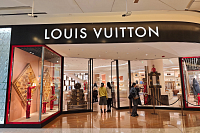
Cécile Cabanis noted the success of “The Louis,” an impressive flagship store shaped like a steamship launched at the end of June in Shanghai. Described as “fun” by the executive,
explained the CFO. Inside the boat, the visitor
before exiting through a boutique
selling gifts, or luggage, continued Cécile Cabanis.
The American cluster in the division progressed and, more broadly, LVMH’s sales increased by 3% in comparable data for the quarter in the United States after stabilizing in the second.