Editor’s Note
This article explores how 20th-century jewelry broke from tradition by drawing inspiration from everyday life, tracing the origins of Boucheron’s iconic Question Mark necklace from a simple botanical sketch to a revolutionary design.
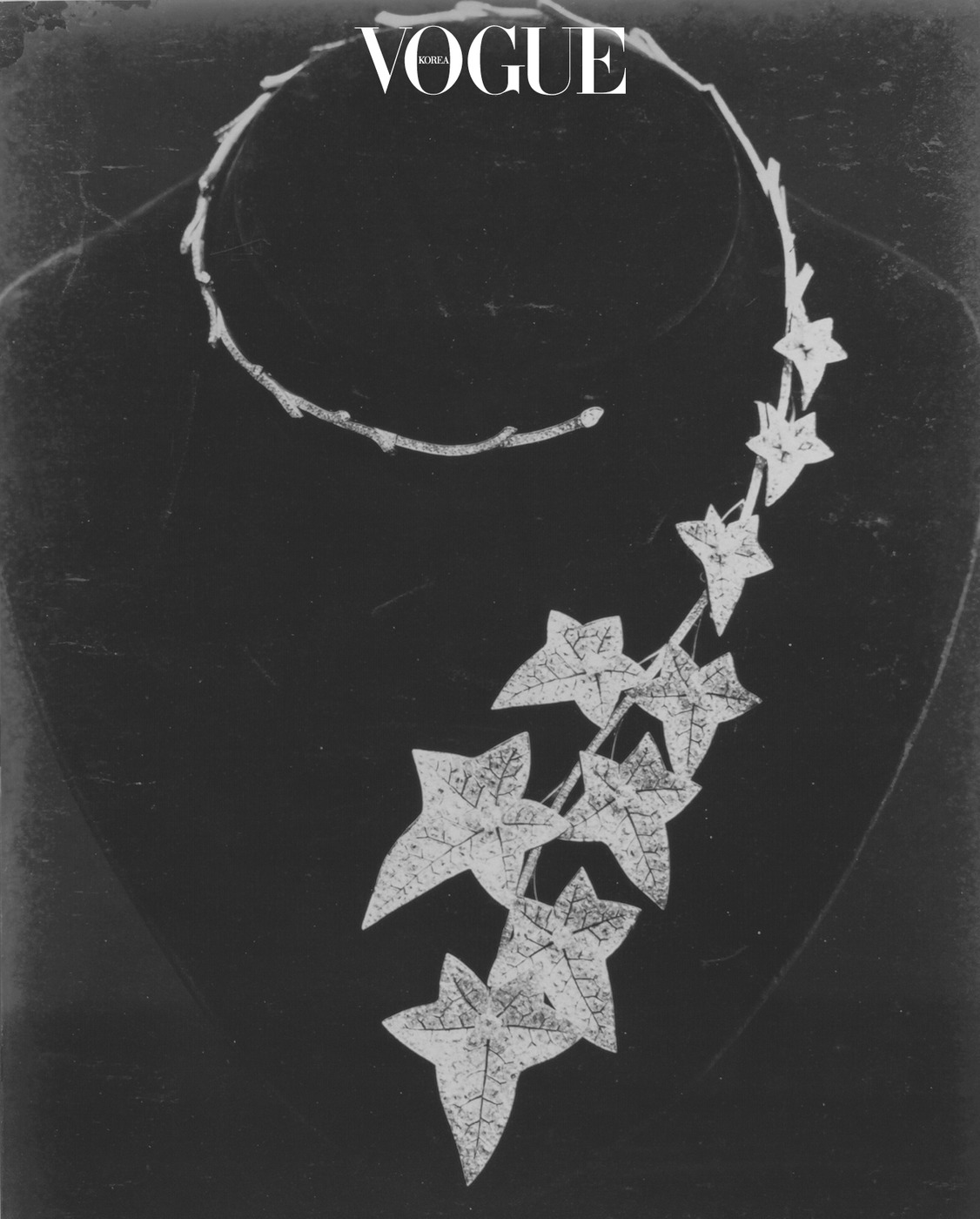
Why did 20th-century jewelry draw inspiration from the less noble and less refined? This is the story of the defining moments in the invention of modern jewelry, captured from everyday life.
In 1879, Frédéric Boucheron commissioned the first drawing of the Question Mark necklace from French painter Paul Legrand, who sketched a long ivy vine. Two years later, in 1881, this sketch evolved into the first model of the iconic necklace. This motif, beloved by Frédéric Boucheron, was transformed through the Maison’s craftsmanship into six different designs from 1881 to 1889. Instead of the conventional flowers favored by other jewelers, it replicated the ivy covering the arches of the Palais Royal, where the first boutique was located, and featured leaves that seemed to come alive with the wearer’s movement, achieved through the tremblant technique.
Until the 19th century, jewelry primarily served as a symbol of status and power. However, jewelry began to unfold in a completely different direction starting from the 20th century. This was the point where jewelry, once merely opulent treasure, began to express individuality and become exciting.
The French jewelry house Boucheron opened this prologue. In the 19th century, necklaces were so intricate that women had difficulty putting them on alone. In an era when ‘elegance assisted by a maid’ was taken for granted, Frédéric Boucheron, the founder of Boucheron, posed a question in 1879:
Thus, in 1881, the Boucheron ‘Point d’Interrogation’ necklace, also known as the Question Mark necklace, was born. It featured a structure that wrapped around the neck without a clasp. It boldly abandoned the perfect symmetry formula of existing necklaces, opting for an organic curve that followed the neckline, and concealed a spring blade inside to ensure a graceful fit. The design, replicating the wild ivy that decorated the arches of the Palais Royal instead of the floral patterns preferred by other jewelers of the time, was also captivating. This entirely novel necklace was hailed as an innovation in high jewelry and won the Grand Prix at the 1889 Paris Exposition Universelle.
In the 1930s, entering the so-called Machine Age and influenced by the German Bauhaus movement, jewelry design became even more intriguing. Legendary jewelry designers like Jean Fouquet, Raymond Templier, and Gérard Sandoz discarded the grammar of existing jewelry design that followed elegance and introduced new jewelry designs inspired by geometric forms and gloss. They boldly mixed precious and non-precious metals and took unexpected elements like car radiator grilles, tank tracks, and mechanical gears as motifs. They diminished the intrinsic value of gemstones, elevating jewelry to true art objects and redefining jewelry from a mere status symbol to an artistic objet d’art.
Raymond Templier’s words capture the contemporary aspect of jewelry design:
Their works have been re-evaluated in the collector’s market in recent years.
This new jewelry aesthetic can also be found at the Roman jewelry house Bulgari. Bulgari boldly introduced industrial aesthetics. In the 1940s, inspired by gas pipes, they imparted flexibility to metal bands and boldly incorporated structures reminiscent of mechanical parts like chains, nuts, and bolts into jewelry. The iconic Bulgari style ‘Serpenti Tubogas,’ still widely used in watches and jewelry today, is a代表作.
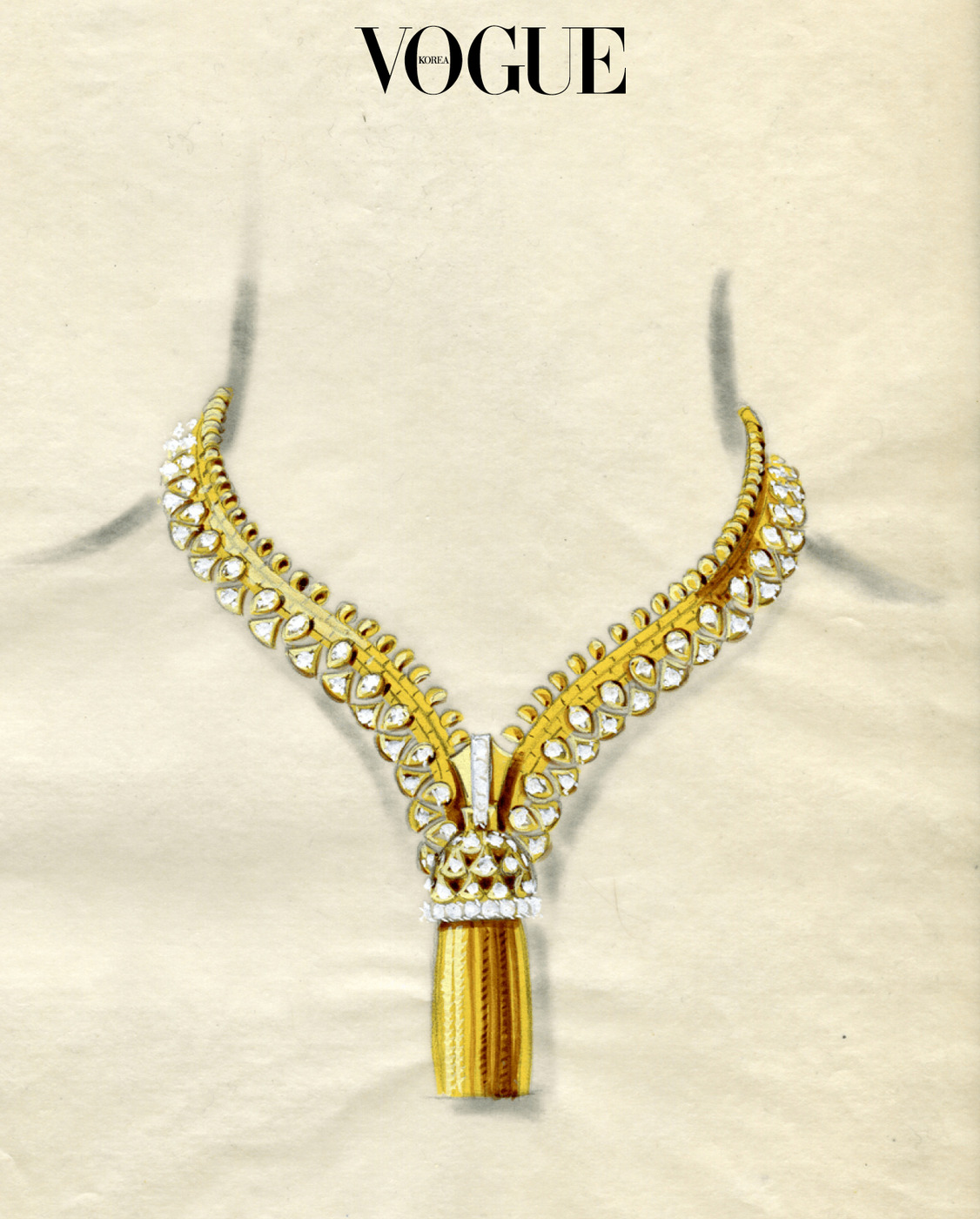
Meanwhile, Van Cleef & Arpels’ ‘Zip’ necklace, inspired by a zipper, was also an interesting discovery from life. In the late 1930s, Wallis Simpson, then the lover of King Edward VIII of England and a renowned European fashion icon, jokingly suggested an idea:
Over a decade later, a real zip necklace made of diamonds and platinum was introduced to the world.
This trend of contemporary jewelry design continued, satisfying diverse tastes even with daring items like safety pins and razor blades. But ultimately, it culminated in the Cartier ‘Love Bracelet,’ which gained widespread public resonance.
The now-famous Cartier Love bracelet was born in 1969, a time when the spirit of ‘Make Love, Not War’ flowed. Aldo Cipullo, one of the era’s representative jewelry designers born in Naples, Italy, recalled suffering from painful insomnia due to a personal heartbreak.
The Cartier Love bracelet, born from Aldo Cipullo’s heartbreak, had a structure that required lovers to fasten it onto each other’s wrists themselves, and a special screwdriver was needed to remove it. The design imbued with mechanical romance was inspired by a hardware store in New York that Cipullo frequented with his brother.
Aldo Cipullo, who designed the Cartier Love bracelet, defined it as:
Vivienne Becker, author of Cipullo: Making Jewelry Modern, stated:
It challenged the traditional concept of jewelry as a symbol of status and wealth, completing a unisex design that both men and women could wear daily.
Thanks to the great inventions of the 20th century, born from the ideas and aesthetics of great designers, jewelry gained multifaceted charm, allowing even those with contemporary tastes like the writer to enjoy it.