Editor’s Note
This excerpt traces the humble origins of Sotirios Voulgaris, the founder of the Bulgari brand, from his birth in Epirus to his early entrepreneurial steps in Italy. It highlights the journey from a modest beginning to establishing a legacy in jewelry.
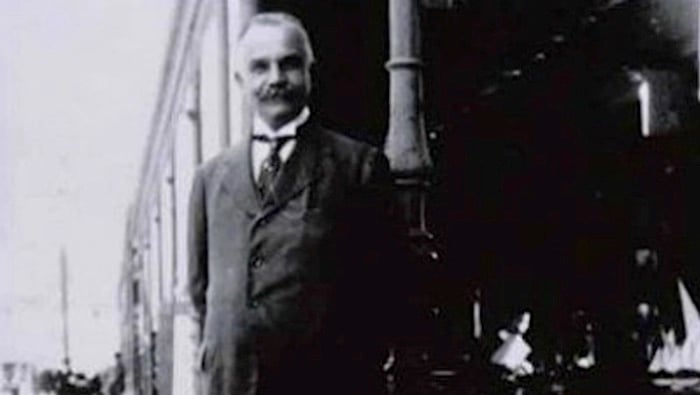
The “father” of the high fashion brand was born in March 1857 in the Greek region of Epirus and was one of eleven children of his father Georgios Voulgaris and his mother Eleni Stronggaris.
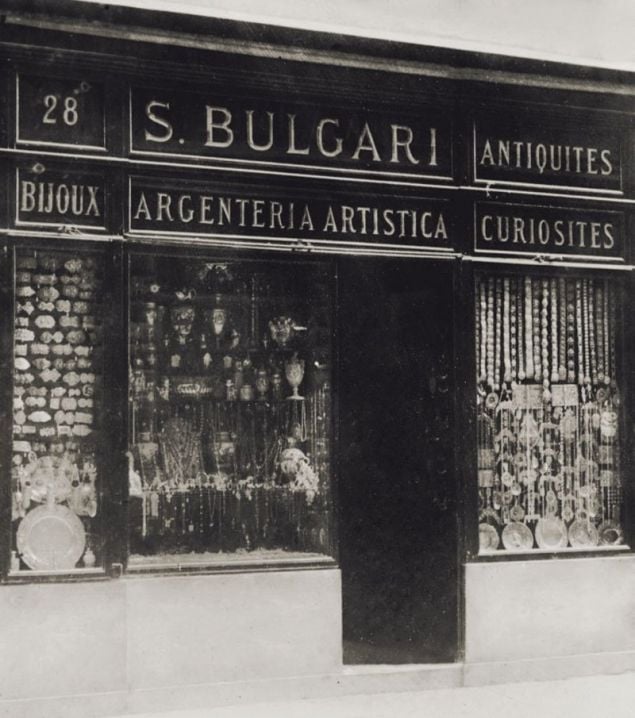
In 1880, Sotirios moved to Italy for a better future with only a few cents in his pocket. His talent and passion working with valuable metals and stones earned him a few profitable jobs before he opened his own jewelry shop in 1884.
In its early days, Bulgari was noted for its silver jewels that were inspired by ancient Greek, Roman, and Byzantine art.
One of the brand’s most popular pieces during that time was the “Trombino,” a small trumpet-shaped ring that became a top seller in Rome and Paris during the 1920s and 1930s. With hard work and dedication to his art, Sotirios Voulgaris laid the foundations of the unique Bulgari style while more and more stores kept opening across Italy.
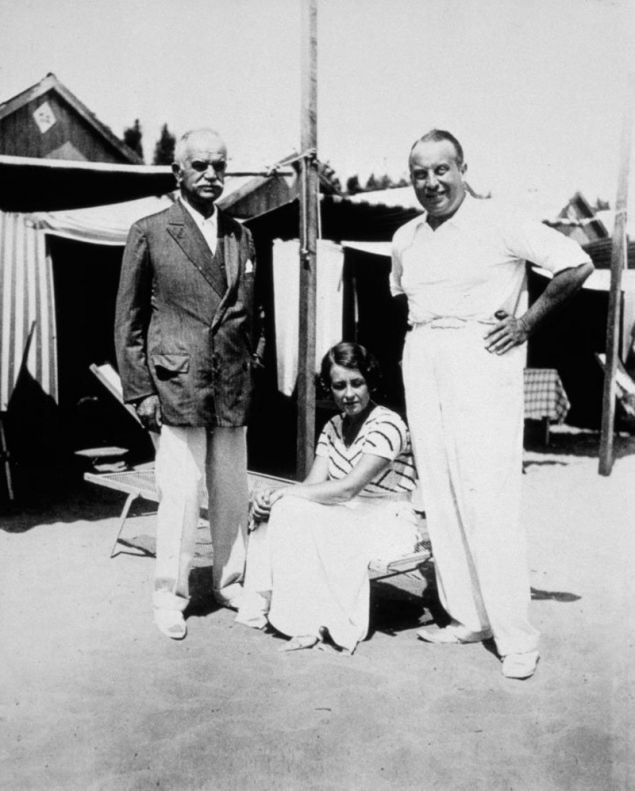
In 1932, Sotirios died at the age of 75, leaving behind a great legacy to his two sons, Giorgio and Costantino, who were the ones responsible for the image Bulgari House has today. The BVLGARI logo was used for the first time in 1934, when its gilded brass letters graced the central doorway of the Via Condotti flagship store.
The two brothers continued introducing new elements to the fashion house with the use of gold becoming more relevant for the creation of jewelry. By the beginning of the 1940s, the brand also introduced their famous Serpenti bracelet-watches, which soon conquered the markets.
During the 1950s, Bvlgari launched its first floral brooches that became widely known as “en tremblant” due to their trembling diamond corollas. In the meantime, the house had already attracted its first celebrities with Elizabeth Taylor, Anna Magnani, Ingrid Bergman, and Gina Lollobrigida being some of the most famous clients of the brand.
Giorgio’s death in 1966 brought his son Gianni to the forefront. Gianni had led the Bulgari company for nearly twenty-five years. With Gianni as chairman and CEO, the house entered an era of global expansion in the 1970s with Bvlgari stores opening in New York, Geneva, Monte Carlo, and Paris.
Many new motifs made their debut during that era while the predominant use of yellow gold for the company’s jewels became known as a Bvlgari trademark globally.
In the decades that followed, the company remained successful, with the house seeing 150 percent revenue growth between 1997 and 2003.
In 2014, Bvlgari celebrated the 130th anniversary of the brand while, in 2017, a new jewelry manufacturing headquarters was established in Valenza, Italy, the largest in Europe with a total area of 14,000 square meters.
With over four thousand employees around the world and a net worth of billions of dollars, BVLGARI is, nowadays, a global icon without borders. However, the house doesn’t forget its founder’s roots and country of origin.