Editor’s Note
This analysis highlights a critical shift in financial security, where systemic vulnerabilities are increasingly exploited by sophisticated criminal networks. The article argues that reactive legal measures are no longer sufficient, advocating instead for comprehensive “pre- and post-event” diagnostics to manage unpredictable risks. As these threats become integral to global market dynamics, proactive preparation is now essential for resilience.
Weak Systems Are Exploited by Criminal Organizations, Unpredictable Risks Require Proactive Preparation
Already Essential in Global Financial Markets, Moving Beyond Legal Advice to ‘Pre- and Post-Event’ Diagnostics
Preparing Partnership Services with Overseas Law Firms, Steady Increase in Client Requests from Major Financial Groups and Virtual Asset Firms
“In the future, how well a company adheres to international anti-money laundering standards will directly translate to its competitiveness.”
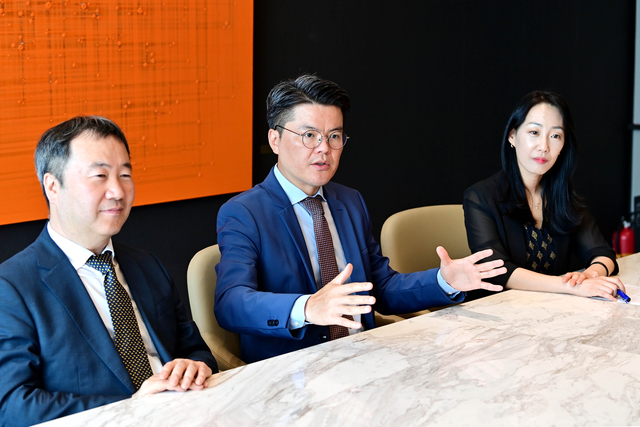
Attorney Kim Si-mok (33rd Judicial Research and Training Institute class), who leads the Anti-Money Laundering (AML) team at law firm Yulchon, is considered a ‘pioneer’ in the industry for establishing Korea’s first integrated solution system covering three areas: legal response, internal structural improvement, and consulting for AML. Recently, with the addition of Senior Specialist Lee Ho-jae, a former AML specialist supervisor from the Financial Supervisory Service, and Internal Control Consulting Center Head Chu Min-su, who has 23 years of AML consulting experience, the team is evaluated as having built a dream team recognized by all.
In practice, major financial holding companies such as Hana, Woori, NH Nonghyup, and Shinhan, as well as key financial firms like Samsung, Mirae Asset, and Meritz, have all utilized their services. Major digital financial companies and virtual asset firms like Kakao Pay, Naver Financial, Toss, and Upbit have also had their internal AML systems reviewed. In an interview with Munhwa Ilbo on the 28th at the Parnas Tower in Samseong-dong, Gangnam-gu, Seoul, Attorney Kim and others emphasized, “Neglecting AML compliance efforts can lead not only to business suspension measures but also to exclusion from the global market,” and stated, “It is time for financial institutions to have tailored integrated solutions that help them fully establish internal control systems to properly comply with domestic and international AML regulations.”
— AML is an unfamiliar area for the general public. What is your team’s goal?
“Anti-money laundering is currently the ‘hottest’ area in international finance. It has already established itself as an essential part of corporate internal control compliance. Financial institutions must strengthen their internal structures through thorough legal review and consulting to reduce unpredictable risks. Borders no longer exist for global capital. There is also the opposite side. The stronger the AML regulations, the more conservatively financial institutions have to operate. Users become inconvenienced, and cases of inappropriate regulations or demands for personal information increase. That’s why there is a need for a role to help ensure that legal, appropriate, and accurate regulations are applied to companies. Our team’s short-term goal is to go beyond rapid response and meticulous legal advice to provide comprehensive AML compliance services to client companies. Comprehensive compliance consists of three main parts. First, we proactively diagnose and improve vulnerabilities in financial companies’ AML systems. Second, we effectively respond to AML audits and inspections by financial supervisory authorities. Third, the post-process is important. We enhance the system itself by reflecting inspection trends, points of criticism, and authoritative interpretations from financial authorities. In the medium to long term, we plan to build global services through partnerships with local law firms overseas.”
“The AML system is a core pillar for preventing crime, not just in one country but globally. Initially, awareness of this system was low among domestic financial institutions. Now, Korean financial companies have also shifted their awareness and are making efforts to comply. However, each financial institution has a different scope of business and significant differences in work environments such as personnel, organization, and facilities. Even a small oversight can lead to a major incident.”
“Companies that do not comply with AML regulations will inevitably be forced out of the market. However, it is important to maintain a line that does not stifle business activities. During the consulting process, we constantly deliberate on what level to recommend and what the appropriate level is, while communicating with the company.”
— Please introduce a case where you achieved results.
“We recently completed an AML inspection and consulting project for a large securities firm. At a meeting with management, we announced results recommending a major organizational strengthening. The CEO immediately ordered an organizational restructuring and personnel appointments, to be applied from early August. While the profit-seeking sales department and the safety-seeking compliance department are complementary in a broad sense, they constantly clash in practice. When a law firm presents legal advice and consulting results, it gives strength to the compliance department in persuading the sales department. In this process, the law firm gains the satisfaction of contributing to corporate soundness and market safety.”
— Why should Korean companies pay attention to the AML system?
“When foreign financial companies enter the Korean market, they always inquire about AML regulatory requirements. It’s not just financial institutions. Global jewelry (precious metals), art, auction houses, and even oil refineries check AML-related standards when entering Korea. It’s a deeply ingrained,理所当然 procedure. Korea is also strengthening regulations to meet international standards. Not long ago, the Financial Supervisory Service conducted intensive inspections on large securities firms. Recently, inspections have expanded to life insurance companies as well.”
— Following the launch of the second Donald Trump administration, international policies to incorporate virtual assets into the mainstream are being further strengthened.
“Virtual assets are often used for money laundering due to their borderless use and anonymity. Korea is also imposing AML obligations on virtual asset business operators and strengthening inspections and sanctions, but the money laundering risk remains relatively high.”
“A global system is being built to prevent virtual assets, including stablecoins, from being used for money laundering. The Financial Action Task Force (FATF) also mentioned in its June report that regulations based on existing jurisdictions do not work properly for virtual assets, and regulatory failure can lead to global consequences. As an FATF member country, its recommendations and guidelines influence Korean domestic law. The international community is questioning whether sufficient AML measures are being taken considering the unique characteristics of virtual assets. We expect that a system to prevent money laundering risks will be established during the future legislative process for virtual asset-related laws, such as the Digital Asset Basic Act.”
“The international community is accelerating efforts to establish transnational regulatory standards. If Korea does not faithfully follow international standards, it will be difficult to participate in the global market. The standards are becoming increasingly sophisticated and stringent. The ability to accurately understand and properly implement these standards will be key to future global competitiveness.”