Editor’s Note
This article reports on Roborock’s data-sharing practices, specifically regarding the transfer of Korean users’ personal information to a Chinese IoT firm. The company has stated its current policy is compliant and sees no need for revision. We present this information for reader awareness.

Roborock has drawn a line, stating there is no issue with its policy that allows for the sharing of Korean users’ personal data with a Chinese Internet of Things (IoT) company, and that it has no immediate plans to revise it.
According to its ‘Personal Information Processing Policy,’ Roborock can share Korean users’ personal data with ‘Hangzhou Tuya Information Technology’ (Tuya), an IoT company headquartered in Hangzhou, China. This company has also been subject to a request for sanctions from the U.S. Treasury Department by the U.S. Senate due to concerns over personal data leakage.
Roborock specified this regulation when it last updated its privacy policy on October 22, 2024. The intent is to provide IoT services to users by sharing ‘device information such as device identifiers’ with Tuya. The policy also includes provisions that ‘user information may be shared within Roborock’s affiliates, and some app functions are provided to third-party partners through software development kits.’
Roborock’s position is that concerns about personal data being leaked to a Chinese company are a misunderstanding.
Roborock has obtained the ‘Diamond’ certification, the highest IoT security evaluation rating from global certification body UL Solutions, for its two S9 MaxV series models. The Diamond certification is the highest grade awarded only when security standards are met in areas such as user data anonymization, detection of malicious software tampering, and prevention of unauthorized access attempts.
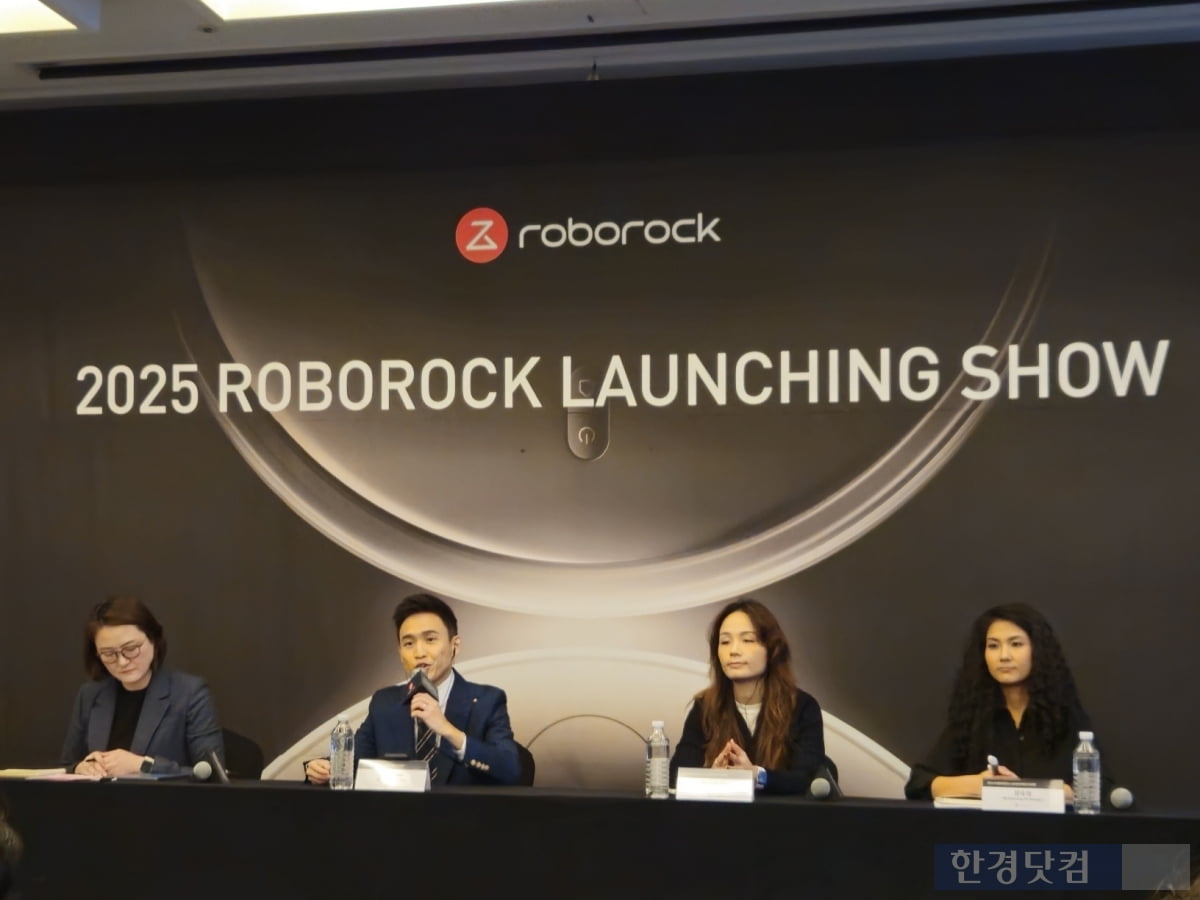
The data server management method was also presented as grounds that there is no problem with the personal information policy.
She also emphasized that user data is encrypted before storage.
The Roborock app requires user consent to activate devices such as the camera, microphone, and Bluetooth. If the user does not consent, a significant portion of the product’s functions are restricted.
Nevertheless, concerns about the privacy policy are related to China’s Data Security Law. Enacted in 2021, China’s Data Security Law stipulates that companies must cooperate when the government collects data for national security reasons. Even if Roborock manages personal information internally, it is possible to interpret that it could hand it over to authorities if requested by the Chinese government.
This is also why Tuya received a request for sanctions from the U.S. Senate. In 2021, then-Senator Marco Rubio, along with Senators Rick Scott and Tom Cotton, sent a letter to then-Treasury Secretary Janet Yellen urging sanctions against Tuya, stating, “If the Chinese Communist Party requests Tuya to share the personal information of U.S. citizens, Tuya must follow this directive.”
Furthermore, the privacy policy includes provisions that the personal information collected by Roborock can be shared not only with Tuya but also with other affiliates of the company. Roborock explained regarding this, “Models released after 2020 do not store user data with Tuya,” adding, “We are notifying some customers who are using models from before that about the fact of information provision.”
They also ruled out the possibility of cooperation with DeepSeek. DeepSeek is not utilized in the AI functions of Roborock’s new products. The S9 MaxV Slim features the AI-based navigation system ‘Starlight 2.0.’
Roborock became the number one in domestic robot vacuum cleaner market share in 2022, just two years after entering Korea, with a 25% share. Its share further expanded to 46.5% in the first half of last year. Particularly in the premium (high-end) line priced over 1.5 million won, it holds a dominant market share of 60-70%.
The scale of Korean sales surged from 48 billion won in 2021 to 100 billion won in 2022 and 200 billion won in 2023. As of the first half of last year, Korea accounted for 18% (142 billion won) of the company’s total sales of 806 billion won. The company is also expanding its product line by releasing washer-dryers in the same year.