Editor’s Note
This analysis highlights a growing divergence in the luxury sector, where Hermes’s unwavering ultra-high-end strategy fuels robust growth, while more accessible mega-brands face headwinds. It underscores a pivotal market shift toward exclusivity over volume.
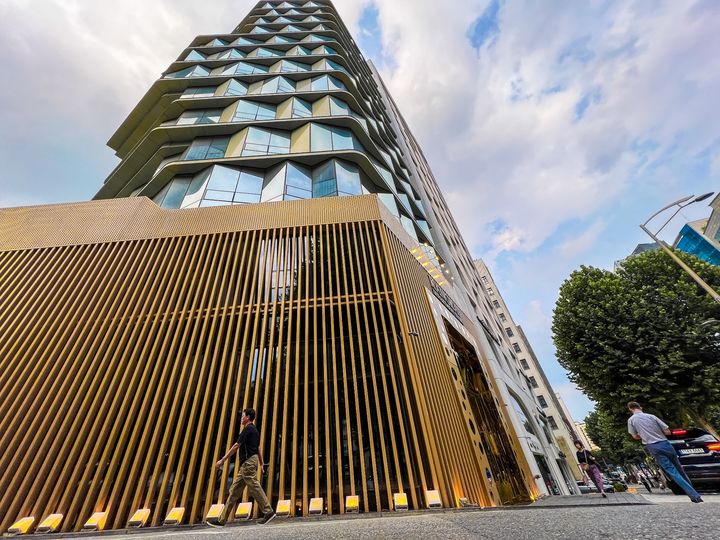
[Seoul=Newsis] Reporter Jeon Byeong-hoon = In the global luxury market, a clear polarization in performance has emerged. Brands like Hermes and Richemont, which adhere to an ultra-high-price strategy, have successfully defended their performance. In contrast, groups centered around brands with relatively easier price accessibility, such as LVMH (Moët Hennessy Louis Vuitton) and Kering, have seen their growth stumble.
According to the luxury industry on the 2nd, Hermes recorded global sales of 3.9 billion euros (approximately 6.19 trillion Korean won) in the second quarter of this year, a 9% increase year-on-year based on a fixed exchange rate.
Notably, Hermes drove its performance with balanced growth across all regions, centered on ultra-high-priced product lines like Birkin and Kelly bags, where supply cannot keep up with demand.
In contrast, within Hermes itself, sales of relatively lower-priced product groups such as silk scarves and beauty products decreased by 4% year-on-year in the first half, showing a sluggish trend.
Regarding this, Axel Dumas, Chairman of Hermes, stated:
Richemont, which owns jewelry brands like Cartier and Van Cleef & Arpels, also recorded sales of 5.4 billion euros in the second quarter of this year, a 6% growth year-on-year.
In particular, the jewelry division led the growth with an 11% increase, reconfirming the strength of ultra-high-priced products.
On the other hand, LVMH and Kering, which owns Gucci, saw their sales decrease by 4% and 18%, respectively, during the same period.
Especially for LVMH, while its watch and jewelry division maintained a level similar to the same period last year, performing better than other divisions like wine, fashion, and perfumes, it could not avoid an overall sales decline.
This trend in luxury consumption is also reflected in the ‘2025 True Luxury Global Consumer Insight Report’ recently published by the Boston Consulting Group (BCG) in collaboration with the Italian luxury association Altagamma.
The report analyzed that ‘Top-tier clients,’ accounting for the top 0.1%, drive the market by constituting 23% of global luxury sales. Meanwhile, the middle class and aspirational shoppers, once referred to as luxury entry-level consumers, are seeing their influence gradually weaken as their spending power diminishes due to economic slowdown and price burdens.
In South Korea as well, the polarization phenomenon among luxury brands and the increasing preference for ultra-high-priced brands continue. The trend of ‘Nth price increases’ by the Korean subsidiaries of luxury brands is also expected to persist through the second half of the year.
Amid this trend, the pre-owned luxury market is gaining prominence as more consumers are unable to find desired items at new boutique stores or seek to purchase luxury goods at cheaper, more reasonable prices.
While pre-owned luxury stores in South Korea were mostly operated as online malls or small-scale multi-store operations in the past, recently, customers are flocking to super-large offline shopping centers, attracted by the advantage of direct ‘luxury product experience shopping.’
For instance, Gangnam Canker’s Department Store in Samsung-dong, Gangnam-gu, Seoul, famous as Asia’s largest ‘Mint condition’ (pre-owned luxury goods comparable to new) specialized large-scale shopping center, has configured a large-scale mint-condition product store for about 100 luxury brands, including the ‘HerLuSha’ (Hermes, Louis Vuitton, Chanel) trio and Swiss luxury watch Rolex, within a single building with two basement floors and twelve above-ground floors.
A distribution industry official stated:
![[서울=뉴시스] 황준선 기자 = 서울 시내 한 에르메스 매장 모습. 2025.01.02. hwang@newsis.com](https://img1.newsis.com/2025/01/02/NISI20250102_0020648862_web.jpg?rnd=20250102143018)