Editor’s Note
Bvlgari’s sixth appearance at the China International Import Expo highlighted a strategic focus on balancing heritage craftsmanship with modern innovation. Under the theme “Sustainable by Innovation,” the brand emphasized digital transparency and technology’s role in advancing sustainability—key themes shaping the future of luxury.
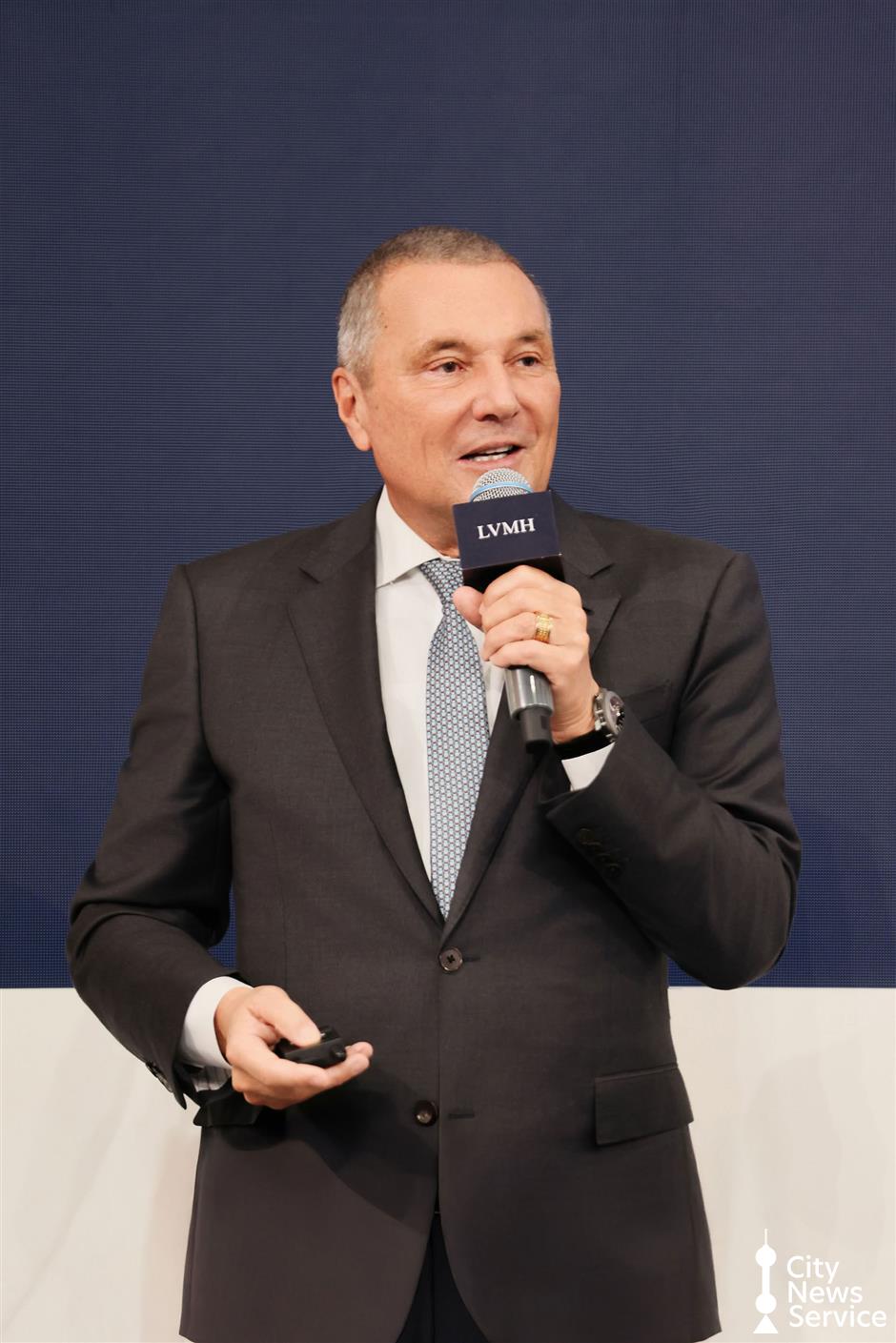
Bvlgari took a measured approach at this year’s China International Import Expo, focusing on how craftsmanship and innovation can coexist within a changing global luxury landscape. In its presentation, titled “Sustainable by Innovation,” it explored digital transparency, sustainability, and the role of technology in preserving the artistry of jewelry-making. This marked Bvlgari’s sixth participation in the expo and the third occasion on which its CEO, Jean-Christophe Babin, attended the event.
In a year when much of the luxury sector has been grappling with slower growth, Babin’s remarks were less about short-term sales and more about long-term temperament.
He views the recent softening of consumption as part of a broader realignment rather than a downturn.
For him, this shift reflects a maturing relationship between consumers and brands – one that privileges craftsmanship, emotion, and credibility over novelty. Babin has watched China’s well-off families grow into one of the world’s most important luxury customer bases. Yet he believes the next chapter will not be driven by volume but by discernment – a subtle change that requires patience and cultural sensitivity.
The CEO resists the popular assumption that the market’s future rests solely with Generation Z.
His point is not to downplay youth but to argue for balance.
For Babin, sustainability extends beyond environmental practice; it includes the durability of relationships, materials, and meaning.
China’s rapid digitalization is testing that durability. Babin perceives China’s e-commerce platforms as both beneficial and disruptive.
He views this as a structural evolution of luxury in China, one that demands a new kind of storytelling in which digital space is not merely a channel but a stage for brand character. He also believes Chinese consumers’ comfort with technology aligns naturally with Bvlgari’s own experiments. At this year’s Expo, the company presents Connected Jewelry, which embeds a unique micro-engraved code in each piece to document its origin. To Babin, such innovations are not about chasing trends but about accountability.
Such openness to innovation, he added, is also cultural, a continuation of Bvlgari’s long history of drawing connections across worlds. He frames Bvlgari’s identity through the lens of exchange – between East and West, past and present.
He sees the same dynamic in China’s openness to reinterpretation and its ability to adapt tradition to modern life. The company’s ties with China stretch back nearly a century, when Bvlgari exhibited Chinese jade in Rome, an early gesture of aesthetic dialogue that Babin likes to cite as evidence of continuity rather than opportunism. Today, the brand’s design team includes creators from China, South Korea, the United States, and other countries working alongside Italian artisans.
That hybridity, he suggested, will define how global luxury evolves in the coming decade. Instead of clear boundaries between markets or aesthetics, he expects overlapping identities: technology informed by heritage, local craft with global visibility, and sustainability built into design rather than declared through campaigns.