Editor’s Note
This article examines the market disruption caused by lab-grown diamonds, which share the physical and chemical properties of natural stones but are produced in a fraction of the time. Their rise is a key factor in the recent decline of natural diamond prices.
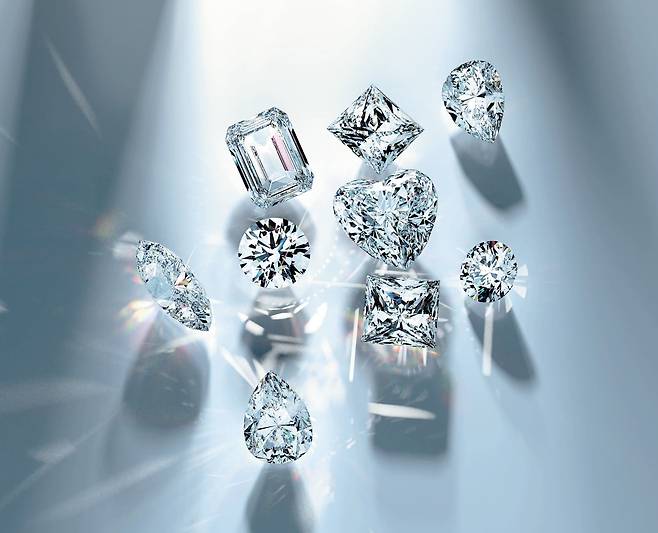
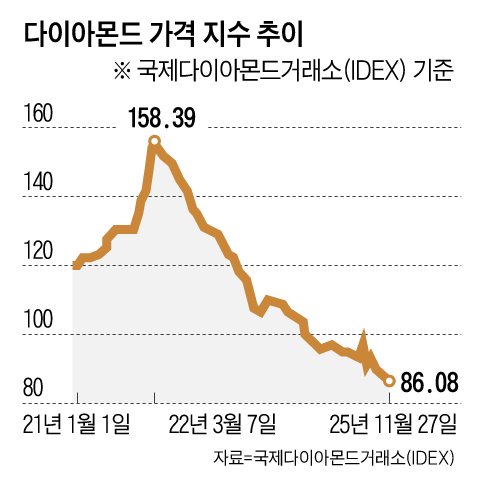
The core reason behind the sharp decline in natural diamond prices is the rise of man-made diamonds produced in laboratories. These products, called ‘lab diamonds’ or ‘lab-grown diamonds,’ are literally diamonds cultivated in labs.
Lab-grown diamonds are not fake diamonds. They possess the same composition, crystal structure, hardness, and optical properties as natural diamonds. While natural diamonds are formed over millions to billions of years under high pressure and high temperatures 120-200 km below the Earth’s surface, lab-grown diamonds replicate this process in a lab in just 2 to 6 weeks. They are made by placing a small diamond seed in a high-temperature, high-pressure chamber or by injecting methane or hydrogen gas into a vacuum vessel to grow the crystal. The US economic media Forbes stated, “Just as generic drugs have the same ingredients and effects as original pharmaceuticals but differ only in price, lab-grown diamonds are chemically and visually identical to natural diamonds.”
Just ten years ago, lab-grown diamonds were about 10% cheaper than natural diamonds. However, due to technological advancements and increased production, they now cost only 10-20% of the price of natural diamonds. This price drop has significantly boosted the market share of lab-grown diamonds. According to diamond analyst Paul Zimnisky, lab-grown diamonds accounted for only 1% of the total diamond market in 2015 but grew to about 20% last year.
The explosive growth of lab-grown diamonds coincides with a trend, especially among younger consumers, of prioritizing value for money. Global consulting firm McKinsey noted in a report, “The tremendous success of lab-grown diamonds has pulled natural diamond prices down more than the mining industry expected,” citing “consumers who want cheaper options” as the background.
Celebrities have also supported this trend. Numerous celebrities like Meghan Markle, wife of Britain’s Prince Harry, singer Taylor Swift, and actress Emma Watson have frequently worn products featuring lab-grown diamonds, spreading the perception that there’s no reason to insist on natural diamonds. Global luxury brands are also jumping into the lab-grown diamond market. Fred, the jewelry subsidiary of French luxury group LVMH, launched a lab-grown diamond collection in 2023, and luxury fashion brand Prada also launched a collection using lab-grown diamonds.
The change is reflected in numbers. According to a report by US wedding company The Knot, which surveyed over 17,000 newlywed couples who got married last year and this year, 52% of surveyed couples said the engagement rings they exchanged contained lab-grown diamonds, surpassing half for the first time ever. This is a 6% increase from last year’s survey and a 40% increase from 2019. Due to the rising popularity of lab-grown diamonds, the average purchase price of engagement rings for engaged couples decreased from $6,000 in 2021 to $5,200 last year.
Ethical and environmental issues and risks that can arise during the natural diamond mining process are also reasons why young consumers choose lab-grown diamonds.
Due to the popularity of lab-grown diamonds and the resulting decline in natural diamond prices, De Beers, the world’s largest diamond company that created the slogan “A Diamond is Forever,” is facing its biggest crisis in over 130 years. Last year, its revenue fell by 23%, and it faced a sales crisis with $2 billion worth of inventory piled up.
Botswana in Africa, De Beers’ major partner accounting for 70% of natural diamond production, has fallen into negative growth. As the natural diamond market slumped, halving related industry income, Botswana’s economy retreated by 3% last year. According to the World Bank, Botswana’s GDP is expected to decrease by 0.8% this year. Although a significant portion of Botswana’s territory is desert, it prospered thanks to the diamond mining industry, becoming one of Africa’s top seven income countries through education and free healthcare. However, as the diamond-related industry, which accounts for about 30% of fiscal revenue and 75% of foreign exchange earnings, faces a crisis, the entire national economy is shaking.