Editor’s Note
This article explores a significant shift in the luxury market, where younger generations are redefining value by choosing sustainable, lab-grown diamonds over traditional mined stones. It highlights a broader trend of conscious consumerism driven by Gen Z and Alpha.

Precious diamonds were once a ‘symbol of scarcity,’ but a generation has emerged that is breaking this formula. They are Generation Z (born after 1995) and Alpha (born in the 2010s-2020s), who are leading the global consumer market. Instead of ‘natural diamonds’ mined from the earth, these generations prefer ‘lab-grown diamonds’ (LGDs), artificial diamonds created using advanced technology in laboratories. While the sparkle of both diamonds is the same, young people are choosing lab-grown diamonds by focusing on the values and ethics embedded within them, rather than the source of their brilliance.
Lab-grown diamonds are synthetic diamonds produced through high-temperature, high-pressure (HPHT) or chemical vapor deposition (CVD) technology. Their physical and chemical properties are identical to natural diamonds, but they are far removed from environmental destruction or human rights issues as they require no mining process. In the past, they were treated as ‘cheap substitutes’ focused on being more affordable than natural diamonds. However, they are now recognized as a new luxury symbolizing advanced technology, sustainability, and ethical value.
Social media platforms like Instagram and TikTok are overflowing with posts showcasing lab-grown diamond products under hashtags such as #labgrownlove and #labgrownjewelry. Influencers are accelerating the lab-grown diamond craze by sharing posts with messages like, “My ring doesn’t harm the Earth.”
Of course, a major reason for the popularity of lab-grown diamonds is price. They are 30-70% cheaper than natural diamonds while receiving the same international certification. On average, a 1-carat natural diamond costs around $6,000 (approximately 8.5 million KRW), while a lab-grown diamond of the same grade can be purchased for about $2,500 (3.54 million KRW).
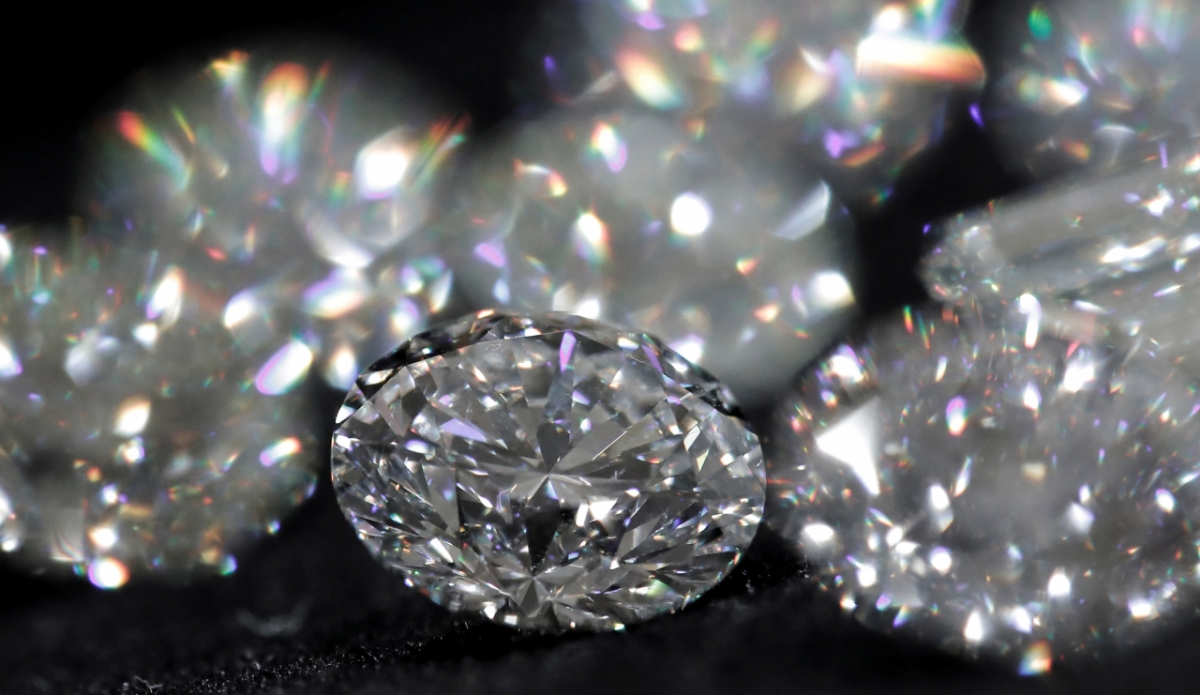
However, foreign media point out that the current craze for lab-grown diamonds cannot be explained by price alone, identifying “Gen Z consumers’ emphasis on ethical justification and sustainability” as the reason.
The American economic magazine Forbes evaluated that “lab-grown diamonds are no longer a shadow of traditional diamonds but a new luxury precious metal combining ethical value and technological innovation.” The long-standing controversies surrounding labor exploitation and carbon emissions in the mined diamond industry are a burden for the younger generation. In contrast, lab-grown diamonds are gaining popularity among young people by establishing themselves as clean gems through production processes using renewable energy and ‘carbon neutral’ certification.
The market growth is also steep. According to the World Diamond Council (WDC), as of 2024, lab-grown diamonds’ share of the global diamond market reached about 12%, and their proportion on US and Korean online platforms exceeded 20%. The current global lab-grown diamond market size is approximately $24 billion (34.0128 trillion KRW), with an average annual growth rate of over 15%.
The popularity of lab-grown diamonds is shaking the foundation of the traditional diamond industry. According to the Bloomberg Diamond Standard Index Price, diamond prices have fallen by about half over the past three years.
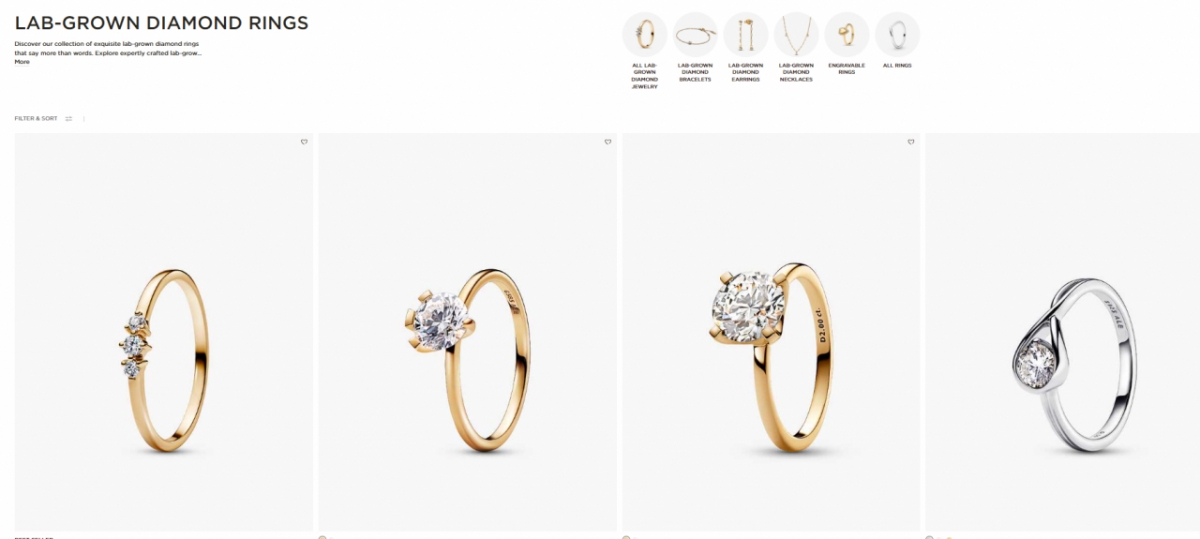
Experts predict that the popularity of lab-grown diamonds will lead to a restructuring of the entire jewelry industry. Morgan Stanley analyzed, “Over 20% of the jewelry market this year will be replaced by lab-grown diamonds,” adding, “Traditional jewelry companies must shift to a brand story-centered premium strategy rather than price competition.”
Global jewelry company Pandora announced it would stop selling natural diamonds, declaring, “We will convert all future diamond products to lab-grown diamond production.” Tiffany has tentatively introduced a lab-grown diamond line. De Beers, the British diamond processor that once dominated 70% of the world diamond market, saw its natural diamond sales drop by over 30% last year despite two price cuts. De Beers launched its lab-grown diamond brand ‘Lightbox.’
This phenomenon is economically overturning the structure of the ‘ethical premium.’ In the past, the perception that ‘ethical products are expensive’ was dominant, but now ethical and sustainable products are establishing themselves at reasonable and accessible prices.
![에이티즈, 미니13집 발매 기념 기자간담회 개최[★포토]](https://thumb.mtstarnews.com/cdn-cgi/image/w=496,h=303,fit=crop,f=auto,g=face/21/2026/02/2026020516253320022_1.jpg)
Business Insider explained this, noting that a shift is underway toward a ‘value-based market’ where consumers evaluate products based on value rather than price.