Editor’s Note
This article explores how a small mining town in North Carolina, Spruce Pine, produces a material essential to global technology and manufacturing. Its recent temporary closure highlights the fragility of this critical supply chain.

How a small North Carolina mountain town is fueling global innovation.
Tucked into the valleys of the Blue Ridge Mountains, a mine in Spruce Pine, N.C. closed for several weeks following the destruction caused by Hurricane Helene in late Sept. 2024.
Spruce Pine is a town of fewer than 2,500 residents, but the mine plays a crucial role across the globe. The torrential rainstorm flooded roads and cut power to a uniquely vital site for one of the world’s most valuable industries: semiconductors. Spruce Pine is home to a group of rare quarries that produce 90% of the world’s high-purity quartz (HPQ) — a crucial material used to enable the molten silicon base of chip wafers.
Simply put, anything that has to think — from smartphones to cars, or the computer you read stories on — must have a chip. Everything that has a chip has a piece of this small Appalachian town inside it from the sand it provides.
Sibelco is the largest employer in the three counties in which it operates — Mitchell, Avery and Yancey — and has devoted significant capital to revitalizing these communities following the storm. We visited Sibelco’s Schoolhouse mine, the primary plot for HPQ extraction, to better understand the company’s operations and the town’s journey to recovery. A consistent theme emerged: the mine’s impact on the world is comparable to its magnitude for the community.
Singleton, a native and second-generation miner in Spruce Pine, advocates for Sibelco’s commitment to the area in as many ways as possible.
Beyond the company’s purchases for operations, the mines inject capital into the community in many, often indirect, ways. The plant’s presence generates tax revenue that can fund public programs, such as schools and emergency services, and increases the demand for housing and retail markets. Sibelco brings residents to the town, where they live, spend and consume. That sense of life and activity is needed for a community to survive.
In 2024, the company established the Sibelco Spruce Pine Foundation, aiming to have a “lasting impact” on infrastructure, housing and businesses in the community’s recovery process. With recurring donations, Sibelco will directly aid in home building and equipping the community with tools of resilience for natural disasters, protecting one of the business’s core assets that company CEO Hilmar Rode describes they are “dedicated” to.
Long before the California 49ers moved west to strike gold, North Carolina was the primary locale for the American gold rush. For decades, gold mining was the second-largest provider of employment in the state behind farming and was the source of a considerable flock of Europeans and out-of-staters to the South. Mining isn’t new in the Tar Heel State, and this rich history has left behind hundreds of abandoned sites of scarred Earth that have forced the state to carefully regulate the industry.
Key statutes and provisions like the Mining Act of 1971 and Title 15A of the North Carolina Administrative Code require greater strength of permits, reclamation plans after land use, environmental protections and local and federal compliance. Sibelco considers this legal pressure and employs a careful, multistep conservation framework each day in its operations.
Singleton also objects to many of the common criticisms of the mining industry and justifies Sibelco’s effort with the scope of Spruce Pine’s impact.
The energy transition is one of those things — every solar panel that absorbs rays and every wind turbine blade that rotates needs HPQ to run. Photovoltaic cells, the building blocks for solar panels, require the mineral in their construction, as do the electronic systems and sensors that support turbine operation. Similarly, HPQ is an integral component to the energy storage systems that help manage these intermittent sources of power. While involved in a cautious business environment, Sibelco commends its finished product as a tool whose benefit outweighs the ecological damage that it already works to mitigate.
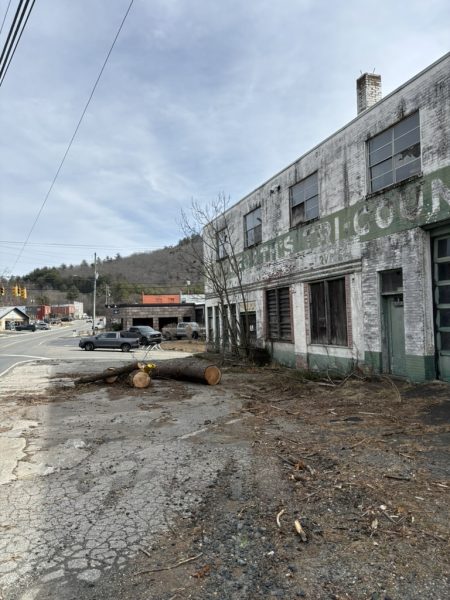
The destructive flooding of Hurricane Helene has caused several Spruce Pine stores to close.