Editor’s Note
This article explores Surat, India’s “Diamond City,” which processes an estimated 90% of the world’s diamonds. It highlights the city’s central role in the global diamond trade, from cutting and polishing to export.
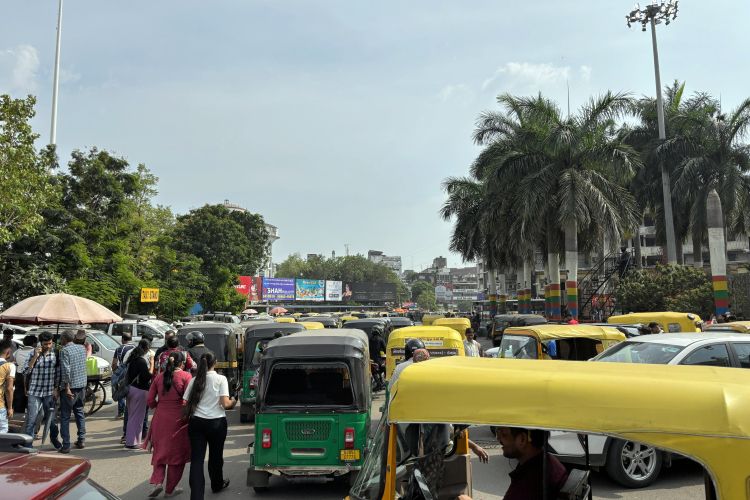
Surat, a city of 6 million people in Gujarat state, western India, is known as the “Diamond City,” handling a staggering 90% of the world’s diamond processing. Rough diamonds from Africa and elsewhere are cut and polished here before being exported worldwide. The United States was its largest export market, accounting for 30% of exports.
This was said by Jagdish Kothari (59), Chairman of the Surat Diamond Association, when visited in late September. The Trump administration imposed the tariff on August 27, adding a 25% “penalty” tariff on top of the existing 25% reciprocal tariff, targeting India for its large crude oil imports from Russia.
On top of sluggish demand and falling prices since the pandemic, and increased costs from having to import Russian rough diamonds via Dubai due to sanctions, the world’s highest total tariff of 50% hit directly, halting exports to the US. The association, with about 6,000 member companies, worries, “It will undoubtedly be a major blow, especially for small factories.”
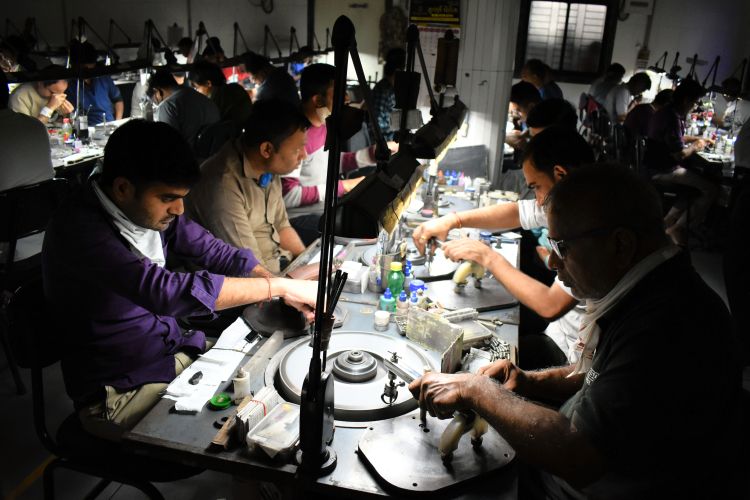
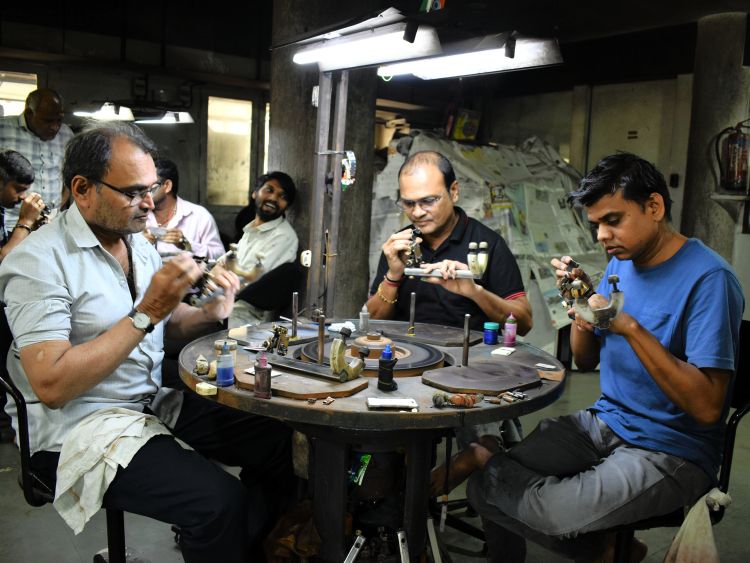
The diamond and jewelry industry is a major sector employing about 1 million people. The polishing process is largely the same everywhere: in dimly lit rooms, workers sit around rotating plates, diligently polishing diamonds.
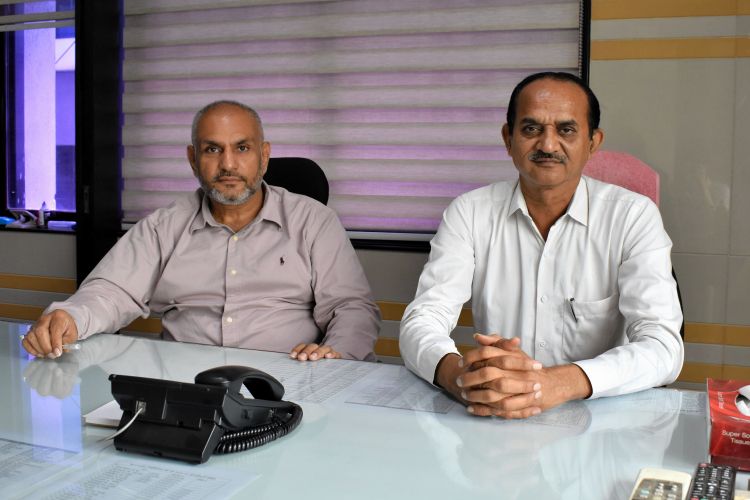
This analysis comes from Hasmukh Kothari (45), who runs the major company “Kothari Diamonds.” His headquarters employs about 2,700 people in two shifts. Alongside dozens of human workers, four robots were seen “silently” repeating polishing tasks. “They don’t need breaks or meals like people and work constantly. The quality is also consistent compared to humans.”
However, most factories visited were small, often using a single floor of a multi-tenant building. Anil Roy (35), who runs a small company with about 30 workers, says, “The difficult part of diamond processing is how to cut it thin while preserving weight. Mastering that skill, which directly affects price, takes 7 to 10 years.”
Amid the rough seas of sluggish demand, falling prices, and bans on Russian rough imports, many businesses are expanding from just diamonds into manufacturing jewelry like rings and necklaces.
Explained Jaanti Savaliya (43), Gujarat Chairperson of the Gem & Jewellery Export Promotion Council (GJEPC). Thus, major global economic movements are reflected in the jobs and products of India’s small factories.
What is the impact of the world’s highest tariff on the Indian economy?
Explained Ajay Srivastava (62), who long handled trade negotiations for the Indian government. India’s trade stance has consistently prioritized protecting domestic agriculture, even against the US.
The Trump administration’s “America First” clashes with the Modi government’s “Make in India” manufacturing promotion policy. The deadlock continues precisely because these flagship policies of the two major powers are colliding.
India maintains a shrewd distance between the two superpowers, the US and China. Behind India’s stance as a “tough negotiator” lies a diplomatic principle of “self-reliance” since independence from British colonial rule in 1947.
Explained Professor Emeritus Vishwajit Dhar (67) of Jawaharlal Nehru University.
Surat, which prospered as a trading port since the Mughal era and where the British East India Company established its first base in the early 17th century, became a global diamond processing hub in the 1960s. It is a historical twist that Surat, where British rule in India began, now stands at the forefront of the US Trump tariff, as a center for textiles and jewelry, few export industries.
Nevertheless, they are not defeated. Jayesh Patel (52), Vice Chairman of the Surat Diamond Association, stated decisively: