Editor’s Note
This article highlights Richemont’s strong quarterly performance, which fueled a significant rise in its share price. The report suggests a broader recovery in the luxury sector, particularly for jewelry, mirroring positive trends seen at other major fashion houses.
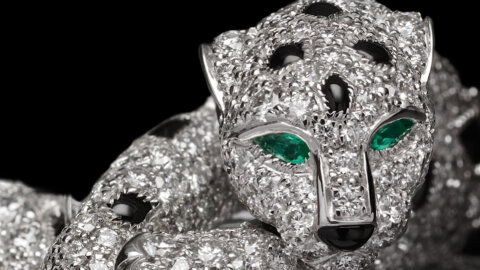
Richemont, the luxury group specializing in jewelry and watches, shone on the Swiss Stock Exchange, with an increase of around 7%, later moderating by late morning but still up over 4%. The luxury house recorded more solid growth in the second quarter compared to the previous period, also observing a resurgence of interest in the jewelry sector and a light at the end of the tunnel, as already seen in fashion houses like LVMH, Kering, Burberry, or Hermès, thanks also to the reappearance of Chinese consumers and a limited impact from US duties.
In the first half, Richemont recorded revenue growth of 5% at current exchange rates (+10% at constant exchange rates), reaching 10.62 billion euros, exceeding expectations of 10.38 billion euros. Net income practically quadrupled from 457 million euros to 1.8 billion euros, after significant asset write-downs in the same period the previous year had drastically reduced its profits.

It was the second quarter that saw a significant sprint, with revenue increasing 8% at current exchange rates and 14% at constant exchange rates to 5.2 billion euros, thanks to growth across all geographic areas despite headwinds including currency fluctuations and rising gold prices. Europe grew 9% at current exchange rates, the Americas grew 12%, Asia grew 4%, and the Middle East and Africa grew 16%. In particular, the note specifies that the area comprising China, Hong Kong, and Macao has returned to growth.
Looking at the different business segments, the jewelry houses, which include brands like Cartier and Van Cleef & Arpels in its portfolio, continued to benefit from high demand and increased sales by +9% at current exchange rates in the first half and +12% in the second quarter. Sales of watches, with brands like Baume & Mercier, Cartier, Jaeger-LeCoultre, Montblanc, Officine Panerai, Piaget, instead decreased organically by 6% (at current exchange rates) in the first six months, but in the quarter ended September limited the decline to -2% at current exchange rates, turning to +3% at constant exchange rates.

Chairman Johann Rupert said in a post-results conference call, but urged caution, arguing that it is still too early to talk about a full recovery.
According to a Reuters report, Richemont “is managing better than its competitors with both US trade duties and the recent slowdown in the luxury sector, thanks to a stable pricing policy and greater exposure to jewelry compared to fashion, which is more subject to rapid changes.” It should also be added that the United States and Switzerland have recently reached a commercial agreement to reduce the 39% tariffs on Swiss imports imposed by Trump. The United States is the largest market for Richemont, generating approximately 22% of sales.