Editor’s Note
This survey reveals a key insight for the luxury sector: affluent, sustainability-conscious consumers are willing to pay a significant premium—an average of 1.4 times more—for brands that align with their environmental values.
A new survey sheds light on the behavior of consumers with high purchasing power who are also conscious of environmental considerations. Hearst Fujingaho (Minato-ku, Tokyo) released the third installment of its ‘Business to Luxury (B2L)’ awareness survey report on July 4th. The report targets affluent women with a high interest in sustainability who have spent over 1 million yen in a single transaction within the past year. It highlights the specific actions and values of a demographic that values sustainable consumption while enjoying a luxurious lifestyle.
The survey was conducted via a web questionnaire among 2,361 valid respondents from the company’s media readers and e-commerce users. Among them, 270 respondents with high sustainability interest scores who answered that they had “spent over 1 million yen at once in a hobby-related area” were defined as “Luxury Consumers” for analysis.
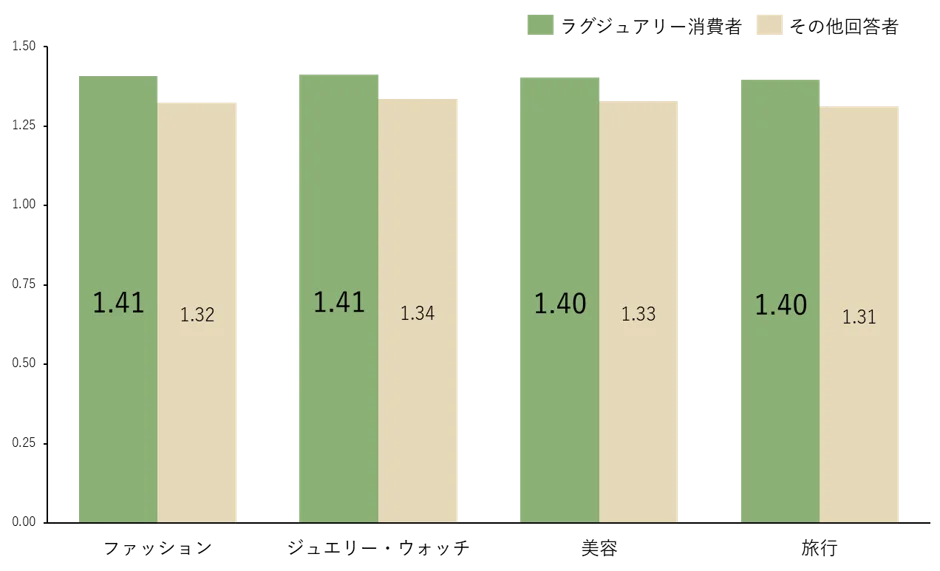
A key finding is that these consumers’ “acceptable price premium for sustainable products” reached an average of 1.4 times. Across all four categories—”Beauty,” “Fashion,” “Jewelry & Watches,” and “Travel”—there was low resistance to spending more for sustainable products compared to conventional ones, showing a stable trend.
The survey included in-depth interviews with four individuals with different attributes selected from the target group. While each had their own distinct lifestyle and values, they all strongly considered “the impact of their consumption on society and the environment.”

A common understanding emerged that it is not mere image strategy, but whether one can be “convinced” by the company’s initiatives themselves that drives sustainable luxury consumption.
Furthermore, the four interviewees were shown four versions of sustainable advertisements produced by the company for comparative evaluation. The results showed that expressions which candidly conveyed the essence of the initiatives received the most support, with creative work that “communicated it wasn’t just for show” garnering empathy.
This result suggests that when companies and brands appeal to sustainable values, they are required to communicate with sincerity, backed by substance and story, rather than mere “decoration.”
The survey report also included a special contribution by environmental political scientist Professor Norichika Kanie of Keio University’s Graduate School of Media and Governance.
Professor Kanie pointed out.
he asserted.
He also analyzed that a brand’s stance on sustainability is directly linked to the question of “how it relates to the world and the future,” and that the discerning aesthetic sense of luxury consumers who see through this is driving market evolution.
This report revealed that the seemingly opposing values of sustainability and luxury are, in fact, deeply intertwined. The very demographic that is active in high-value consumption also possesses high awareness of society and the environment, along with a “critical eye” and “high aspirations” to scrutinize corporate initiatives.
This survey probes the core of marketing strategy: how companies can go beyond mere “sustainability appeals” to gain trust and become the chosen ones.