Editor’s Note
This article provides key insights from industry experts on current colored gemstone market trends and retail performance, drawn from a recent presentation at AGTA GemFair Tucson.

Tucson, Ariz.—Two gemstones experts took the stage during AGTA GemFair Tucson earlier this month to discuss market trends, including updates on pricing and the most popular colors.
On Feb. 6, Stuart Robertson, president of Gemworld International Inc., and Brecken Branstrator, editor-in-chief of the company’s publication, GemGuide, kicked off the day with a presentation on colored stone prices and market trends.
Robertson began with a recap of 2024 from a retail perspective, noting record-high holiday sales and highlighting the fact that jewelry outperformed apparel, a reversal from the prior year.
Independent jewelers performed particularly well.
Sales via online and social media markets saw a nearly 10 percent increase from 2023, he added, while there also was strength at the high end of the market.
However, mid-tier large corporate chain stores, where Robertson said the buyer often knows nothing about the particular community the product is being sold to, did not do so well.
Simple gold pieces and colored gemstones were the top-selling categories throughout the year.
For years, GemGuide has recognized colored stones as an entire category, usually accounting for somewhere between 9 and 11 percent of the industry, but Robertson said that’s not the case anymore.
He expects the Gemstone Trading Network, a new colored gemstone-dedicated platform from RapNet and AGTA, to be significant in expanding market access for colored stones.
Robertson also expects a learning curve for those expanding into the category, particularly for those who previously worked only with diamonds, as the value determinants of color extend beyond the four Cs.
Also, he noted, colored stones aren’t like gold or diamonds, which tend to be accessible to buyers whenever they want.
Although color is expected to remain one of the strongest categories in this industry this year, Robertson said production is still limited and has been for a few years.
To his knowledge, no major new sources have come online.
Robertson repeated his advice from 2024—buyers who see desirable gemstones should act quickly, as the opportunity to see a comparable material is unlikely.
Dealers have become increasingly aware of this fact. If they sell something, they know they need to replace it, or restock it, in the current marketplace.
While it’s still somewhat possible to find old stock that is priced a little bit more advantageously for the buyer, it’s not common, Robertson said.
The market price is what is it is.
Branstrator, the editor-in-chief of GemGuide, continued the presentation with trend predictions.
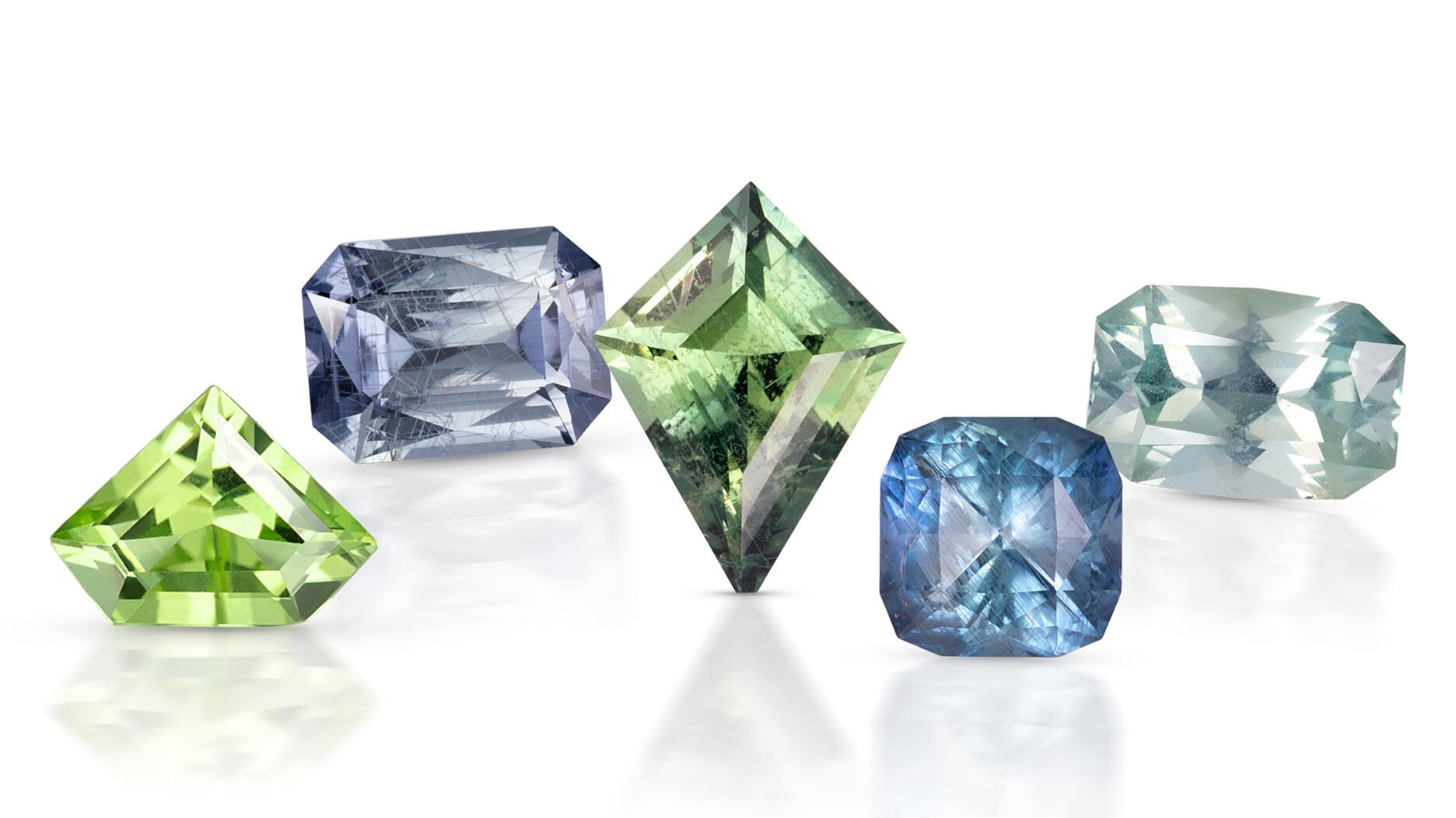
She said she expects green tourmaline, with its availability and affordability, will continue its growth as a popular stone, and interest in orange gemstones may be on the rise as well.
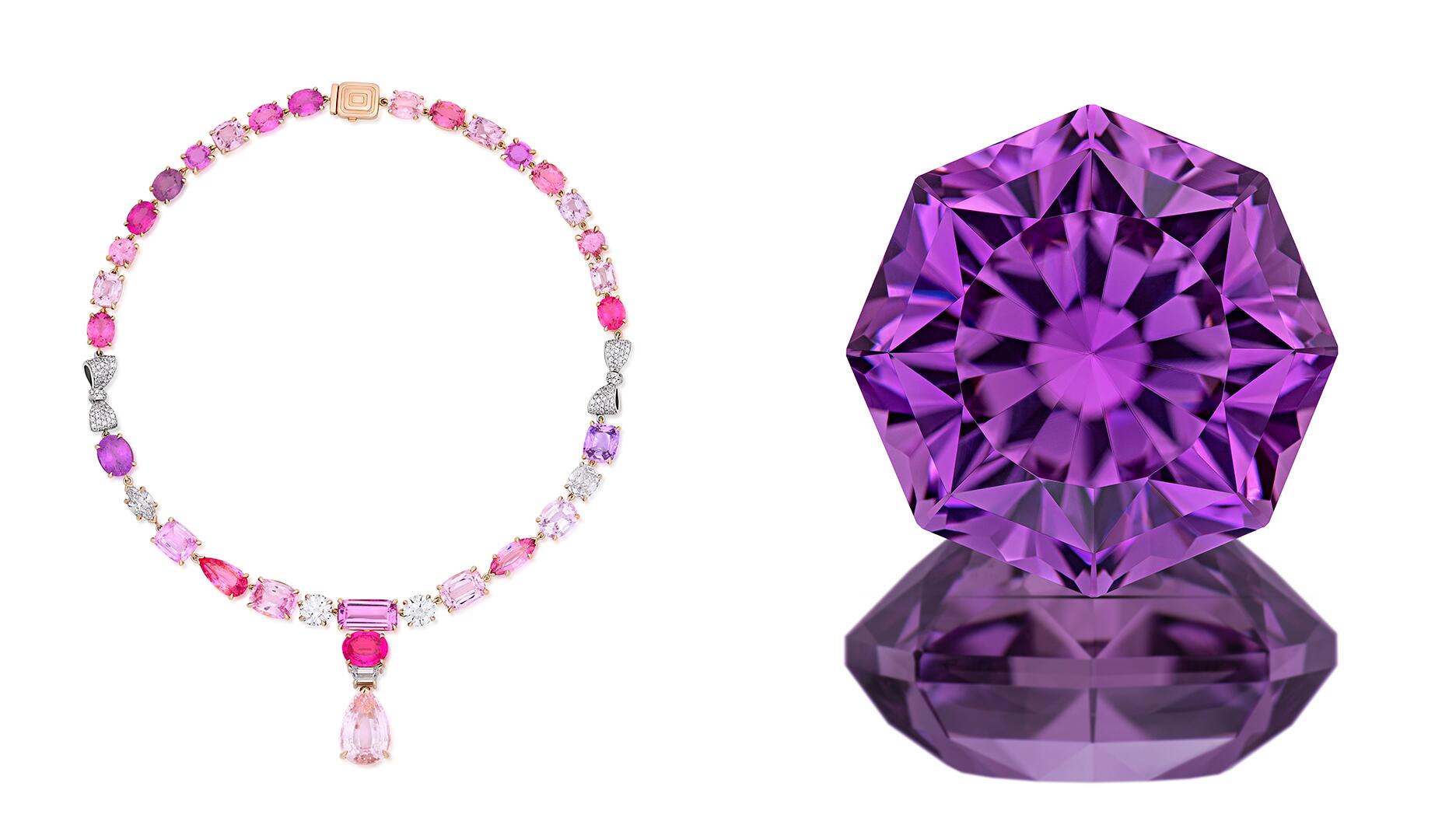
Designers also are expected to continue experimenting with unique color combinations and interesting gemstone cuts, particularly “one-off” or fantasy cuts from independent cutters.
In terms of pricing, Branstrator said that while high-end material prices aren’t likely to decline, the commercial to lower end may soften.
She echoed Robertson, predicting that buyers, driven by color’s low supply and high demand, will continue exploring new categories of material. She said she’s noticed buyers are more open to purchasing goods that may have been overlooked at one time, such as “hazy” sapphires.
Designers also have been working with a green variety of Cuprian tourmaline.
Cuprian is a term used to refer to copper-bearing tourmalines; the most well-known variety is the “Windex blue” tourmaline found in the Paraíba state of Brazil.