Editor’s Note
This article outlines the crucial first step in responsibly disposing of unused or expired medications and their packaging: utilizing designated collection points. Proper disposal protects our environment and aids material recovery.
Leftover medication from treatments, expired drugs, and empty medicine containers are waste that must be managed specifically. For two reasons: to avoid potential contamination of soil or rivers—which could occur if they were disposed of, for example, in the toilet, sink drain, or regular trash—and to recover the materials from which the packaging is made so they can be reintroduced into the circular economy.
For this, the first step is to deposit them in the Sigre Points set up for collection in 22,200 pharmacies. Most citizens are aware and actively collaborate in this process after cleaning out their home medicine cabinets; according to the entity’s collection data, which improves year after year. Specifically, in 2024, the collection of empty containers or those with residues of expired medication increased by 4.3% compared to the previous year, and an average of 105.6 grams of this waste per inhabitant was deposited in each pharmacy.
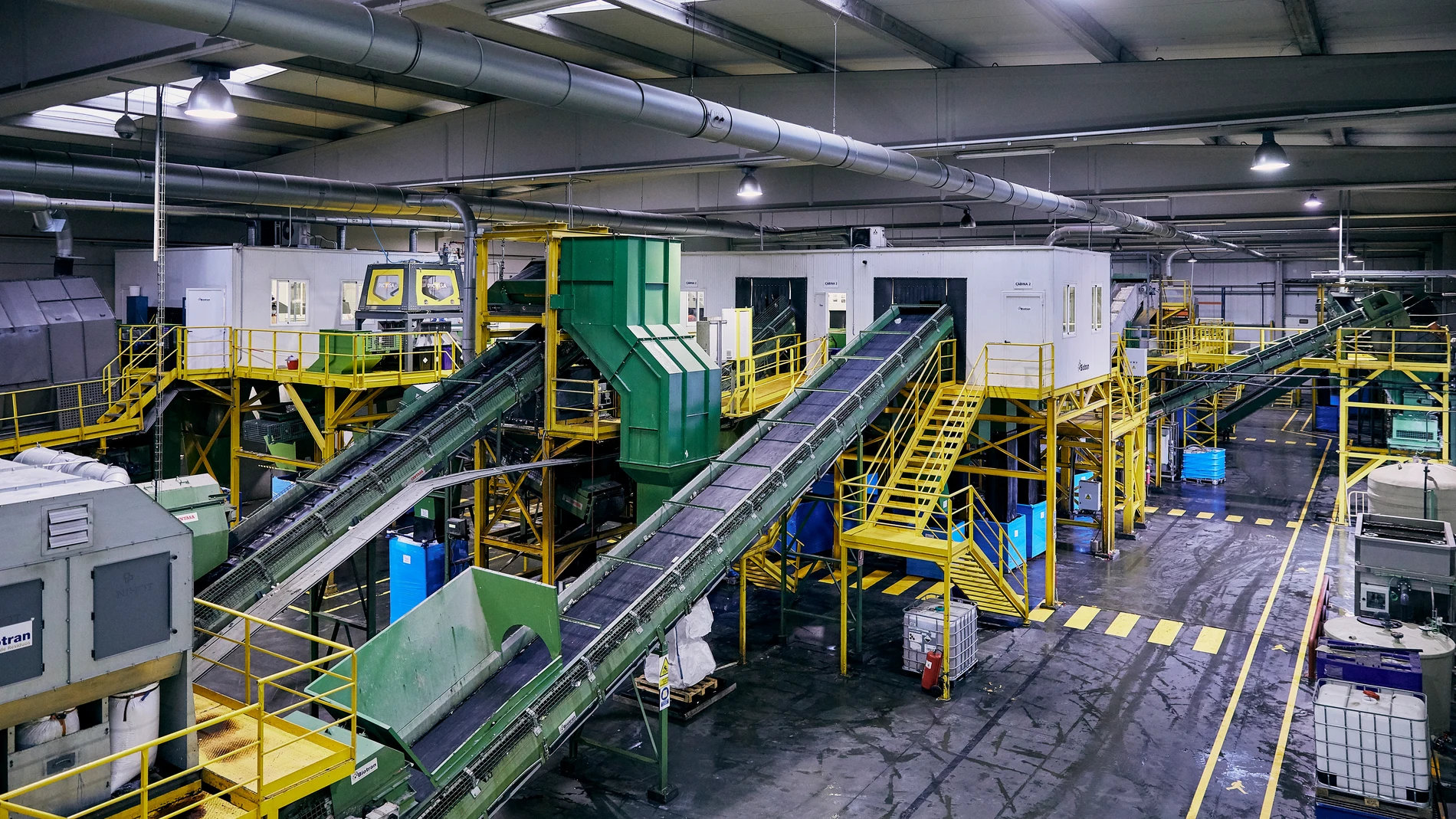
After that first step, the next one places all that pharmaceutical waste in the sorting plant located in Tudela de Duero, Valladolid, where the process, properly speaking, begins for the subsequent environmental treatment of pharmaceutical waste.
The Sigre model and the packaging and pharmaceutical waste sorting plant have a comprehensive approach, through which it not only manages waste but also promotes citizen awareness actions.
The feeding line is the first point of the recycling process. There, the bags—of different colors depending on the province of origin—containing the waste are deposited, and from there, after passing through the bag opener, a variable divider directs them to two parallel lines heading to the sorting cabins, one manual and the other equipped with a robotic sorter.
From that point, and already separated according to the fraction each one corresponds to—paper/cardboard, glass, metals, plastics, etc.—”the waste goes through various automated processes that continue separating them by weight, size, properties, and technical characteristics.” “Once—continues Vega—the total weight and regional origin are controlled, they are temporarily stored in specific areas and containers, for their subsequent shipment to authorized managers who will recycle them, recover them for energy, or eliminate them, as provided by current regulations for each of them.”
The robotic systems and artificial intelligence implemented in the plant “have memorized more than 10,000 images of materials, allowing for highly precise and adapted separation to manage a wide variety of formats and products. Additionally, the plant has specialized technologies that intervene in different phases of the processes, thanks to which almost 70% of the packaging it receives is recycled.” Among these technologies, the general director of Sigre cites, for example, blister emptiers and container washers to eliminate medication residues. “This last process, by the way,—highlights Vega—is performed with zero water discharge since it has a system for collecting and storing used water, which in turn will also be managed by other authorized managers.”
The five categories of waste into which the packaging and medications that entered the feeding belts at the beginning of the process are separated, plus those that may be produced during the management process, such as wash water, are separated, stored, and sent to specific managers for each of them. And it will be from that moment when each of them begins to form part again of its own circular economy circuit, depending on whether it is paper and cardboard, plastic, metals, etc.
Packaging that cannot be recycled and medication residues undergo a process to produce refuse-derived fuel (RDF), for subsequent energy recovery, which allows harnessing their calorific value and minimizing environmental impact.
On the other hand, the packaging and pharmaceutical waste sorting plant, “is a key facility in the pharmaceutical waste management system, and, therefore, one of the main challenges it responds to is being able to evolve to comply with new, increasingly demanding regulations and standards for the correct management of this waste,” emphasizes Miguel Vega. As, for example, he details, “those that involve greater efficiency in material recovery and a significant reduction in its carbon footprint.”