Editor’s Note
This piece explores a personal dilemma at the intersection of commerce and value, questioning how markets assign worth when technology creates perfect substitutes for nature’s treasures.
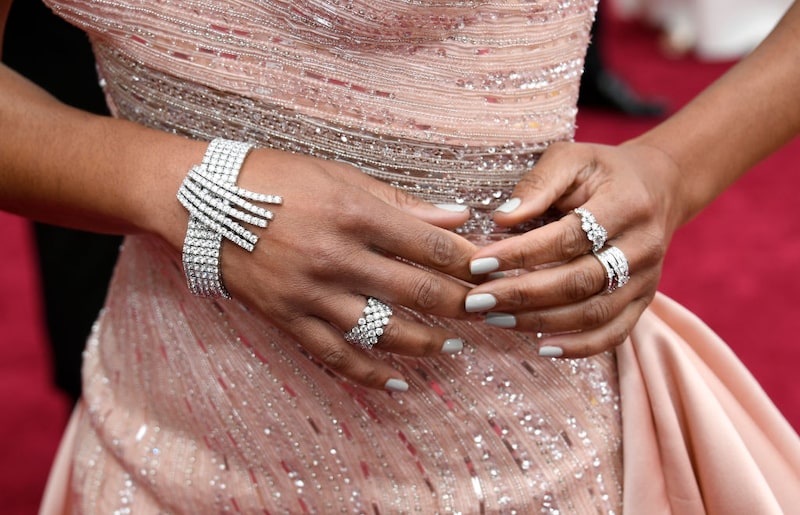
I am passionate about markets. And also about diamonds. This helps explain why I am experiencing a kind of existential crisis.
The popularity of lab-grown diamonds makes me question the beauty of markets, which lies in their ability to assign a value to practically anything.
Moreover, it’s not just diamonds. Everything in the economy whose value is based on scarcity suddenly becomes abundant: luxury handbags, music, and even currency itself.
Why does anything have value now?
Diamonds hold a special place in my heart, not only as a jewelry lover but also as an economist. When young economists begin to reflect on the concept of value and why things cost what they do, we inevitably turn to the father of modern economics, Adam Smith.
It was the scarcity of the diamond, and of course good marketing strategy, that made the market large and valuable. Over time, this rare piece of coal, whose creation takes millions of years, came to symbolize eternal love and commitment.

Today, diamonds can be manufactured in a lab in a short time, in almost any quantity. They have no resale value nor do they symbolize eternal love. But try telling that to someone who just received (or gave) a perfect 3-carat engagement ring, 90% cheaper than the “real” one.
Meanwhile, the price of natural diamonds, which always promised to hold their value, has fallen by up to 40%.
Again, questions arise. If the supply of diamonds is unlimited, what is their value? Can the market price them? More broadly, how will markets handle this crisis of abundance?
After all, practically everything in the US, except housing, is available on-demand in any quantity.
Almost all music ever created is available on your phone, for the monthly price of what a single album used to cost. Information that was once only available from a few media companies is now practically everywhere, from any source you want, with the focus you want.
And just like in music, in media no one knows what business model works, because what is valuable seems to constantly change.
Even the most valuable and scarce asset of all, intelligence, is becoming abundant. Chess players and financial gurus, at least some version of them, can be summoned through the magic of AI, and their talents can be distributed for free.
What are the implications for the value of human thought, knowledge, and discernment?

Markets will eventually figure it all out. At least that’s what I tell myself. After all, food and many now-disposable consumer goods were also scarce. Now that they are not, look how much better off we are.
Yes, the process was messy, but in the end the market made the products people wanted more abundant. Whether you prefer gourmet potato chips or dining at an award-winning restaurant, they are available for a price, and some of them might actually be worth it.
Consumer goods are also segmented by quality. That could be the future of diamonds. For example, fake Birkin bags abound, now available at Walmart, alongside lab-grown diamonds.
To an untrained eye, these bags are indistinguishable from the authentic ones. They are leather, look good, and hold things. Still, people still desire an authentic Birkin, for which there is a years-long waiting list. Perhaps it’s due to its mystique or the valuable resale market, but there are people willing to spend $15,000 on an authentic Birkin.
What Hermès has achieved is creating scarcity from abundance. It controls the supply of Birkins and does not sell too many bags. This not only keeps demand high but also diverts it to other Hermès products. Other luxury designers struggling against counterfeits are less astute; they sell more bags and are experiencing a drop in demand.
De Beers, one of the world’s largest diamond distributors, faces a complex problem. The diamond market is too large for De Beers to apply the Hermès strategy. It needs exceptional and special diamonds, but also needs them to be present in every US engagement ring.
This may no longer be realistic.
A likely alternative is a world where natural diamonds remain coveted, hold their value, and possess special symbolism, and, like the Birkin, are consumed mainly by a select market segment. The market for smaller, lower-quality natural diamonds could disappear.

If that happens, I will regain my faith in both the value of a diamond and the forces of the market. Which is good, because both things, more beauty and more commerce, benefit everyone. It brings tears to my eyes just thinking about it.